Creamy Almond and Lemon Coffee Cakes Expand Popular Mini-Baking Series With Bright Spring Flavors

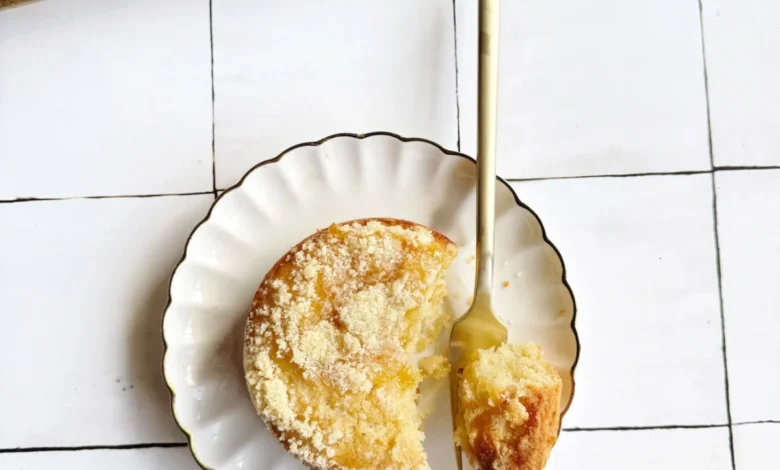
The culinary landscape of artisan home baking continues to evolve as specialty food creators introduce seasonal variations to established comfort-food formats. Following a successful series of miniaturized, structurally distinct coffee cakes featuring traditional and contemporary flavor profiles, bakers and dessert enthusiasts now have access to a new iteration: the Creamy Almond and Lemon Coffee Cake. This latest addition merges the nutty, dense profile of almond cream with the sharp, acidic brightness of homemade lemon curd, signaling a shift toward balanced, citrus-forward pastries for the spring and summer baking seasons.
Evolution of the Mini Coffee Cake Series
The introduction of the almond and lemon variant builds upon a well-documented lineage of single-serving or small-batch coffee cakes developed over recent years. The product line originated with a traditional jam-filled cake format, designed to offer portion-controlled servings without sacrificing the multi-layered texture typical of large-scale coffee cakes. Subsequent releases adapted to seasonal consumer demands, including pumpkin and streusel variations for autumn, spiced carrot cake versions for spring, banana bread iterations for year-round pantry baking, and cherry-streusel combinations for mid-summer harvests.
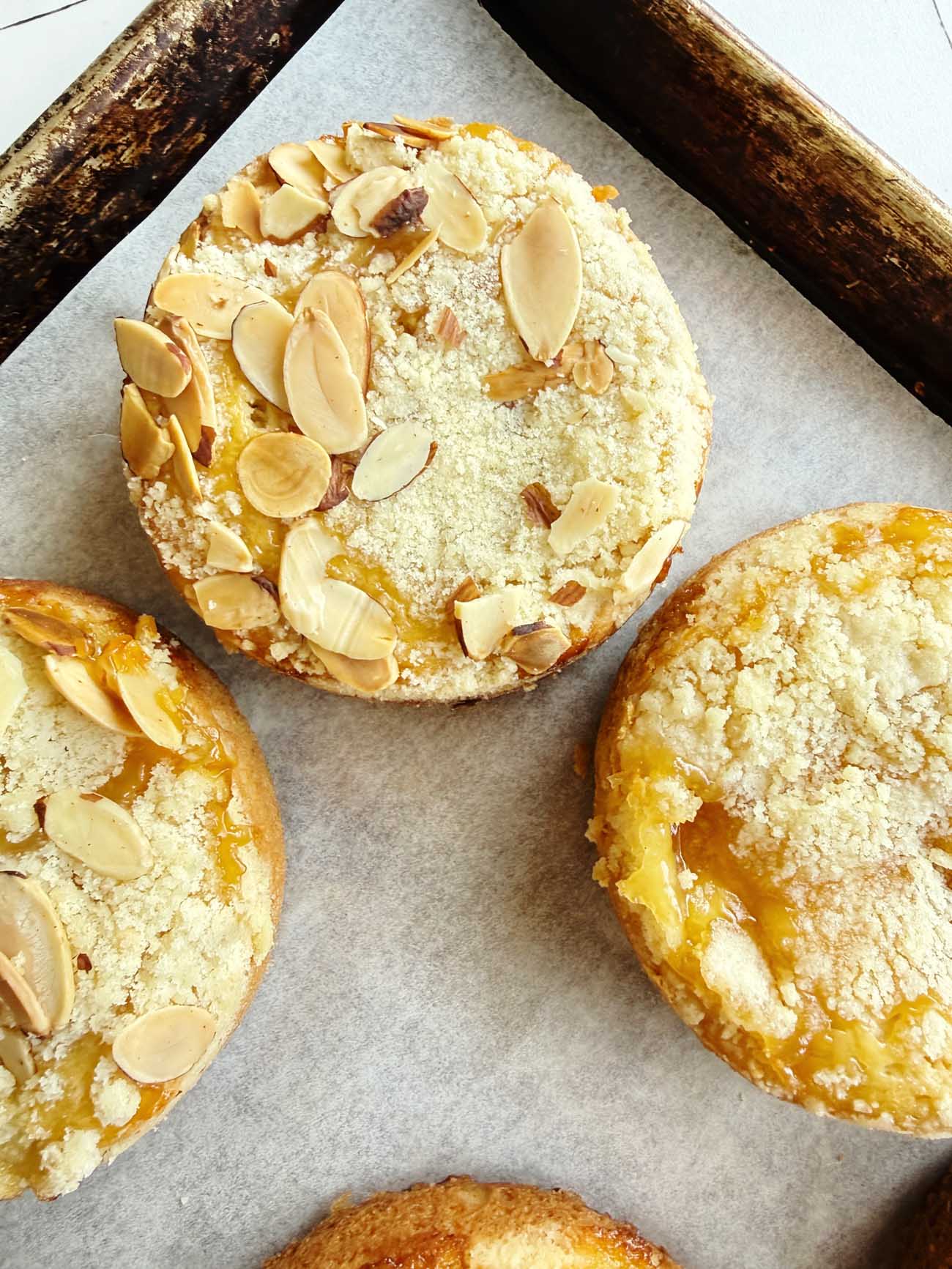
Food historians and culinary analysts note that the miniaturization of classic sheet cakes and breakfast pastries reflects broader shifts in consumer dining habits. Smaller formats appeal to households seeking reduced food waste, precise portion management, and quicker baking times compared to traditional 9-by-13-inch baking pans. By utilizing standardized mini springform pans or jumbo muffin tins, home bakers can achieve professional presentation standards and consistent heat distribution.
Flavor Chemistry: The Almond and Lemon Synergy
The pairing of almond and lemon relies on established principles of flavor matching. Almond products—incorporating both almond flour and concentrated almond extract—provide a high fat content and deep, benzaldehyde-driven nutty aromas that coat the palate. This richness requires an assertive counterpoint to prevent the crumb from becoming overly dense or cloying.
Lemon curd introduces citric acid and high moisture levels, cutting through the buttery texture of the cake base and the lipid-rich almond cream layer. According to culinary research, the volatile compounds in fresh citrus zest combined with the warm, marzipan-like notes of almond create a high-contrast profile that stimulates multiple sensory receptors simultaneously. This dual sensation explains the enduring popularity of lemon-almond combinations in European patisserie traditions, which are increasingly being adapted into American quick-bread and coffee-cake architectures.
Structural Engineering of the Pastry
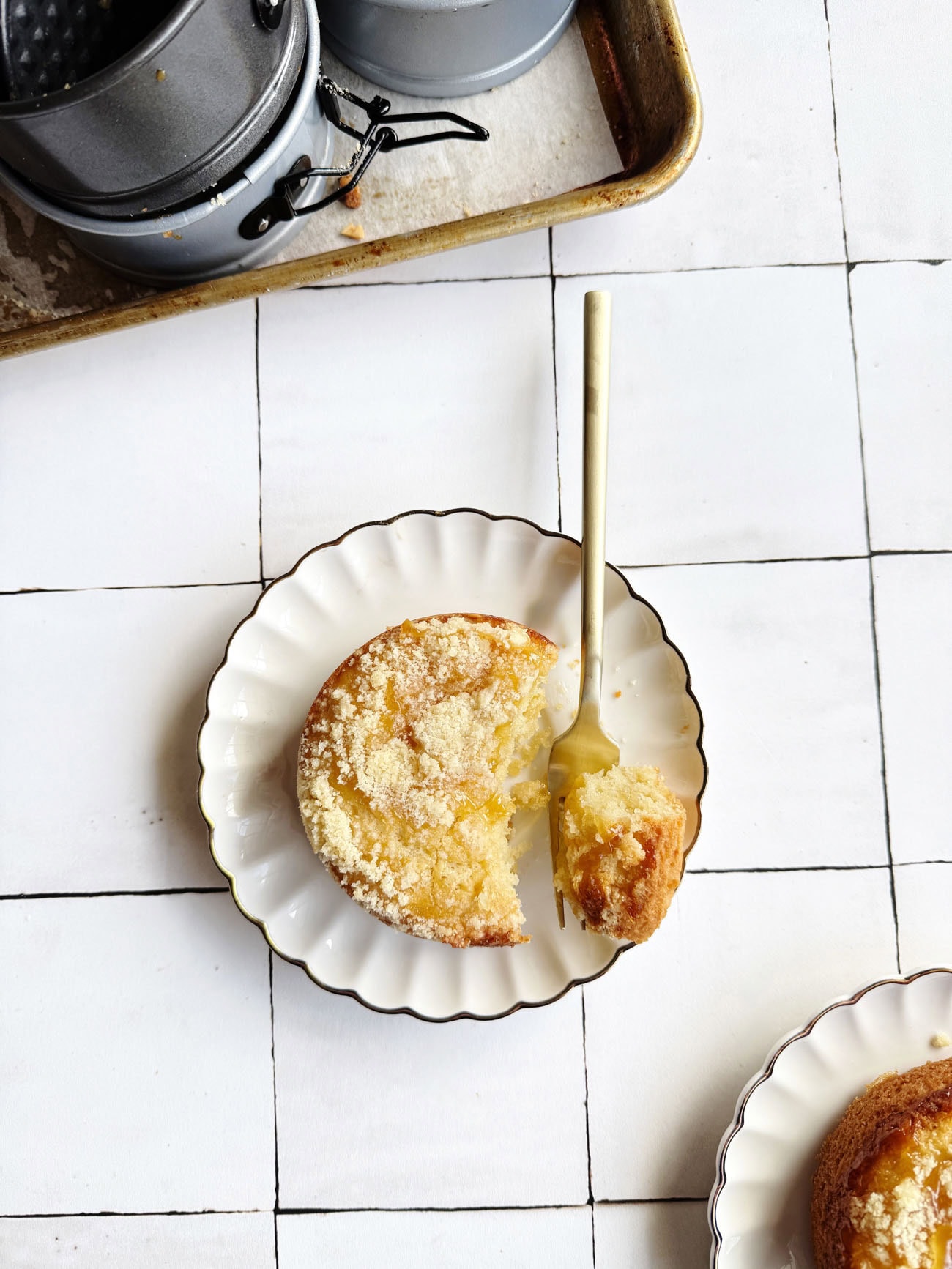
Achieving the characteristic texture of these specialty cakes requires a precise assembly sequence. The construction method departs from standard single-batter techniques by integrating distinct textural tiers within a compact footprint:
- Base Layer: A foundational cake batter formulated with precise flour-to-fat ratios provides structural integrity. The recipe utilizes a standardized measurement where one cup of unbleached flour equals 142 grams, addressing common discrepancies in home baking metrics where cup volumes can vary from 120 to 142 grams.
- Almond Cream Layer: A dense, pliable filling incorporating finely ground almond flour and pure almond extract rests directly atop the cake batter, introducing moisture and a marzipan-like consistency during baking.
- Lemon Curd Interlayer: Homemade or high-quality commercial lemon curd is piped or spread over the almond cream, ensuring an even distribution of tartness across every bite.
- Streusel Integration: Efficiency in preparation is achieved by reserving a portion of the dry cake base ingredients to serve as the crumb topping. This method eliminates the need for a separate mixing bowl, reducing preparation time and cleanup for commercial and home kitchens alike.
Baking parameters are flexible to accommodate standard kitchen equipment. While the preferred method utilizes eight 4-inch springform cake pans to maintain distinct edges and uniform height, alternative vessels such as jumbo muffin tins or standard ramekins yield comparable results with adjusted baking times. For commercial or high-volume preparation, the formulation can also be adapted to a standard greased and lined 9-by-13-inch baking pan, requiring an extended bake time of 28 to 32 minutes.
Economic and Culinary Implications
The release of seasonal baking formulas through digital recipe platforms highlights the growing economic influence of content-driven culinary publishing. As home baking participation remains elevated compared to pre-2020 baselines, recipe developers face increased demand for reliable, metric-driven formulations that minimize ingredient waste and guarantee success across diverse kitchen environments.
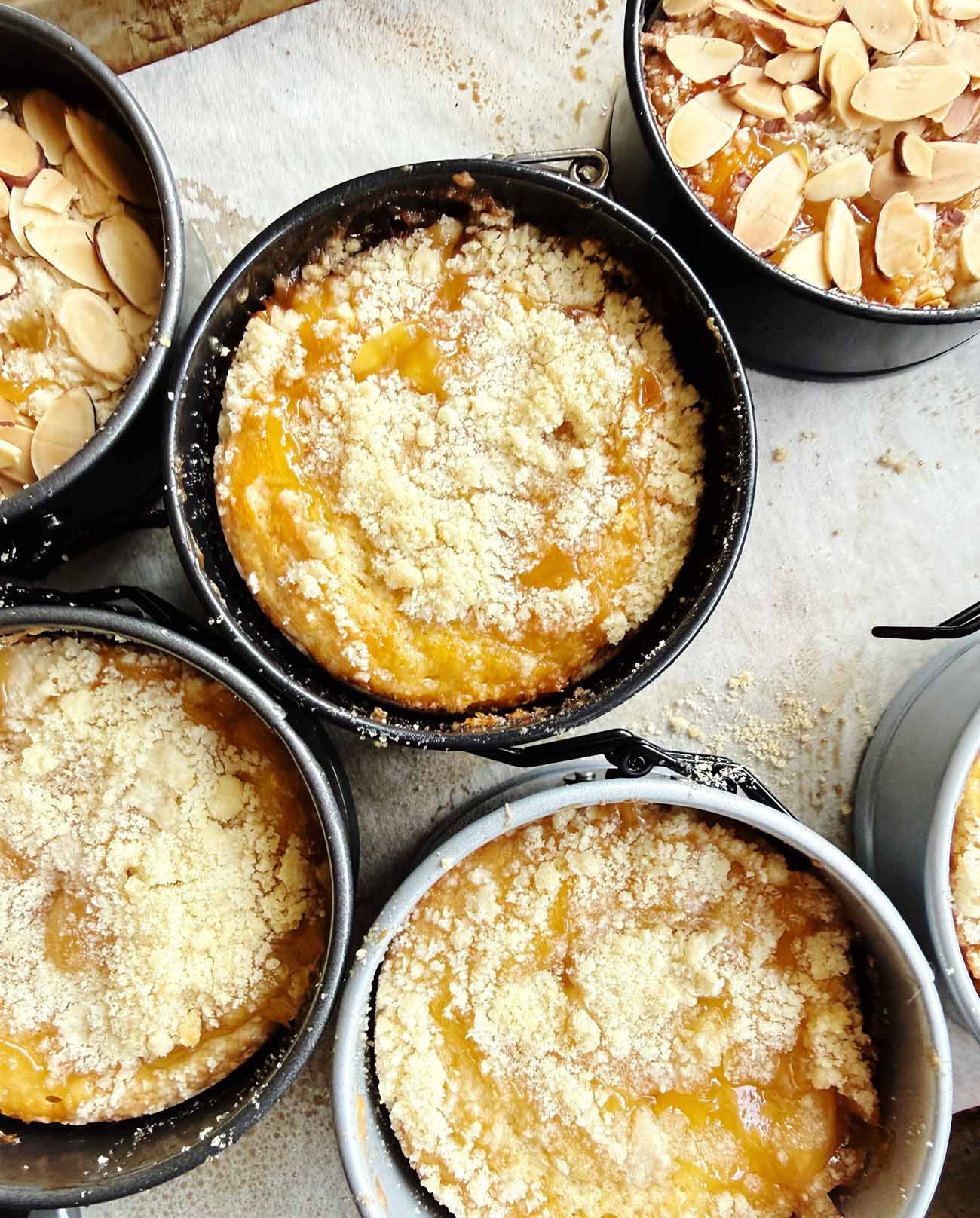
Industry observers note that standardized weight measurements—such as the emphasis on gram weights for flour rather than volumetric cups—reflect a broader professionalization of home cooking. By providing precise technical specifications alongside adaptable equipment options, modern recipe development bridges the gap between commercial patisserie standards and domestic execution.
The Creamy Almond and Lemon Coffee Cake is currently available to home bakers via specialty food networks and digital recipe archives, accompanied by comprehensive scaling notes, alternative pan size conversions, and step-by-step preparation guidelines designed to ensure consistent results across varying skill levels.