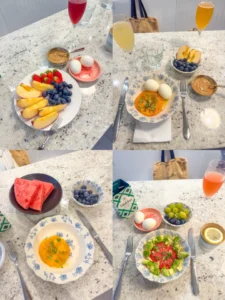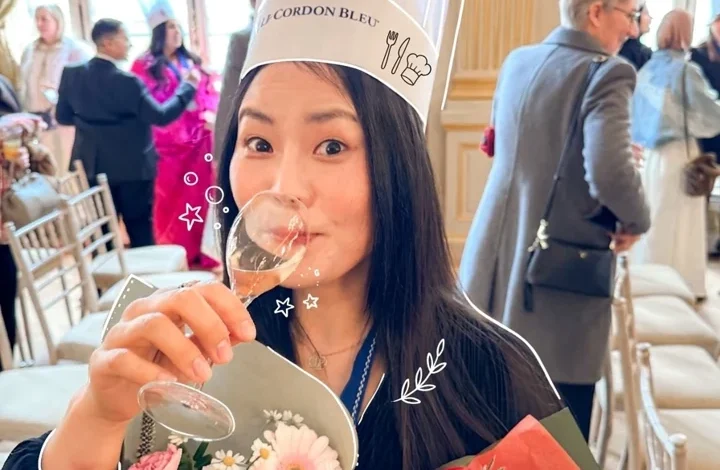
After a rigorous nine-month academic and culinary residency in the heart of France, chef and digital content creator Seonkyoung Longest has officially graduated from Le Cordon Bleu Paris. The milestone marks the conclusion of a high-intensity professional development program at one of the world’s most prestigious culinary institutions. While the graduation ceremony serves as the formal end of her tenure at the school, it also highlights the broader, often complex reality of international culinary education, where technical mastery frequently intersects with personal transformation and the challenges of global mobility.

The Le Cordon Bleu Educational Framework
Le Cordon Bleu, founded in Paris in 1895, maintains a rigorous pedagogical structure centered on the French culinary tradition. The curriculum is renowned for its demanding pace, requiring students to undergo intense practical demonstrations followed by hands-on kitchen training. For students like Longest, the nine-month duration involves a transition through foundational techniques—culinary basics, intermediate levels, and finally, superior proficiency.

This program requires a significant commitment, typically involving six to eight hours of kitchen practice per day, strictly regulated by industry standards. The educational model is designed to simulate the high-pressure environment of professional kitchens, forcing students to adapt to standardized workflows, precise measurements, and the physical endurance necessary for haute cuisine. The graduation of a student from this program signifies not only the completion of coursework but the successful navigation of a standardized professional language that is recognized globally across the hospitality sector.

A Chronology of Transition
Longest’s journey in Paris spans a ten-month period, beginning with her arrival in France to pursue formal culinary training. The timeline of her tenure can be categorized into three distinct phases:

- The Orientation Phase (Months 1–2): Initial integration into the Parisian culinary ecosystem, focusing on foundational techniques and adapting to the rigorous institutional culture of Le Cordon Bleu.
- The Intensive Training Phase (Months 3–7): This period marked the core of the academic experience, involving complex module completion, advanced pastry and savory techniques, and the development of professional networks among a diverse international student body.
- The Synthesis Phase (Months 8–9): The final stretch focused on final examinations, practical assessments, and the psychological processing of the experience, culminating in the formal graduation ceremony in April 2026.
This period of residence was not merely academic; it served as a buffer and a period of professional recalibration. For many culinary professionals, returning to an institutional setting after years of independent practice represents a unique shift in identity, moving from creator to student.

The Psychological and Professional Impact of Culinary Education
Beyond the mastery of the "mother sauces" or the intricacies of entremets, the Le Cordon Bleu experience serves as a microcosm of global migration and professional re-invention. The school attracts a cohort of students from diverse backgrounds, each navigating the "liminality" of living abroad. This state—defined as being in a threshold or transitional phase—is a common byproduct of long-term international study.

Data from the hospitality industry indicates that programs of this nature significantly influence the career trajectory of participants. Graduates often report a shift in their professional branding, leveraging the prestige of the institution to transition into high-end consultancy, executive chef roles, or refined digital media content. However, the academic rigor often brings to light the realities of the industry, including the mental health challenges associated with the grueling nature of professional cooking.

Peer Dynamics and Support Networks
A notable aspect of the student experience at Le Cordon Bleu is the development of informal support structures, such as the peer group referenced by Longest. These groups, often composed of international students, provide a vital safety net in a foreign environment.

Sociological observations of international culinary schools suggest that these bonds are forged through shared adversity—long hours in the kitchen, high-stakes practical exams, and the collective experience of navigating a non-native culture. For students, these relationships are as essential to their long-term success as the technical skills acquired in the classroom. They provide the emotional labor necessary to offset the isolation that often accompanies intensive professional training.

Future Trajectory: Beyond the Classroom
The conclusion of the Le Cordon Bleu program does not necessarily equate to a settled future. For Longest, the immediate next step involves an additional period of specialized pastry study at the Ecole Ritz Escoffier in Paris. This decision to extend her stay in the French capital underscores a trend among culinary graduates: the pursuit of hyper-specialization in elite Parisian institutions before re-entering the global market.

The implications of this move are significant. By aligning her training with both Le Cordon Bleu and the Ritz Escoffier, Longest is positioning herself at the intersection of classical French tradition and modern, high-level pastry artistry. This trajectory suggests a shift toward more technical, fine-dining-oriented content and professional practice.

Industry Implications and Context
The professionalization of culinary creators has become a dominant trend in the media landscape. As platforms like YouTube and social media evolve, audiences increasingly demand content that is backed by formal credentials. Graduates of elite programs are moving away from purely "home-cook" branding toward a more authoritative, chef-driven persona.

The "uncertainty" mentioned by students in this position is a recurring theme in the industry. The culinary field is notoriously volatile, and the transition from graduation to the "real world" of restaurant operations or digital media entrepreneurship is fraught with structural challenges, including rising operational costs and the saturation of the digital culinary market.

Conclusion
The completion of this nine-month journey represents a significant professional achievement, but it also reflects the broader reality of the modern culinary artist—a constant state of movement, learning, and reassessment. As Seonkyoung Longest moves forward into her studies at the Ritz Escoffier, her experience serves as a testament to the endurance required to pursue formal culinary training at the highest level. The ambiguity of her next steps is not an indication of a lack of direction, but rather a common characteristic of high-level professionals who are actively iterating on their own careers, leveraging elite training to redefine their place in a globalized, highly competitive industry.

As she continues her work in Paris, the culinary community will be watching to see how these newly acquired skills from two of the most iconic institutions in the world will be integrated into her future creative and professional endeavors.