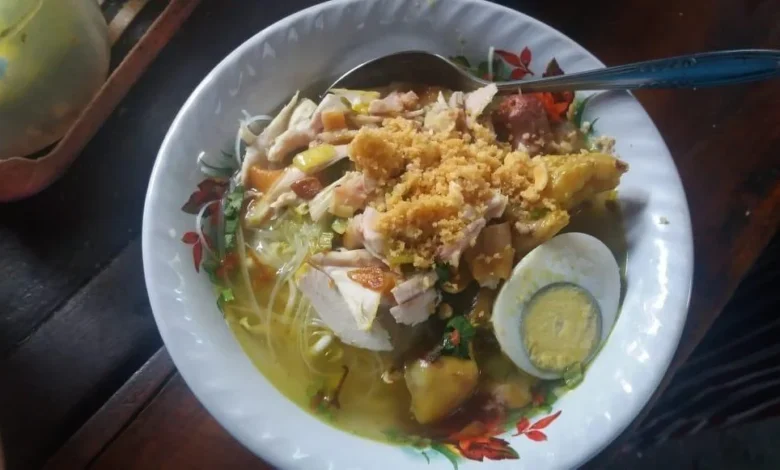
Soto Ayam Lamongan, a fragrant chicken soup originating from Lamongan, East Java, stands as a testament to Indonesia’s diverse and vibrant culinary landscape. Revered for its robust yellow broth, deeply infused with an intricate blend of spices, and distinguished by the addition of koya—a savory, granular topping—this dish transcends mere sustenance, offering a profound sense of warmth and familiarity that resonates deeply within the Indonesian palate. Its widespread popularity, particularly as a cherished weekend meal for families, underscores its role as a culinary cornerstone and a beacon of Indonesian gastronomic heritage.
The Anatomy of a Classic: Decoding Soto Ayam Lamongan
At its core, Soto Ayam Lamongan is a meticulously crafted dish, each component contributing to a symphony of flavors and textures. The foundation is a rich chicken broth, simmered for hours to extract maximum flavor from the bones and meat. This broth is then transformed by a bumbu halus (fine spice paste) typically comprising turmeric, ginger, galangal, lemongrass, candlenuts, garlic, and shallots, all sautéed until fragrant before being introduced to the simmering liquid. The turmeric lends the broth its characteristic golden hue, while the other spices impart a complex, earthy, and aromatic profile that is both invigorating and deeply comforting.
The main protein, shredded chicken, is usually prepared by boiling a whole chicken until tender, then frying it briefly to crisp the skin before shredding the meat. This two-step process ensures both tenderness and a subtle textural contrast. Accompanying the chicken are a medley of fresh vegetables and starches: translucent cellophane noodles (soun), thinly sliced cabbage, crisp bean sprouts, and fresh tomato wedges. A sprinkle of chopped spring onions and crispy fried shallots (bawang goreng) adds a final layer of aroma and texture.
However, what truly sets Soto Ayam Lamongan apart from its myriad soto cousins across the archipelago is the koya. This unique topping, a finely ground powder typically made from crispy shrimp crackers (kerupuk udang) and fried garlic, occasionally enhanced with fried shallots, is sprinkled generously over the soup just before serving. Upon contact with the hot broth, the koya softens slightly, releasing an umami-rich, savory depth that thickens the broth and adds a distinct textural dimension, creating an unparalleled gastronomic experience. The dish is almost invariably served with a wedge of lime to add a refreshing tang and a dollop of sambal (chili paste) for those who crave an extra kick of heat, often accompanied by steamed white rice.
A Culinary Journey Through Time: The History of Soto
The history of soto in Indonesia is as rich and complex as its flavors, tracing its roots back centuries and reflecting the diverse cultural influences that have shaped the archipelago’s cuisine. While the exact origins are debated, food historians suggest that soto, or similar broth-based dishes, may have evolved from Chinese culinary traditions, particularly the influence of Chinese immigrants who settled in various parts of Indonesia from the 17th century onwards. Early versions of soto, often featuring noodles and clear broths, bear resemblances to Chinese noodle soups.
Over time, these foundational recipes were meticulously adapted and indigenized, incorporating the abundant local spices and ingredients unique to each region. This led to a remarkable diversification, with each area developing its distinct soto variant, reflecting local palates, available resources, and cultural nuances. For instance, Soto Betawi from Jakarta is known for its rich coconut milk and milk-based broth, Soto Makassar for its use of beef offal and specific spices, and Soto Banjar from Kalimantan for its clear, aromatic broth often featuring potato cakes.
The emergence of Soto Ayam Lamongan specifically can be placed within this broader narrative of regional culinary evolution. While a precise timeline for its inception is elusive, it is understood to have developed as a staple in the Lamongan Regency of East Java, likely perfected over generations by local cooks and street food vendors. The region’s access to fresh chicken, local spices, and the ingenuity of its culinary practitioners collectively forged the distinctive identity of Soto Ayam Lamongan, with the koya becoming its defining characteristic, setting it apart from other chicken soto varieties. By the mid-20th century, as internal migration and improved transportation facilitated the spread of regional cuisines, Soto Ayam Lamongan began to gain recognition beyond East Java, gradually becoming a nationwide favorite.
Lamongan’s Gastronomic Gem: Regional Identity and Culinary Heritage
Lamongan, a regency situated on the north coast of East Java, holds a distinguished place in Indonesia’s culinary map primarily due to its eponymous soto. The dish is not merely a food item; it is an integral part of Lamongan’s identity, a source of local pride, and a significant contributor to its cultural heritage. The local environment, characterized by its agricultural richness, has historically provided easy access to fresh poultry and a wide array of spices, laying the groundwork for the development of such a flavorful dish.
The unique combination of specific spices, coupled with the innovative addition of koya, is a testament to the culinary creativity and resourcefulness of Lamongan’s people. This distinct flavor profile has not only captured the hearts of locals but has also become a powerful ambassador for the region, drawing food enthusiasts from across Indonesia and beyond.
Street vendors, known as pedagang kaki lima, have played an indispensable role in popularizing Soto Ayam Lamongan. These mobile kitchens, often operating from humble carts (gerobak), are the lifeblood of Indonesia’s street food scene. They serve as culinary incubators, preserving traditional recipes, perfecting cooking techniques, and making these beloved dishes accessible to all segments of society. The sight and sound of a soto vendor, with the aroma of simmering broth wafting through the air, is a familiar and cherished part of urban and rural landscapes across Indonesia. The informal nature of these establishments fosters a sense of community, where people gather to share meals, stories, and laughter, making Soto Ayam Lamongan a social experience as much as a gastronomic one.
The Art of Koya: A Signature Element
The koya in Soto Ayam Lamongan is not merely an accompaniment; it is arguably the defining element that elevates the dish and distinguishes it from other soto varieties. This granular, savory powder, often misunderstood by those unfamiliar with the dish, is a masterful culinary innovation. Its primary components are typically finely crushed shrimp crackers (kerupuk udang) and fried garlic. Some regional variations or individual recipes might also incorporate fried shallots, ground roasted peanuts, or even a touch of white pepper, contributing to its complex flavor profile.
The process of making koya is straightforward yet crucial. High-quality shrimp crackers are deep-fried until puffed and crispy, then allowed to cool. Separately, garlic cloves are thinly sliced and fried until golden and aromatic. Both ingredients are then ground together, traditionally using a mortar and pestle, into a fine, somewhat coarse powder. The key is to achieve a texture that is fine enough to dissolve partially in the hot broth, releasing its flavor, but still substantial enough to add a slight grit and richness.
When sprinkled over the hot soto, the koya immediately begins to interact with the broth. It thickens the soup slightly, imparting a creamy mouthfeel without the addition of dairy or coconut milk. More importantly, it infuses the broth with an intense umami depth, a savory quality derived from the shrimp crackers and the pungent sweetness of fried garlic. This unique combination creates a flavor that is both deeply comforting and incredibly addictive, transforming the broth from a simple chicken stock into a profoundly satisfying elixir. Without koya, Soto Ayam Lamongan would lose much of its distinctive character, becoming another delicious but less unique chicken soto. Its inclusion is a testament to the ingenuity of Indonesian cooks in transforming simple ingredients into extraordinary culinary experiences.
Beyond the Bowl: Nutritional Profile and Health Considerations
Soto Ayam Lamongan, while undeniably delicious, offers a mixed nutritional profile that warrants consideration for a balanced diet. As a dish primarily featuring chicken, it is an excellent source of lean protein, essential for muscle repair, growth, and overall bodily functions. The various vegetables—cabbage, bean sprouts, and tomatoes—contribute dietary fiber, vitamins (such as Vitamin C and K), and minerals (like potassium). The extensive array of spices used in the broth, including turmeric, ginger, and galangal, are known for their anti-inflammatory and antioxidant properties, adding a layer of health benefits.
However, certain aspects of its preparation can impact its overall nutritional value. The traditional method of frying the chicken before shredding, and the deep-frying of shrimp crackers and garlic for koya, can significantly increase the fat content. While these fats contribute to flavor, excessive consumption may be a concern for those monitoring their calorie or fat intake. Similarly, the generous use of salt in the broth and seasoning can lead to a high sodium content, which can be a factor for individuals with hypertension or those advised to limit sodium.
For those seeking a healthier version without compromising on flavor, several modifications can be made. Opting for boiled or grilled chicken instead of fried can reduce fat. While koya is integral, a lighter version can be made by using less oil in frying the garlic and using baked rather than fried crackers, or even reducing the quantity used. Increasing the proportion of vegetables and being mindful of salt usage during preparation can also enhance the dish’s health profile. Served with brown rice instead of white rice, it can also boost fiber intake. Despite these considerations, in moderation, Soto Ayam Lamongan remains a wholesome and nutritious meal, offering a balance of macronutrients and beneficial micronutrients.
Economic Tapestry: Soto’s Role in Indonesia’s Culinary Economy
The economic impact of Soto Ayam Lamongan, and indeed the broader soto category, on Indonesia’s culinary economy is substantial and far-reaching. It serves as a powerful engine for small and medium-sized enterprises (SMEs), particularly for the countless street food vendors and small restaurants that specialize in the dish. These micro-businesses provide livelihoods for millions of Indonesians, from the cooks and servers to the suppliers of ingredients.
The preparation of soto requires a diverse array of fresh produce, poultry, and spices, creating a robust demand across various agricultural and manufacturing sectors. Chicken farmers, vegetable growers, spice traders, noodle producers, and cracker manufacturers all benefit directly from the popularity of soto. This intricate supply chain supports rural economies and fosters local entrepreneurship, reinforcing economic stability at the grassroots level.
Furthermore, Soto Ayam Lamongan contributes significantly to Indonesia’s burgeoning culinary tourism sector. As one of the nation’s most iconic dishes, it attracts both domestic and international tourists eager to experience authentic Indonesian flavors. Food tourism is a vital component of the national tourism strategy, with dishes like soto serving as cultural ambassadors that entice visitors to explore different regions. The economic ripple effect extends to hospitality services, transportation, and ancillary businesses that cater to tourists, thereby boosting local economies in culinary hotspots like Lamongan and beyond. The affordability and widespread availability of soto also ensure that quality, traditional food remains accessible to all income brackets, making it a democratizing force within the national food economy.
Safeguarding Culinary Legacy: Preservation and Future Challenges
The preservation of authentic Soto Ayam Lamongan, alongside other traditional Indonesian dishes, is a critical endeavor in the face of globalization, commercialization, and evolving consumer preferences. The challenge lies in maintaining the integrity of traditional recipes and cooking methods while allowing for necessary adaptation and innovation.
Efforts to safeguard this culinary legacy include documentation projects by culinary institutions and food historians, who meticulously record recipes, techniques, and the cultural context of dishes. Culinary schools often incorporate traditional Indonesian cuisine into their curricula, ensuring that the knowledge and skills required to prepare these dishes are passed down to future generations of chefs. Government initiatives and cultural organizations also play a role by promoting Indonesian cuisine through festivals, culinary diplomacy, and supporting local food businesses.
However, several challenges persist. The increasing demand for convenience and standardization in commercial food production can sometimes lead to shortcuts that compromise authentic flavors and ingredients. The rise of fast-food culture and globalized tastes also poses a threat, potentially diminishing interest in traditional dishes among younger generations. Moreover, ensuring the sustainable sourcing of high-quality, local ingredients is crucial, particularly as climate change and agricultural practices evolve. Balancing tradition with innovation—allowing for healthier adaptations or contemporary presentations without losing the essence of the dish—is a delicate act. For instance, while a chef might experiment with different protein sources or spice ratios, the core elements like the aromatic broth and the distinct koya must remain sacrosanct for the dish to truly be called Soto Ayam Lamongan. These preservation efforts are vital not just for the sake of food but for safeguarding a significant part of Indonesia’s cultural identity and heritage.
Expert Perspectives on Soto’s Cultural Resonance
Culinary anthropologists and food historians consistently highlight Soto Ayam Lamongan’s profound cultural resonance, positioning it not merely as a dish but as a symbol of Indonesian identity and communal living. Dr. Rahmawati Budi, a prominent Indonesian food historian, might assert, "Soto, in its myriad forms, is more than just a meal; it embodies the spirit of Indonesian hospitality and culinary ingenuity. Soto Ayam Lamongan, with its unique koya, perfectly illustrates how regional distinctiveness contributes to a rich national tapestry." This perspective underscores how local innovations coalesce to form a broader national culinary identity.
From a sociological standpoint, the ubiquitous presence of soto vendors, often operating from modest establishments or mobile carts, fosters a sense of community and social cohesion. "These soto stalls are informal community hubs," might state Professor Antonius Wijaya, a cultural sociologist. "They are places where people from all walks of life can gather, share a meal, and connect, reinforcing social bonds in a rapidly modernizing society. The shared experience of enjoying a warm bowl of soto transcends socio-economic divides."
Government tourism bodies, recognizing the strategic importance of culinary heritage, actively promote dishes like Soto Ayam Lamongan as key attractions. A representative from the Ministry of Tourism and Creative Economy might emphasize, "Our traditional dishes are powerful cultural ambassadors. Soto Ayam Lamongan showcases the complexity and deliciousness of Indonesian cuisine, drawing tourists and strengthening our creative economy. We are committed to supporting local vendors and preserving these culinary traditions for future generations." These insights collectively affirm Soto Ayam Lamongan’s multifaceted significance—as a gastronomic delight, a cultural emblem, an economic driver, and a social unifier.
Preparing Soto Ayam Lamongan at Home: A Guide
Recreating the authentic flavors of Soto Ayam Lamongan in a home kitchen is a rewarding culinary endeavor. While the process involves several steps, the result is a deeply satisfying meal perfect for family gatherings.
Ingredients:
- For the Chicken and Broth:
- 1 whole chicken (approx. 1.5 kg), cut into 8-10 pieces
- 3 liters water
- 2 salam leaves (Indonesian bay leaves)
- 3 kaffir lime leaves
- 2 stalks lemongrass, bruised
- 1 tsp salt (or to taste)
- 1/2 tsp white pepper (or to taste)
- Oil for frying (for chicken and spice paste)
- For the Bumbu Halus (Fine Spice Paste):
- 10 shallots
- 5 cloves garlic
- 5 cm fresh ginger
- 4 cm fresh galangal
- 4 cm fresh turmeric (or 1 tsp turmeric powder)
- 4 candlenuts, roasted
- 1 tsp coriander powder
- 1/2 tsp cumin powder
- For the Koya (Signature Topping):
- 100g shrimp crackers (kerupuk udang), fried until crispy
- 6 cloves garlic, thinly sliced and fried until golden
- For Serving:
- 200g cellophane noodles (soun), soaked in hot water until soft, then drained
- 1/4 head cabbage, thinly sliced
- 100g bean sprouts, blanched
- 2 tomatoes, cut into wedges
- 2 hard-boiled eggs, halved
- 2 spring onions, chopped
- Fried shallots (bawang goreng) for garnish
- Lime wedges
- Sambal (chili paste)
Instructions:
- Prepare the Chicken and Broth:
- In a large pot, bring 3 liters of water to a boil. Add the chicken pieces, salam leaves, kaffir lime leaves, and bruised lemongrass. Reduce heat and simmer for 45-60 minutes, or until the chicken is tender. Skim off any impurities that rise to the surface.
- Once cooked, remove the chicken from the broth. Strain the broth and set aside.
- Allow the chicken to cool slightly. Heat a little oil in a pan and lightly fry the chicken pieces until the skin is slightly golden. Shred the chicken meat from the bones and set aside.
- Make the Bumbu Halus:
- Blend all bumbu halus ingredients (shallots, garlic, ginger, galangal, turmeric, roasted candlenuts, coriander powder, cumin powder) with a little oil or water until a smooth paste is formed.
- Heat 3-4 tablespoons of oil in a separate pan. Sauté the bumbu halus over medium heat until fragrant and the oil separates (this indicates the paste is fully cooked), about 10-15 minutes.
- Combine Broth and Spice Paste:
- Add the sautéed bumbu halus to the strained chicken broth. Bring the broth back to a simmer. Season with salt and white pepper to taste. Continue simmering for another 15-20 minutes to allow the flavors to meld.
- Prepare the Koya:
- Once the fried shrimp crackers and fried garlic are cool, combine them in a food processor or use a mortar and pestle to grind them into a fine, somewhat coarse powder.
- Assemble and Serve:
- In individual serving bowls, place a portion of soaked cellophane noodles, sliced cabbage, and blanched bean sprouts.
- Arrange a generous amount of shredded chicken over the vegetables.
- Ladle the hot, aromatic soto broth over the contents of the bowl.
- Garnish each bowl with tomato wedges, half a hard-boiled egg, chopped spring onions, and a sprinkle of fried shallots.
- Crucially, sprinkle a generous spoonful of the prepared koya over the top.
- Serve immediately with lime wedges and sambal on the side, accompanied by steamed white rice.
Tips for Optimal Flavor:
- For an even richer broth, you can lightly toast the spices before grinding them for the bumbu halus.
- Ensure the bumbu halus is thoroughly cooked out to prevent a raw spice taste.
- Don’t skip the koya; it’s the heart of Soto Ayam Lamongan.
- Adjust salt and pepper levels gradually to your preference.
Conclusion: A Timeless Comfort and National Pride
Soto Ayam Lamongan remains a culinary cornerstone in Indonesia, embodying the nation’s rich heritage and diverse gastronomic traditions. Its intricate blend of spices, the comforting warmth of its broth, and the unique, savory punch of koya have cemented its status as a beloved comfort food and a source of national pride. From bustling street stalls to home kitchens, this dish continues to bring families together, nourishing both body and soul. As Indonesia continues to celebrate and promote its culinary identity on the global stage, Soto Ayam Lamongan stands as a vibrant testament to the enduring power of traditional flavors and the timeless appeal of a truly exceptional meal.