The Paradox of Power Examining the Financial Struggles of Soekarno During the Early Years of Indonesian Independence

The historical narrative of Indonesia’s first president, Soekarno, is often dominated by his charismatic oratory, his pivotal role in the Non-Aligned Movement, and his architectural legacy in Jakarta; however, a lesser-known facet of his early presidency involves a startling level of personal financial instability. In the immediate aftermath of the Proclamation of Independence on August 17, 1945, the Republic of Indonesia was a state that possessed sovereignty on paper but lacked a functioning treasury, a stable currency, or a formalized administrative infrastructure. This systemic fragility manifested most poignantly in the personal finances of the head of state himself. Records and memoirs from the era reveal that Soekarno frequently operated on the brink of insolvency, at one point earning a salary so meager that he was forced to borrow money from his own military aides to meet the basic needs of the First Family.
The Legislative Foundation of Presidential Compensation
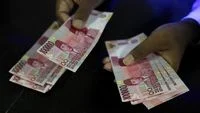
The formalization of the President’s salary occurred shortly after the formation of the first Indonesian cabinet. In November 1945, the government issued Government Regulation (Penetapan Pemerintah) No. 1/O.P, which codified the compensation for the nation’s highest officials. Under this decree, the President of the Republic of Indonesia was allocated a monthly salary of 1,000 Dutch East Indies guilders (f.1,000). At the time, the guilder was still the primary unit of account, and the exchange rate was nominally pegged at a one-to-one ratio with the nascent Indonesian rupiah.
While 1,000 guilders might have appeared substantial for an average citizen in a pre-war colonial economy, it was woefully inadequate for a head of state tasked with maintaining the dignity of a new republic. This salary was intended to be a temporary measure, reflecting the "emergency" status of the government as it operated under the constant threat of Dutch military intervention. However, as the Indonesian National Revolution (1945–1949) intensified, the purchasing power of this salary evaporated, leaving the President in a state of "honorable poverty."
Personal Testimonies of Domestic Austerity
The reality of life in the presidential household was far from the opulence typically associated with executive power. Fatmawati, the first First Lady of Indonesia, provided a candid look into these struggles in her memoir, Fatmawati: Catatan Kecil Bersama Bung Karno (2017). She recalled the monthly arrival of the salary envelope, noting that the contents were rarely sufficient to cover the household’s basic requirements. As the primary manager of the domestic sphere, Fatmawati was tasked with "stretching" a limited budget to cover food, clothing, and the various social obligations expected of the President’s wife.
In her writings, Fatmawati noted that she did not have an independent source of income and was entirely dependent on the official stipend. The lack of a "First Lady’s budget" meant that every hospitality gesture—serving tea to visiting diplomats or providing meals for the numerous freedom fighters who frequented the palace—came directly out of the family’s dinner fund. This forced a lifestyle of extreme simplicity, where the President and his family lived more like the common people (Marhaen) he championed than the elite rulers of the colonial past.
Soekarno himself addressed these hardships in his 1965 autobiography, Bung Karno: Penyambung Lidah Rakyat Indonesia (Sukarno: An Autobiography as Told to Cindy Adams). He famously lamented, "Is there any other head of state who is as poor as I am and often borrows from his aides? My salary is US$200 a month, and it is not enough to meet the needs of my family." The figure of $200, while a conversion used for the international audience of his biography, underscored a bitter irony: the man who held the keys to the nation’s future often did not have enough cash in his pocket to buy a pack of cigarettes or provide for his children without assistance.
The Macroeconomic Context: Hyperinflation and Currency Wars
The financial plight of the presidency cannot be separated from the chaotic economic landscape of post-war Indonesia. Between 1945 and 1949, the country was a battleground not only for soldiers but for currencies. When the Japanese surrendered in August 1945, the "Japanese occupation money" remained in circulation but began to lose value rapidly. The returning Dutch forces, under the Netherlands Indies Civil Administration (NICA), introduced their own currency (the NICA guilder) to re-establish colonial control.
In response, the Indonesian government launched the Oeang Repoeblik Indonesia (ORI) on October 30, 1946. However, the republic lacked the gold reserves or foreign exchange to back the ORI effectively. This resulted in a "tri-currency" environment where Japanese money, NICA guilders, and ORI competed for dominance. The resulting hyperinflation meant that prices for basic commodities like rice and kerosene could double within weeks. For a fixed-income earner like Soekarno, whose salary did not adjust for inflation, the real value of his 1,000-guilder stipend plummeted.
Furthermore, the Republic’s central bank, Bank Negara Indonesia (BNI), founded in 1946, was initially more of a symbol of sovereignty than a functioning financial institution. It struggled to regulate the money supply while the Dutch controlled the major ports and the pre-war central bank, De Javasche Bank. This economic fragmentation ensured that the central government in Yogyakarta (where the capital moved in 1946) was perpetually cash-strapped.
The Dutch Economic Blockade and its Toll
Adding to the internal chaos was the external pressure of the Dutch naval blockade. From 1945 to 1947, the Netherlands implemented a strict "sea blockade" designed to prevent the Republic from exporting commodities such as rubber, sugar, and tobacco. By cutting off the Republic’s access to international markets, the Dutch aimed to starve the revolution of foreign exchange.
The blockade had a direct impact on the government’s ability to pay its civil servants and its military. During this period, the Indonesian government often relied on the "diplomacy of rice"—sending rice to India during a famine in exchange for textiles and international recognition—rather than on cash transactions. When the state treasury was empty, the burden of sacrifice fell first on the leadership. Historical accounts suggest that during the most difficult months of the revolution, cabinet ministers and the President himself would go months without receiving their full stipends, instead receiving "promissory notes" or payments in kind.
Analysis of the Implications: Leadership by Sacrifice
The decision to maintain a low salary for the President was not merely a result of poverty; it was also a strategic and symbolic choice. Soekarno was acutely aware of the optics of leadership. In a nation where the majority of the population was suffering from the ravages of war and colonial exploitation, a lavish presidential lifestyle would have been politically disastrous. By living in "melarat" (poverty), Soekarno solidified his image as the "Great Leader of the Revolution" who suffered alongside his people.
This "leadership by sacrifice" helped maintain national morale. When the people saw that their President was borrowing money from his adjutants—such as Sugandhi or Sabur—to buy basic necessities, it fostered a sense of radical equality. It reinforced the idea that the Republic was a collective endeavor where no one, not even the man at the top, was exempt from the hardships of the struggle for independence.
However, this financial instability also had long-term institutional consequences. The lack of a clear separation between the President’s personal finances and the state’s resources in the early years created a precedent of "informal" financial management. Because the official salary was insufficient, the presidency often relied on discretionary funds or "donations" from wealthy supporters and regional governors to fund its activities. While necessary for survival in the 1940s, these practices would later complicate the development of transparent budgetary oversight during the Guided Democracy era.
Chronology of Financial Milestones in the Early Republic
- August 17, 1945: Proclamation of Independence; no formal budget or salary structure exists.
- November 1945: Issuance of Government Regulation No. 1/O.P, setting the Presidential salary at f.1,000.
- January 1946: The capital moves to Yogyakarta; the government operates on a "guerrilla budget."
- October 30, 1946: Introduction of ORI (Oeang Repoeblik Indonesia); Japanese money is demonetized, but inflation remains rampant.
- July 1947: First Dutch Military Aggression; Dutch forces seize key economic zones, further depleting the Republic’s revenue.
- 1948: The Renville Agreement results in a further loss of territory and resources; Soekarno’s personal finances reach a nadir.
- December 1949: The Round Table Conference (KMB) leads to the transfer of sovereignty; Indonesia inherits a massive debt of 4.3 billion guilders from the Dutch, ensuring that the national treasury remains strained well into the 1950s.
The Legacy of the "Poor President"
The image of Soekarno as a leader who had to borrow from his subordinates serves as a powerful reminder of the costs of Indonesian independence. It highlights a period where the survival of the state was prioritized over the comfort of its officials. While the Indonesian economy would eventually stabilize and the presidential salary would be adjusted in later decades, the stories of the "envelope of 1,000 guilders" and the $200-a-month president remain vital parts of the national memory.
In retrospect, the financial struggles of Soekarno were emblematic of the struggle of the Republic itself. The transition from a colonial subject to a sovereign nation was not merely a political act but a grueling economic ordeal. The fact that the Republic survived despite its leaders being "melarat" is a testament to the ideological conviction that drove the independence movement. Today, as Indonesia has grown into one of the world’s largest economies (G20), the austerity of the 1945 presidency stands as a stark historical contrast to the modern state’s vast resources, reminding citizens of the humble and precarious beginnings of their nation.