Mark Anthony Group Strategically Expands Portfolio Through Acquisition of The Finnish Long Drink to Secure Foothold in Spirits-Based RTD Segment

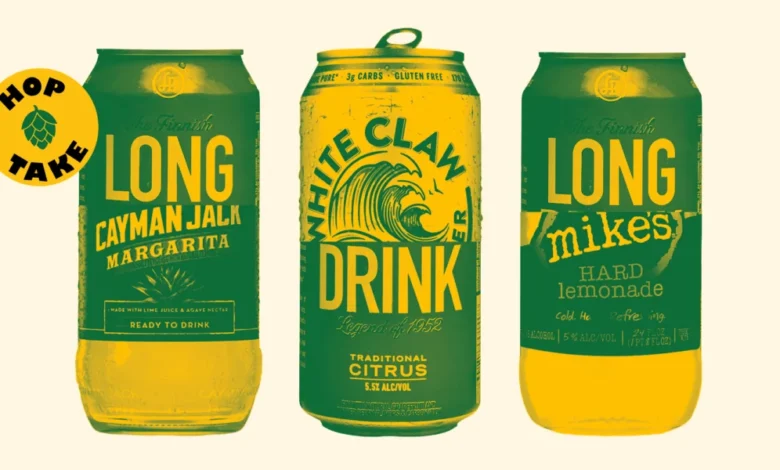
The Mark Anthony Group of Companies (MAG), the parent organization behind the market-leading White Claw Hard Seltzer brand, has officially announced its intent to acquire The Finnish Long Drink (FLD) for an undisclosed sum. This strategic acquisition represents a significant pivot for the Mark Anthony Group as it seeks to fortify its position in the rapidly evolving ready-to-drink (RTD) category, specifically targeting the premium spirits-based segment. The deal comes at a pivotal moment for the beverage-alcohol industry, which is currently witnessing a massive consumer shift away from malt-based beverages and toward spirits-based cocktails and high-quality canned alternatives.
The Finnish Long Drink, which has gained substantial traction in the United States over the last five years, is a gin-based canned cocktail inspired by a traditional Finnish beverage category known as "lonkero." The brand has been bolstered by significant celebrity investment and marketing, most notably from actor Miles Teller, who increased his ownership stake in the company in early 2023. The acquisition by Mark Anthony Group is expected to provide FLD with the manufacturing scale, distribution network, and marketing resources necessary to compete with category leaders such as E. & J. Gallo’s High Noon.
Historical Context: The Origins of the Long Drink
The "long drink" category has deep roots in Scandinavian culture, specifically originating in Finland during the mid-20th century. The beverage was first developed by the Finnish government in preparation for the 1952 Summer Olympics in Helsinki. At the time, the country was facing a surge of international visitors and needed a way to serve high volumes of drinks quickly and efficiently. The solution was a pre-mixed cocktail consisting of gin and grapefruit soda.
While the beverage remained a staple in Finland for decades, it was largely unknown in the North American market until the founders of The Finnish Long Drink launched the brand in the United States. By leaning into the "Legend of 1952" narrative, the brand established a sense of provenance and artisanal quality that distinguished it from the "commodity flavor" profiles of many domestic hard seltzers. This historical backstory has been a key component of the brand’s marketing strategy, helping it defend a premium price point in a crowded retail environment.
Strategic Rationale for the Mark Anthony Group
For the Mark Anthony Group, the acquisition of The Finnish Long Drink addresses a critical gap in its current portfolio. While the company achieved historic success with White Claw, which dominated the malt-based hard seltzer boom of the late 2010s, the market has recently shifted. Consumers are increasingly opting for spirits-based RTDs over flavored malt beverages (FMBs).
MAG previously attempted to capture this shift through internal innovation, launching White Claw Vodka + Soda. However, the product struggled to gain the same level of market dominance as its malt-based predecessor and was eventually phased out in mid-2025. By acquiring an established brand like FLD, MAG gains an immediate, high-performing entry into the spirits-based segment without the risks associated with starting a new brand from scratch.
Industry analysts suggest that FLD is a uniquely valuable asset because its gin base differentiates it from the sea of vodka-based seltzers currently flooding the market. It offers a distinct flavor profile that appeals to consumers looking for "personality" in their canned cocktails, while still fitting into the same consumption occasions as industry giants like High Noon or Anheuser-Busch InBev’s NÜTRL.
Performance Metrics and Market Share Data
The acquisition is backed by impressive growth data. According to off-premise scan data from NIQ, The Finnish Long Drink held a 3.1 percent share of the spirits-based RTD segment in the 52-week period ending March 14, 2024. During that timeframe, the brand generated approximately $107.2 million in sales, representing a 23.2 percent year-over-year dollar gain.
Additional data from Shanken Impact Databank, which accounts for both off-premise retail and on-premise (bar and restaurant) sales, placed FLD’s volume at 3.3 million 9-liter case equivalents for 2025. This performance ranks it as the sixth best-selling spirits-based RTD brand in the United States. This growth is particularly notable given that FLD achieved these numbers without the backing of a major "strategic partner" or a national distribution powerhouse like Anheuser-Busch or Molson Coors.
In contrast, MAG’s core FMB portfolio has faced headwinds. Circana scans for the 52 weeks through March 22, 2024, showed that the company’s FMB dollar sales were flat (0.0 percent growth) while volume declined by 2.7 percent. While extensions like White Claw "ClawTails" showed promise—generating $23.7 million in 2025—the flagship Mike’s Hard Lemonade family saw a 3.4 percent decline in volume over the same period. The acquisition of FLD provides a high-growth engine to offset the maturation of these legacy malt-based brands.
Celebrity Endorsement and Official Statements
The role of Miles Teller has been central to the brand’s visibility. Teller, who joined the company as a co-owner after discovering the drink in a retail store, has been an active participant in its expansion. Following the announcement of the acquisition, Teller emphasized the importance of finding a partner that could maintain the brand’s integrity while scaling its reach.
"I first came across Long Drink as a fan—it felt different from anything else out there," Teller said in an official statement. "With The Mark Anthony Group of Companies, we have the right partner to introduce the brand to even more people without losing what made people enjoy it in the first place."
The founders of FLD also expressed optimism regarding the transition, noting that MAG’s expertise in supply chain management and wholesaler relations would alleviate the logistical challenges of contract production. Currently, FLD relies on third-party contractors like City Brewery, a model that can be volatile as brands scale. Integrating into MAG’s infrastructure is expected to streamline operations and improve margins.
The Competitive Landscape: Consolidation in "Beyond Beer"
The MAG-FLD deal is part of a broader trend of consolidation within the "Beyond Beer" category. Just last month, Molson Coors acquired Atomic Brands, the maker of the popular Monaco spirits-based RTD. Meanwhile, Anheuser-Busch InBev has recently moved to acquire BeatBox, a wine-based punch brand that has seen explosive growth among younger consumers.
This wave of acquisitions highlights a fundamental shift in the middle tier of the three-tier distribution system. As the market becomes more crowded, independent brands are finding it increasingly difficult to command the attention of wholesalers and secure prime shelf space in retail outlets. By joining forces with the Mark Anthony Group—the fourth-largest "beer" manufacturer in the U.S. by volume (despite its lack of traditional beer products)—The Finnish Long Drink secures its place in a formidable distribution network.
Broader Industry Implications and Trends
The acquisition occurs against a backdrop of significant shifts in the American brewing industry. The Brewers Association (BA) recently released its 2025 production data, which revealed a reshuffling of the top "craft" brewers. For the first time in years, Boston Beer Company (BBC), the maker of Samuel Adams and Truly Hard Seltzer, lost its No. 2 spot to Sierra Nevada Brewing Co. This shift is largely attributed to BBC’s heavy reliance on non-beer products, which are increasingly categorized separately from traditional craft beer.
Furthermore, the industry is seeing the rise of non-traditional players like Tilray Brands. Originally a cannabis company, Tilray has rapidly become the fourth-largest BA-defined craft brewer through the acquisition of various legacy brands. However, even these larger players are facing a difficult retail environment. Major retailers like 7-Eleven have announced plans to close nearly 650 stores across North America in 2024, a move that could impact the "cold box" availability for RTD and FMB brands that rely heavily on convenience store traffic.
Future Outlook and Integration Challenges
While the acquisition of The Finnish Long Drink is viewed by many analysts as a "smart move," it is not without risks. The Mark Anthony Group must successfully integrate a brand of this scale into its existing operations—a feat it has not previously attempted with an outside acquisition of this magnitude.
Key challenges include:
- Wholesaler Realignment: MAG will likely need to navigate the complex process of moving FLD from its current distributors into the MAG-aligned network, which can involve significant legal and financial hurdles.
- Maintaining Brand Identity: There is often a risk that a small, "cult" brand loses its appeal once it is absorbed into a large corporate entity. MAG will need to balance aggressive scaling with the preservation of the "Finnish" heritage that defined the brand’s early success.
- Market Saturation: As more spirits-based RTDs enter the market, the competition for consumer attention will only intensify. FLD will need to continue innovating to stay ahead of both established players and new entrants.
Despite these challenges, the synergy between MAG’s distribution muscle and FLD’s brand equity positions the combined entity as a formidable force in the next chapter of the American beverage-alcohol market. As the industry moves further away from traditional beer and toward diverse, spirits-based offerings, the Mark Anthony Group’s latest acquisition ensures it remains at the forefront of consumer trends.