The Cultural Origins and Rise of Hpnotiq
To understand the current revival, one must examine the meteoric rise of the brand at the turn of the millennium. Launched in 2001 by Raphael Yakoby, a college dropout who reportedly conceived the idea after seeing a blue perfume bottle at Bloomingdale’s, Hpnotiq was a blend of premium French vodka, tropical fruit juices, and a touch of Cognac. Its striking aquamarine hue was unlike anything else on the market at the time, and it quickly became a staple in the burgeoning urban nightlife scene.
The brand’s success was largely driven by its integration into hip-hop culture and celebrity endorsements. By 2003, it was being name-checked in lyrics by artists such as Fabolous and Ludacris, and it was a mainstay at high-profile parties hosted by Sean "Diddy" Combs. In June 2003, Heaven Hill Brands acquired the liqueur for an estimated $50 million, a testament to its massive market penetration. At its peak, the brand was moving hundreds of thousands of cases annually, representing a new category of "lifestyle" spirits that prioritized visual flair and sweetness over the traditional, spirit-forward profiles of the 20th century.
The Incredible Hulk: A Mixological Turning Point
The most enduring legacy of Hpnotiq’s first wave of popularity was the Incredible Hulk. Created in 2003 at a product launch event at Justin’s, a restaurant in New York City owned by Sean Combs, the drink was a simple equal-parts mixture of Hpnotiq and Hennessy Cognac. The chemistry was straightforward: the blue liqueur combined with the amber-gold of the Cognac to create a vibrant, neon green beverage.
The drink served a dual purpose in the nightlife economy of the early 2000s. For the brand, it expanded the liqueur’s appeal to male consumers who might have found the "pretty" blue bottle unapproachable. For the consumer, it was a potent, visually striking cocktail that signaled status and awareness of current trends. However, as the "Cocktail Renaissance" of the late 2000s and 2010s took hold—emphasizing fresh-squeezed juices, artisanal bitters, and historical accuracy—drinks like the Incredible Hulk were largely dismissed as "club bangers" devoid of craft.
The 20-Year Cycle: Why the Aquamarine Bottle is Returning Now
The return of Hpnotiq follows the established 20-year cycle of cultural nostalgia. Just as the 1990s saw a revival of 1970s aesthetics, the 2020s are currently experiencing a profound fascination with the early 2000s. This "Y2K" revival is visible in fashion, music, and now, beverage programs.
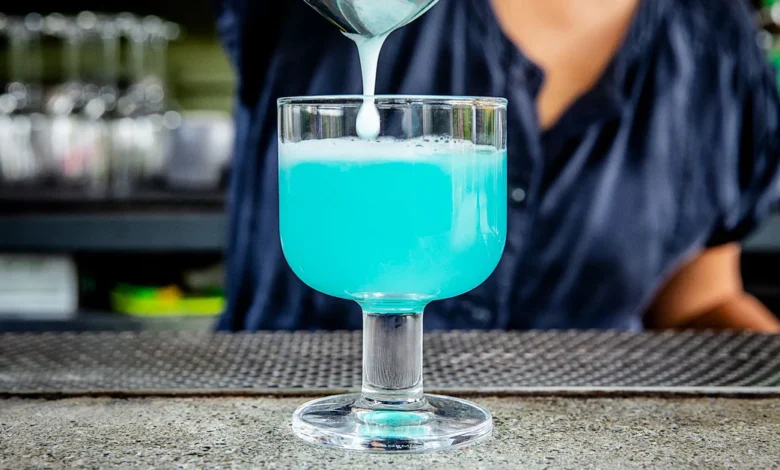
In Los Angeles, the No Smoking Bar has introduced the Incredible Hulk to its menu, signaling a departure from the austere, minimalist cocktail menus that have dominated the city for a decade. Similarly, in Washington, D.C., the Press Club has integrated the liqueur into its offerings. In New York City, the drink has appeared in venues as diverse as Lullaby, where it is served in a sophisticated Nick & Nora glass, and Jean’s, where it was recently served in an Erewhon-branded jar—a move that bridges the gap between early 2000s "trashy" glamour and modern "wellness" luxury.
The resurgence is not limited to the coasts. In Chicago, Kitty’s Cosmopolitan Lounge, a recently opened venue that occupies the footprint of a former nightclub, has made the Incredible Hulk a centerpiece of its menu. According to Kevin Beary, the beverage director and partner at Kitty’s, the decision was a deliberate act of historical preservation. Beary noted that the bar took over a space with a deep nightlife history, and reviving a "club banger" from the previous tenant’s era felt like an appropriate homage to the building’s lineage.
Technical Elevation: From Club Staple to Craft Cocktail
What distinguishes the current revival from the 2003 era is the application of modern mixological techniques to these legacy ingredients. The original Incredible Hulk was often criticized for being overly sweet and lacking balance. Today’s bartenders are applying the "Rescue" treatment to the drink, a term used in the industry to describe the process of taking a maligned historical cocktail and improving it through better ingredients and scientific methods.
At Kitty’s Cosmopolitan Lounge, Beary’s version of the Incredible Hulk is a far cry from the simple two-ingredient pour of the past. While it retains the core of Cognac and Hpnotiq, the recipe is augmented with:
- Clarified Passionfruit Puree: Using a centrifuge or agar-agar clarification to remove solids while retaining the tropical acidity.
- Bianco Vermouth: To add herbal complexity and bridge the gap between the fruit and the spirit.
- Cane Syrup: For a cleaner sweetness than the high-fructose corn syrup often found in older liqueurs.
- Precision Carbonation: The entire mixture is batched and force-carbonated for 48 hours at exactly 32 degrees Fahrenheit.
This "full treatment" results in a drink that honors the visual identity of the original—the neon green color—while offering the clarity, effervescence, and balanced acidity expected by modern cocktail enthusiasts.
Market Implications and Supporting Data
The return of Hpnotiq coincides with a broader trend in the spirits industry: the growth of the "fun" cocktail. According to market research data from IWSR Drinks Market Analysis, there has been a notable uptick in the consumption of liqueurs and cordials as younger demographics, particularly Gen Z and younger Millennials, move away from the "gatekeeping" culture of traditional whiskey and gin bars.
Data from 2023 indicates that the "nostalgia economy" is a primary driver for consumer spending in the hospitality sector. Brands that can evoke a specific sense of time and place—especially the late 90s and early 2000s—are seeing increased engagement on social media platforms like TikTok and Instagram. The visual nature of the Incredible Hulk makes it "Instagrammable," a metric that has become as important to a bar’s success as the taste of the drinks themselves.
Furthermore, Heaven Hill Brands has reportedly leaned into this resurgence by revitalizing their marketing efforts. While they never stopped production, the brand had been largely quiet for a decade. Recent digital campaigns have focused on the "originality" of the blue liqueur, positioning it as a heritage brand for a new generation that wasn’t old enough to drink during its first peak.
Broader Impact on the Hospitality Industry
The "Rescue" movement, which now includes the Incredible Hulk alongside the Espresso Martini and the Appletini, suggests that the cocktail industry is entering a more populist phase. For years, the barrier to entry for a "serious" cocktail bar was a deep knowledge of pre-Prohibition history. The current trend suggests that the industry is becoming more inclusive of different eras of drinking history, even those previously deemed "low-brow."
This shift has several implications for bar owners and beverage directors:
- Menu Diversification: Bars are finding that they can maintain high standards of craft while offering drinks that are accessible and recognizable to a wider audience.
- Visual Branding: The success of the "aquamarine bottle" highlights the importance of color and presentation in the digital age.
- Historical Contextualization: By framing these drinks as "homages" or "revivals," bartenders can educate consumers about the evolution of nightlife culture.
Conclusion: The Future of the Blue Liqueur
Whether Hpnotiq will regain the massive market share it held in 2004 remains to be seen. However, its presence on some of the most influential cocktail menus in the United States suggests that it has moved beyond being a punchline. The revival of the Incredible Hulk serves as a case study in how the hospitality industry can iterate on its own history, taking the colorful, exuberant energy of the past and refining it with the technical precision of the present.
As bars continue to reach for those aquamarine bottles, they are not just serving a drink; they are serving a piece of cultural history, clarified and carbonated for a new era. The "green drink" that once defined the early 2000s club scene has officially transitioned from a relic of the past to a sophisticated tool of the modern bartender, proving that in the world of spirits, everything old—and everything blue—eventually becomes new again.