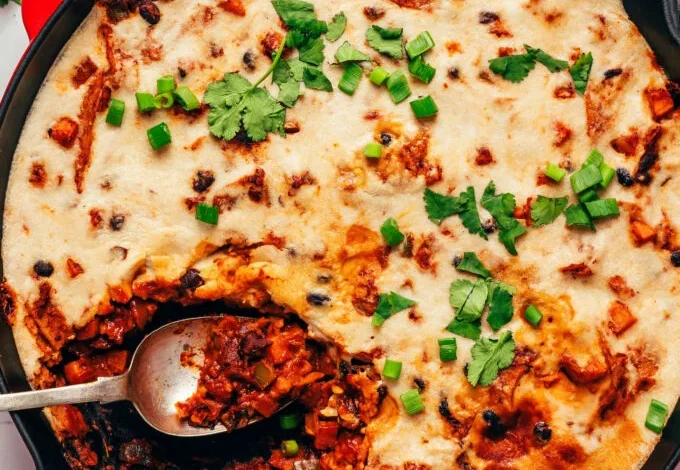
The culinary landscape continues to shift rapidly toward convenient, plant-based meal solutions that minimize cleanup without sacrificing complex flavor profiles. Amid this ongoing shift toward streamlined home cooking, recipe developers and independent food publications are introducing targeted solutions designed to bridge the gap between fast-paced weeknight schedules and traditional comfort food. A prime example of this evolution in modern gastronomy is the newly released recipe for a 30-minute, one-pan Cheesy Vegan Enchilada Skillet, developed to replicate the rich, savory attributes of classic Mexican-inspired comfort fare while significantly reducing preparation complexity.
Main Facts and Culinary Innovation
Traditional enchilada preparation typically involves a multi-stage process: roasting or sautéing fillings, individually stuffing and rolling corn or flour tortillas, arranging them in a baking dish, and blanketing them in sauce and cheese before a lengthy oven bake. The newly introduced enchilada skillet recipe bypasses these labor-intensive steps by restructuring the core components into a cohesive stovetop format.
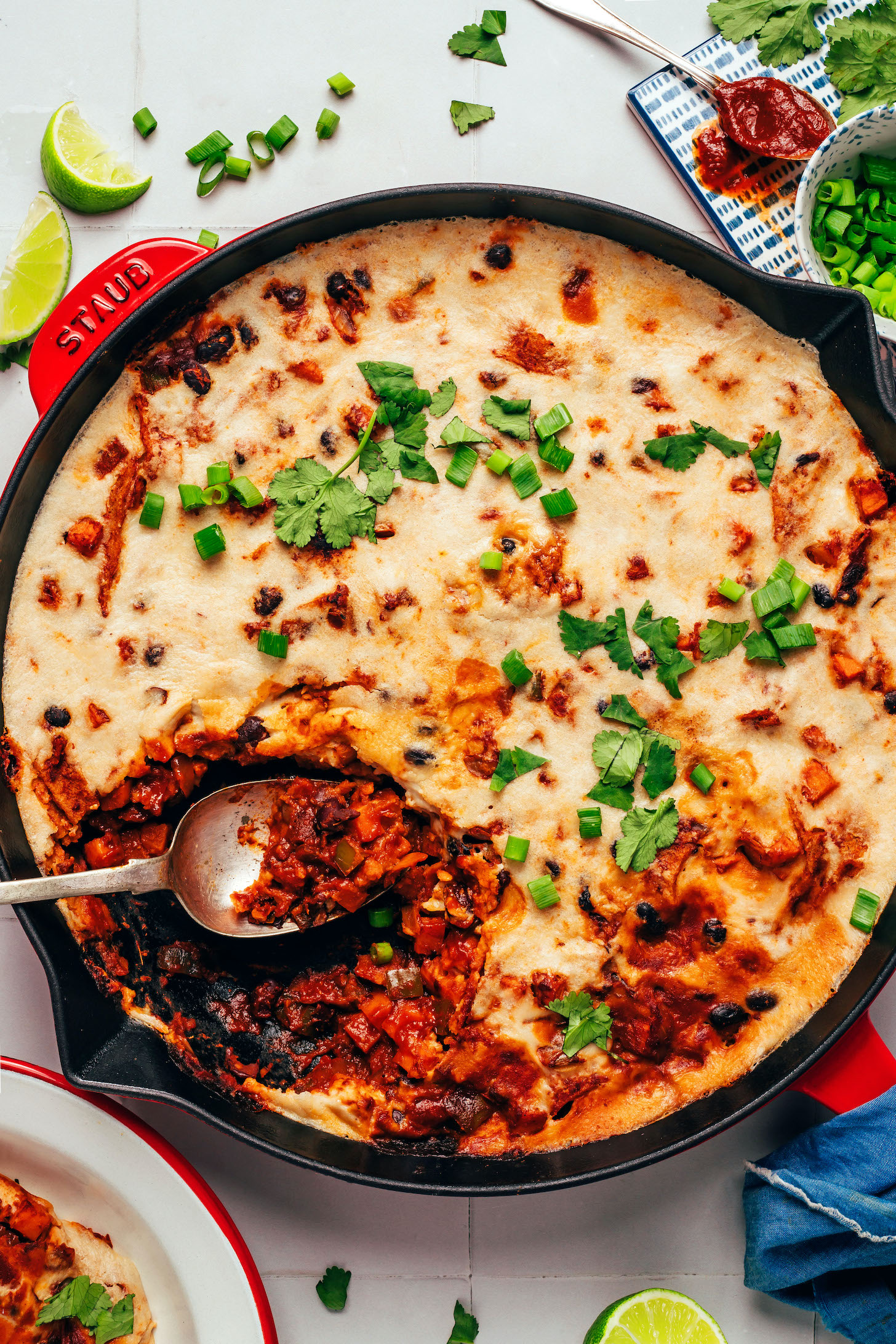
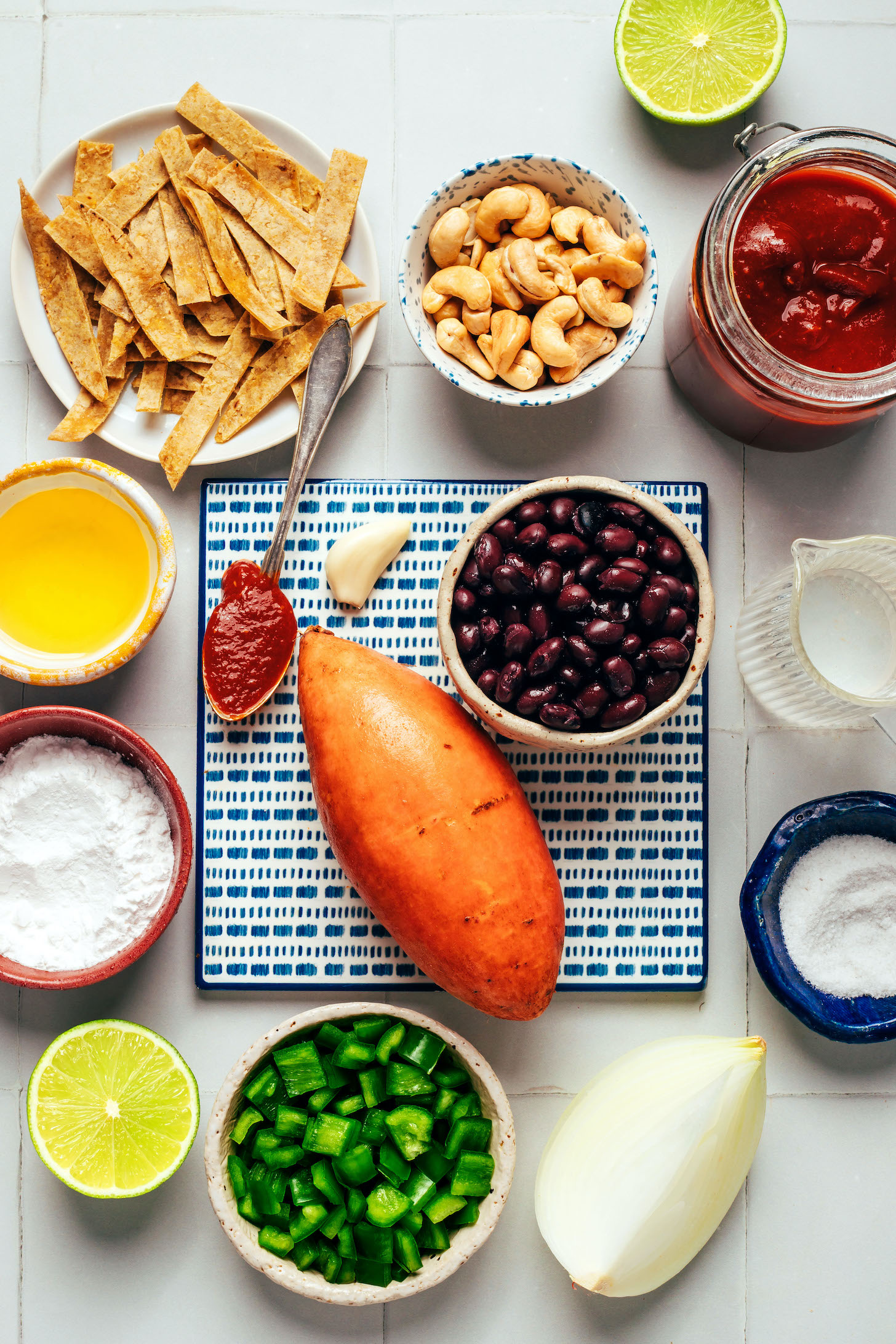
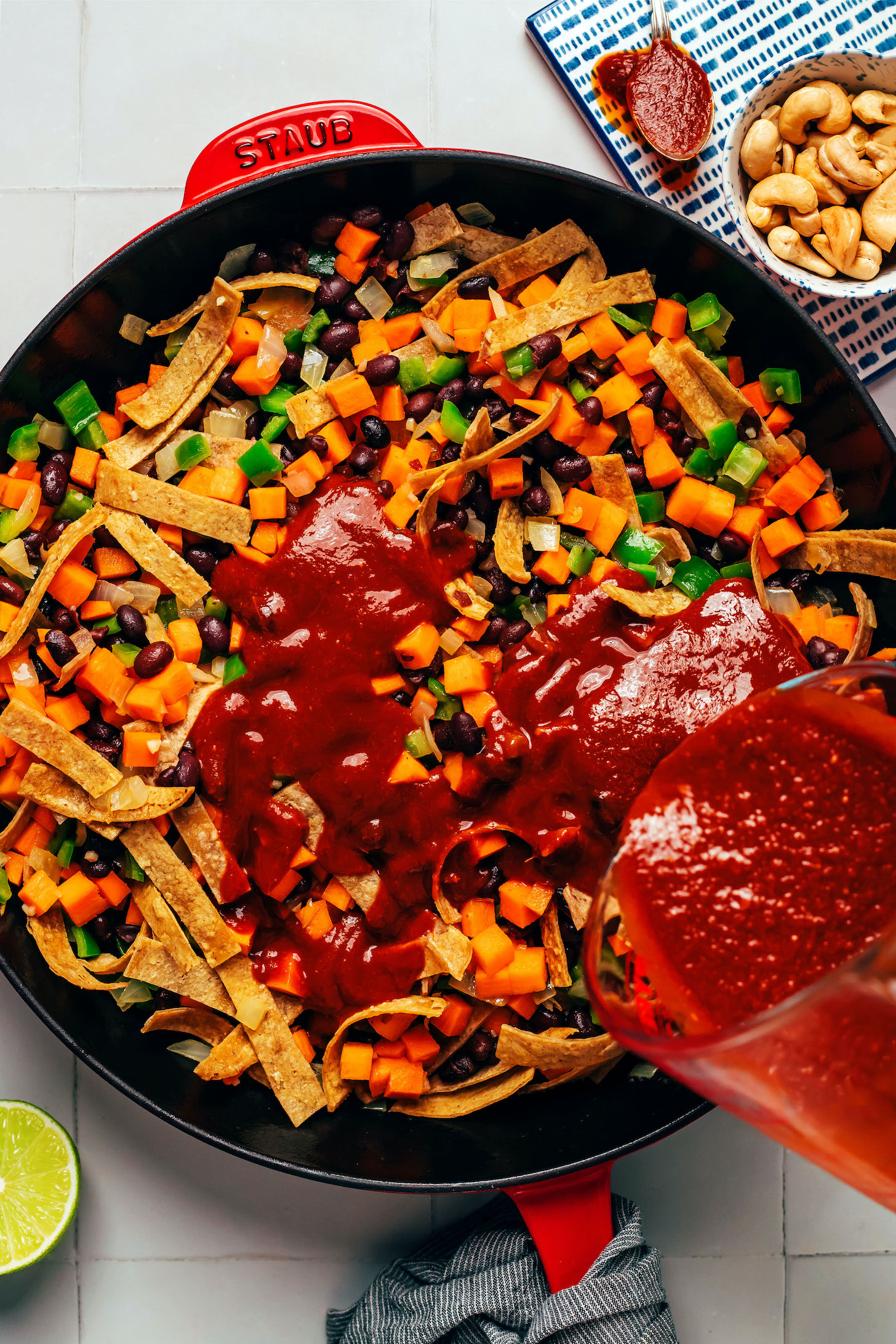
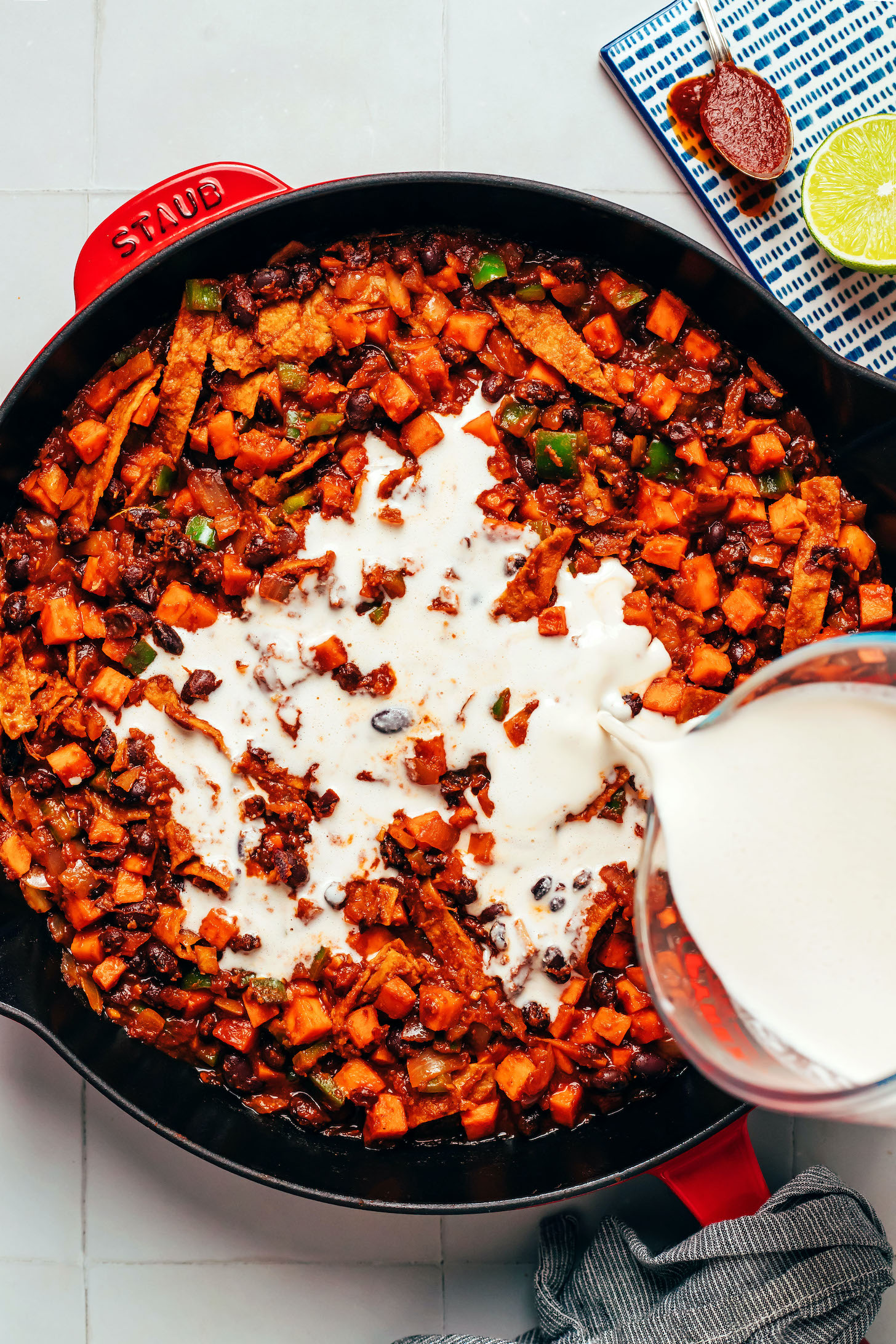
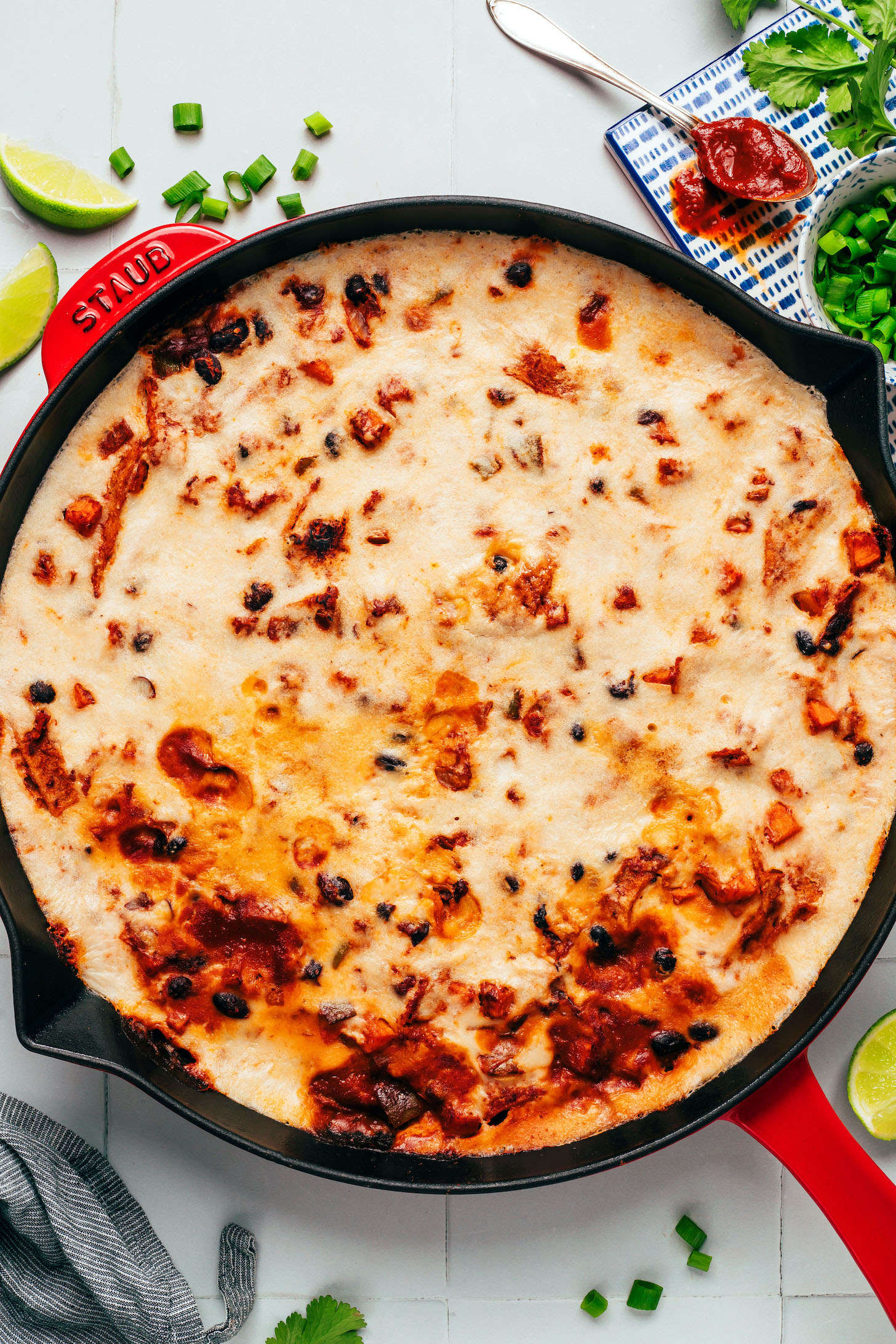
At its foundation, the dish utilizes cubed sweet potatoes or winter squash, fiber- and protein-dense black beans, aromatics such as garlic and onions, and poblano or bell peppers. Instead of rolling the filling, corn tortillas are sliced into strips and simmered directly in the pan alongside a robust red enchilada sauce. To replicate the signature dairy experience, the dish features a specialized, blender-made cashew cheese sauce incorporating water, lime juice, garlic, sea salt, and tapioca starch. When applied over the simmering skillet and covered, the natural properties of the starch react to ambient heat to create a melty, texturally authentic cheese layer entirely free of animal products.
Historical Evolution of the Enchilada
To understand the context of this modern adaptation, culinary historians look back centuries to Mesoamerican roots. Anthropological records indicate that the concept of rolling or folding maize tortillas around other ingredients dates back to Mayan times. Ancient populations near lakes in the Valley of Mexico frequently consumed corn tortillas wrapped around small fish or other available foods.
The first formalized, written documentation of the dish as a distinct recipe appeared much later, notably in the 1831 publication of El Cocinero mexicano (The Mexican Cook), one of the country’s earliest comprehensive cookbooks. Over the ensuing two centuries, regional variations of the enchilada proliferated throughout Mexico and eventually across the United States, incorporating a wide array of fillings—ranging from shredded poultry and beef to potatoes, cheeses, and various chilis—all unified by a characteristic chile-based sauce.
The contemporary skillet adaptation respects this lineage by utilizing foundational elements like corn tortillas, black beans, and traditional peppers, while updating the execution method to align with contemporary nutritional preferences and time constraints.
Chronology of Development and Methodological Breakdown
The formulation of the 30-minute skillet follows a precise, streamlined timeline intended to maximize efficiency in a standard home kitchen. The preparation is broken down into distinct phases:
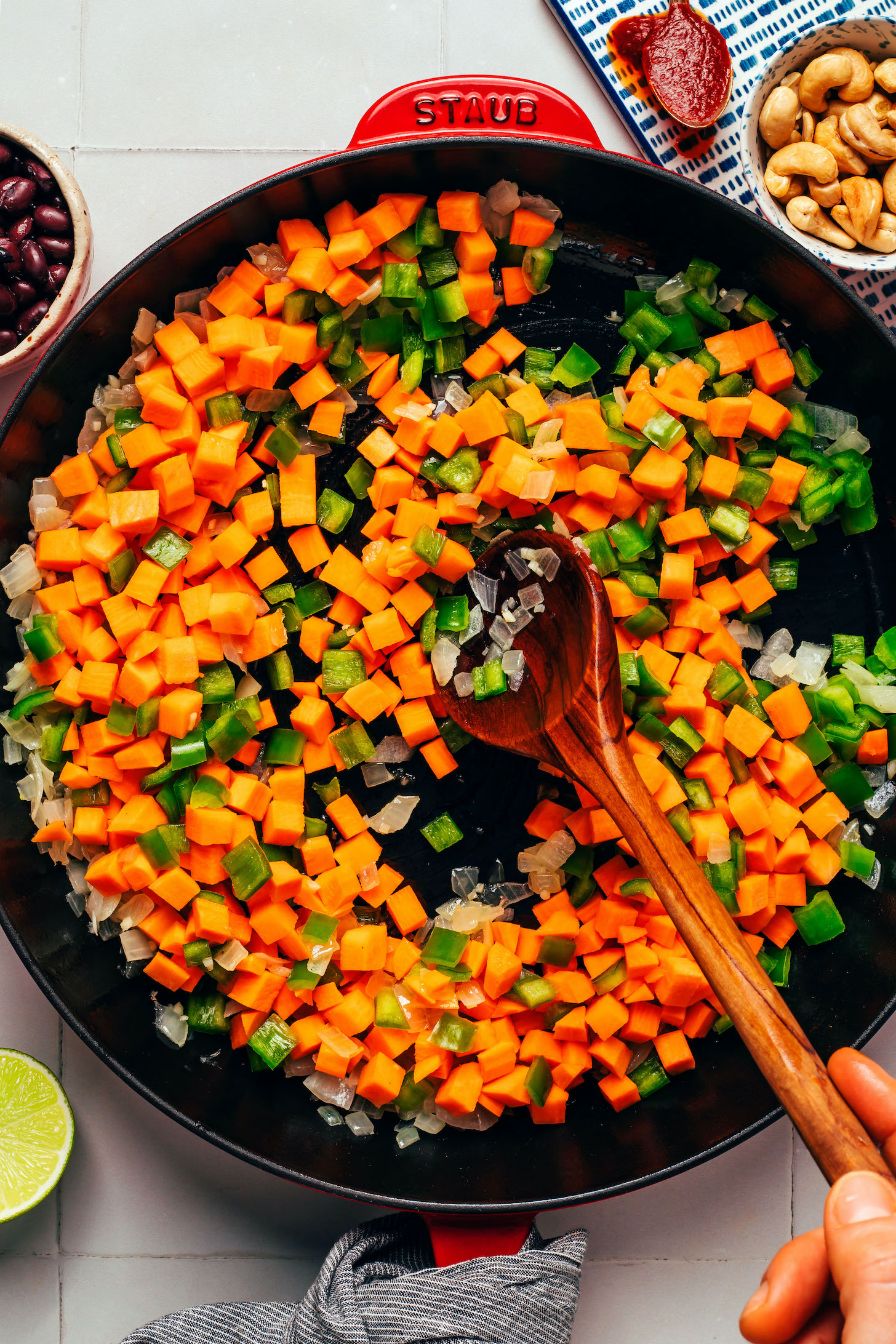
- Preparation and Sautéing (Minutes 1 through 10): The process commences with the fine dicing of root vegetables and aromatics. Sweet potatoes or winter squash are cubed into precise quarter-inch to half-inch dimensions to ensure rapid, uniform cooking. These components, alongside onions and poblano peppers, are sautéed in a single skillet until the onions achieve translucency and the starches begin to soften.
- Integration of Solids and Sauce (Minutes 10 through 20): Rinsed black beans and sliced corn tortillas are folded into the vegetable base. The inclusion of sliced tortillas allows them to soften and absorb the surrounding moisture, serving as a structural element similar to traditional rolled iterations. Red enchilada sauce is then poured over the mixture, bringing the pan to a simmer and uniting the flavor profiles.
- The Emulsion Phase (Simultaneous Preparation): While the skillet ingredients simmer, the cashew-based cheese sauce is blended. Raw cashews are combined with water, fresh lime juice, garlic, sea salt, and tapioca starch. The choice of tapioca starch is critical; unlike traditional thickeners that can become gummy, tapioca yields an elastic, stretchable consistency under heat, closely mimicking melted dairy cheese.
- Final Assembly and Melting (Minutes 20 through 30): The blended cashew mixture is poured evenly across the surface of the simmering skillet. Covering the pan traps the steam, allowing the starch to activate and form a cohesive, bubbling layer. The dish is then partitioned and served directly from the single vessel.
Nutritional and Dietary Data
Nutritional analysis of the standard four-serving recipe reveals a dense profile of micronutrients and macronutrients tailored to dietary health guidelines. Each individual serving contains approximately 416 calories, paired with 68.2 grams of carbohydrates and 13.6 grams of protein.
Of notable dietary significance is the fiber content, which registers at an impressive 14.3 grams per serving, driven largely by the inclusion of black beans, sweet potatoes, and corn tortillas. Total fat is maintained at 12.2 grams, with a minimal saturated fat content of 1.8 grams, primarily derived from the healthy fats naturally present in cashews. Furthermore, the dish is entirely cholesterol-free and contains significant levels of Vitamin A (derived from the sweet potatoes and peppers), potassium, calcium, and iron.
The formulation is inherently gluten-free, provided certified gluten-free corn tortillas are utilized, and satisfies stringent vegan and dairy-free nutritional requirements without relying on heavily processed commercial meat and cheese alternatives.
Industry Reactions and Culinary Adaptability
Food science analysts and lifestyle commentators note that recipes emphasizing single-skillet execution have seen a steady surge in demand across digital culinary platforms. This trend is driven by consumer desire to reduce post-meal cleanup, conserve water and energy resources, and streamline weeknight meal preparation without resorting to highly processed convenience foods.
Culinary experts have also highlighted the adaptability of the baseline recipe. The ingredient profile accommodates seasonal substitutions with minimal alteration to the core technique. For instance, autumn and winter variations frequently substitute sweet potatoes with kabocha or butternut squash, while leafy greens such as kale or spinach can be incorporated to enhance the nutrient density further. For households seeking a higher protein yield, integration parameters allow for the addition of shredded plant-based proteins, such as seasoned tofu taco meat, or traditional animal proteins like pulled chicken, provided adjustments are made to the liquid and salt ratios to maintain optimal sauciness.
Broader Implications for Home Cooking Trends
The proliferation of streamlined, plant-based skillet meals points to a broader transformation in how nutritional guidelines intersect with domestic lifestyle patterns. As work-life balances grow increasingly compressed, consumers routinely seek out recipes that offer the sensory satisfaction and cultural familiarity of traditional comfort foods while accommodating strict time boundaries—in this case, restricting total kitchen time to half an hour.
By demystifying components traditionally perceived as labor-intensive—such as nut-based artisanal sauces and rolled casseroles—dishes of this nature empower home cooks to experiment with scratch-cooking techniques. The successful integration of pantry staples like canned beans and shelf-stable spices further democratizes access to complex, globally inspired flavor profiles, ensuring that healthy, plant-forward eating remains practical and accessible for a broad demographic of consumers.