Defining Regenerative Agriculture: The Complex Debate Over Standards Certification and Corporate Accountability in Sustainable Farming

The global agricultural landscape is currently at a crossroads as policymakers, farmers, and multi-billion-dollar food corporations grapple with a fundamental question: what exactly is regenerative agriculture? As the term moves from the fringes of niche environmentalism into the mainstream boardrooms of the world’s largest food producers, the absence of a standardized, legally enforceable definition has sparked a fierce debate. This conflict centers on whether the movement should be defined by the specific practices farmers implement on the ground or by the measurable environmental outcomes those practices achieve. At stake is not only the integrity of the "regenerative" label but also the future of global food security, soil health, and the trillion-dollar carbon sequestration market.
The Philosophical Divide: Practice Versus Outcome
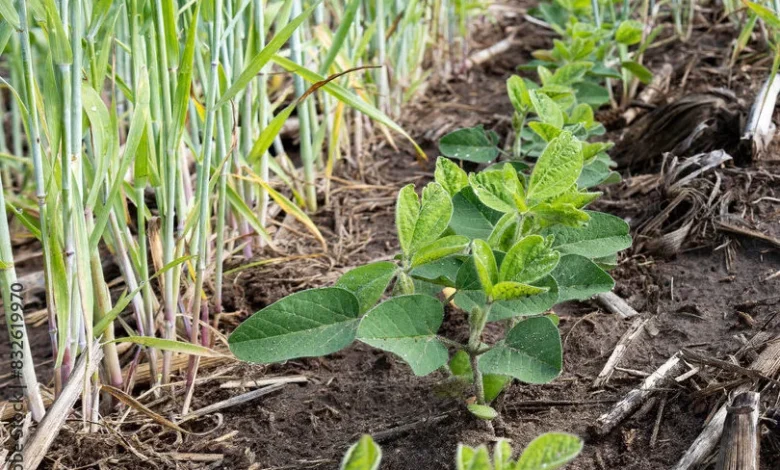
At the heart of the standardizing effort is a dichotomy that divides agricultural experts. On one side are proponents of a practice-based approach, which defines regenerative agriculture through a set of specific farming techniques. These typically include no-till farming, the use of diverse cover crops, integrated livestock management, and the elimination of synthetic fertilizers and pesticides. On the other side are those who advocate for an outcome-based approach, where a farm is deemed regenerative only if it can prove specific environmental gains, such as increased soil organic matter, enhanced biodiversity, or quantifiable carbon sequestration.
Charlotte Vallaeys, an organic expert and independent agriculture consultant who advises companies on sustainability frameworks, argues that the focus must remain on the "how" rather than the "how much." According to Vallaeys, if regenerative practices are implemented correctly and adapted to local climates, positive outcomes will naturally follow. She contends that a definition focused on outcomes—particularly carbon sequestration metrics—risks burdening farmers with impossible administrative and scientific hurdles.
"When writing a standard, it’s much easier for an inspector to verify if a farm has correctly implemented a certain practice, rather than measure an outcome," Vallaeys noted. She warned that an outcome-based mandate would essentially require every participating farm to function as a scientific research site, requiring expensive soil testing, baseline data collection, and ongoing monitoring that many small-scale producers cannot afford.
The Shadow of the USDA Organic Standard
The debate over regenerative agriculture does not exist in a vacuum. It is deeply informed by the history of the USDA Organic label, a certification that took over a decade to standardize and implement following the Organic Foods Production Act of 1990. Today, the organic label is a rigorously verified standard that prohibits most synthetic inputs and requires strict adherence to livestock and land management rules.
Industry analysts, including Vallaeys and Kendra Klein, a senior staff scientist at Friends of the Earth, point out a growing disconnect in the marketplace. While "organic" is a legally protected term with independent auditing and clear compliance requirements, "regenerative" remains largely unregulated. This lack of rigidity is precisely why many large-scale agri-corporations have gravitated toward the term. By using "regenerative" in their marketing, companies can appeal to environmentally conscious consumers without facing the same level of scrutiny or the high costs associated with organic certification.
"Organic is a deeply meaningful regenerative food label," Klein noted, suggesting that the industry’s pivot toward regenerative branding is often an attempt to bypass the strictures of the organic standard. The concern among advocates is that without a formal definition, the term "regenerative" will succumb to "greenwashing," where the word is used to mask business-as-usual industrial farming practices.
Chronology of Standardization Efforts
The movement to define regenerative agriculture has accelerated significantly over the last five years, moving from academic discourse to legislative action.
- 2017-2018: The Regenerative Organic Alliance (ROA), led by the Rodale Institute, Patagonia Provisions, and Dr. Bronner’s, launched the Regenerative Organic Certified (ROC) standard. This was the first major attempt to create a high-bar certification that added soil health and social fairness requirements on top of existing USDA Organic standards.
- 2020-2022: Major food conglomerates, including General Mills, PepsiCo, and Nestlé, announced massive "regenerative agriculture" targets, promising to transition millions of acres of farmland to regenerative practices by 2030. However, each company utilized its own internal definition.
- 2023: The state of California, a global leader in agricultural policy, initiated a formal two-year public process to create a legal definition of regenerative agriculture for the state’s regulatory purposes.
- 2024: The California Department of Food and Agriculture (CDFA) completed its public-listening sessions, which included input from hundreds of stakeholders. The resulting definition was intentionally broad, focusing on holistic management rather than strict accountability mechanisms, drawing both praise for its inclusivity and criticism for its lack of teeth.
Supporting Data and the Economic Stakes
The push for standardization is driven by significant economic projections. According to a report by the Soil Health Institute, adopting regenerative practices can increase net income for farmers by an average of $37 per acre for corn and $51 per acre for soybeans, primarily through reduced input costs for fertilizers and fuel.
Furthermore, the voluntary carbon market, where farmers sell "carbon credits" for the CO2 sequestered in their soil, is projected to reach $50 billion by 2030. Without a standardized definition of what constitutes a regenerative practice, the verification of these credits remains scientifically contentious. Current data suggests that soil carbon sequestration varies wildly based on soil type, moisture levels, and depth of sampling, making "outcome-based" metrics difficult to standardize across different geographic regions.
A 2023 study published in Nature highlighted that while cover cropping can increase soil organic carbon by 0.16 to 0.37 megagrams per hectare per year, these gains can be reversed in a single season of intensive plowing. This underscores the argument that practices (like permanent no-till) are more reliable indicators of long-term health than a snapshot measurement of carbon.
Official Responses and Stakeholder Perspectives
The reaction to the broadening of the regenerative definition is mixed. Phil Kane of Mad Agriculture, an organization that helps farmers transition to regenerative systems, views the term more as a "framing" or a philosophy than a rigid checklist. Kane argues that any shift toward restoration and harm reduction is a positive step.
"It’s really about doing better, reducing harm, and looking towards restoration as a valid goal within agricultural systems," Kane said. He suggests that the "big tent" approach—allowing the definition to remain broad—encourages more conventional farmers to begin the transition without fearing immediate disqualification.
However, critics argue that a broad definition allows industrial factory farms to co-opt the movement. If a massive monoculture operation uses cover crops but continues to apply heavy amounts of glyphosate and synthetic nitrogen, should it be allowed to label its products as "regenerative"? Under many current corporate definitions, the answer is yes, whereas under the ROC (Regenerative Organic Certified) standard, the answer is a firm no.
Broader Impact and Policy Implications
As the United States prepares for shifts in federal agricultural policy, the debate over regenerative standards is expected to take center stage in the next Farm Bill. There is a growing sentiment among small-scale producers and environmental advocates that the federal government—specifically under a potential Trump administration or any future executive branch—should focus less on semantic definitions and more on the regulation of large agri-corporations.
The argument posits that the most effective way to support regenerative agriculture is to level the playing field. This would involve stricter enforcement of antitrust laws to prevent corporate consolidation and more robust regulation of factory farms (Concentrated Animal Feeding Operations, or CAFOs). By internalizing the environmental costs of industrial farming—such as water pollution from manure runoff and greenhouse gas emissions—regenerative farms, which naturally mitigate these issues, would become more economically competitive.
Furthermore, if the federal government invests heavily in a national "regenerative" certification, it risks duplicating the efforts of the USDA Organic program or, worse, diluting it. Many experts believe that funding would be better spent on technical assistance for farmers and infrastructure for local food systems, rather than an arduous 10-year bureaucratic process to define a term that is inherently site-specific.
Conclusion: The Path Forward
The quest to define regenerative agriculture reveals a deeper struggle over the future of the food system. While a practice-based approach offers a pragmatic path for inspection and verification, an outcome-based approach promises the scientific rigor needed for climate mitigation claims.
The California model suggests that government-led definitions may lean toward inclusivity and breadth, potentially leaving the door open for corporate co-option. For consumers, the takeaway remains complex: while "regenerative" signifies a hopeful shift toward soil restoration, the lack of a standardized seal means that "USDA Organic" remains the only federally backed and audited guarantee of sustainable practices currently available on the shelf. As the movement matures, the challenge will be to maintain the "rigor" that proponents like Kane and Vallaeys call for, ensuring that regenerative agriculture remains a tool for genuine ecological restoration rather than just another marketing buzzword.
Related posts: