From an Appletini made with green Chartreuse and Suze to a frozen Pornstar Martini, here are six retro cocktails, revamped for the modern drinker.

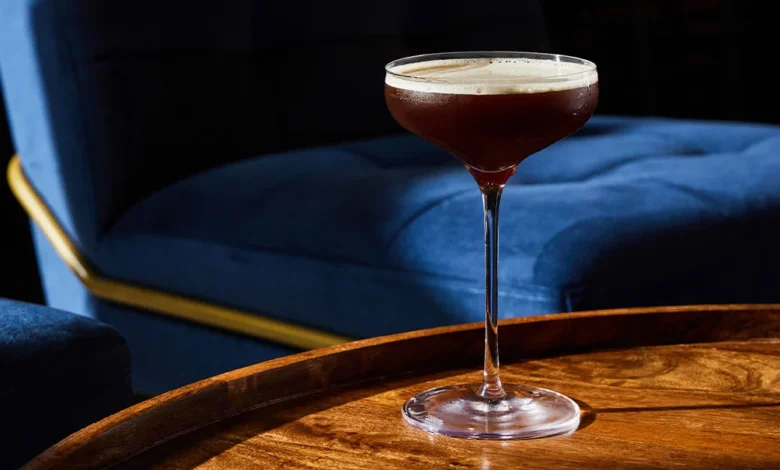
The cultural resurgence of the 1990s and early 2000s has transcended fashion and music, firmly establishing a foothold in the global hospitality industry. Over the past several years, the cocktail world has witnessed a curious and rapid rehabilitation of what were once considered the “dark ages” of mixology. The “tini” suffix, long synonymous with cloying sweetness, neon hues, and a reliance on low-quality, artificial mixers, is no longer a pejorative term. Instead, it has become a canvas for contemporary bartenders to apply high-end techniques, seasonal ingredients, and a rigorous focus on balance.
This trend did not emerge in a vacuum. It was propelled by the unprecedented global success of the Espresso Martini, which acted as a Trojan horse, reintroducing the public to the ritual of the chilled, coupe-served cocktail. Today, the once-maligned classics of the turn-of-the-millennium bar scene are undergoing a sophisticated transformation, moving from kitschy nostalgia pieces to legitimate staples of the modern, elevated beverage program.
The Evolution of the 1990s Cocktail Revival
The revival of these drinks is rooted in a fundamental shift in how bartenders approach ingredients. In the 1990s, the "clubstaurant" era was characterized by speed and convenience. Syrups were frequently high-fructose, juices were canned, and spirits were often mass-produced, neutral vodka brands. The modern iteration, by contrast, relies on fresh-pressed juices, house-made tinctures, clarified liquids, and premium, craft-distilled spirits.

According to industry data, the surge in popularity for these drinks is partially driven by a consumer desire for familiarity paired with high-quality execution. The psychology of this trend is straightforward: patrons are seeking the comfort of drinks they recognize from their formative years, but they possess a more sophisticated palate than they did two decades ago.
The Espresso Martini: The Catalyst for Change
The current mania surrounding the Espresso Martini serves as the primary case study for this phenomenon. Originally conceived in the 1980s by British bartender Dick Bradsell—then known as the "Vodka Espresso"—the drink was designed to provide a caffeine-fueled pick-me-up for a tired model. Its transition into the "Espresso Martini" moniker was met with initial resistance from purists, who argued that a cocktail containing no vermouth or gin could not technically be a Martini.

Despite these semantic debates, the drink became a global phenomenon. Its ubiquity today has reached such a scale that it has sparked a sub-genre of experimentation. From coconut-water-washed cold brews to controversial iterations involving Parmesan cheese, the Espresso Martini has demonstrated that a classic, even a modern one, is robust enough to withstand endless innovation. The drink’s success proved to bar operators that there is significant profit and public interest in cocktails that are approachable, caffeinated, and aesthetically pleasing in a coupe glass.
The French Martini and the Rise of Fruit-Forward Classics
If the Espresso Martini was the engine of the revival, the French Martini provided the blueprint for fruit-forward success. Debuted in 1996 by the "godfather of the modern cocktail revival," Dale DeGroff, at New York City’s Pravda, the drink was a calculated effort to elevate the vodka-and-fruit-juice profile. When it subsequently appeared on the menu at Balthazar, it gained cultural cachet.

The French Martini is a study in simplicity: vodka, pineapple juice, and Chambord (a black raspberry liqueur). In its original context, it was an antidote to the overly complicated and often poorly made cocktails of the era. Today, it is seeing a resurgence as bartenders revisit the ratio of sweet to tart. The modern versions often emphasize fresh pineapple juice—eschewing the canned varieties that previously defined the drink—and utilize higher-proof, artisanal vodkas or even gin to add complexity.
The Pornstar Martini: A Global Phenomenon
Perhaps no drink better represents the provocative nature of the 2000s cocktail scene than the Pornstar Martini. Created by the late Douglas Ankrah at London’s Townhouse in 2003, the drink is an unapologetic sensory experience. Comprising vanilla-flavored vodka, passion fruit purée, and a shot of chilled Champagne on the side, it was designed to command attention.

Data from 2021 underscored the sheer scale of the drink’s popularity, with search volume statistics revealing it as the most searched-for cocktail globally, significantly outpacing traditional favorites like the Piña Colada. This level of interest has forced the industry to take the drink seriously. Modern riffs include frozen renditions, sparkling variations, and even elevated pairings, such as the widely discussed "caviar bump" served alongside the cocktail at upscale venues.
The Lychee and Appletini: From Derision to Sophistication
The Lychee Martini and the Appletini occupy a unique place in the canon of "forgotten" drinks. In the 1990s, the Lychee Martini was a staple of "Asian fusion" menus, often criticized for its reliance on canned lychee syrup and cheap, abrasive vodka. In recent years, however, the drink has been reclaimed by a new generation of Asian-American bartenders who are infusing it with cultural nuance. By incorporating ingredients like jasmine, Vietnamese gin, and savory elements like fish sauce, these bartenders have transformed a shorthand for "dark-age" drinking into a complex, nuanced beverage.

The Appletini, once the quintessential drink of the high-fructose era, has seen a similar trajectory. Its origin at the now-defunct Lola’s in West Hollywood serves as a reminder of a time when the color of a drink was often more important than its flavor profile. Today, the challenge of the Appletini is to retain its signature neon aesthetic while discarding the artificial flavoring. Techniques like clarification—removing the solids from apple juice to create a crystal-clear, intense concentrate—have allowed the Appletini to be taken seriously by the craft cocktail community.
The Bikini Martini and the Future of Retro-Classics
The Bikini Martini, which once relied heavily on the ubiquity of artificial coconut-flavored rums, represents the final frontier of this trend. Its recent revival at establishments like New York City’s Madeline’s Martini highlights the potential for "retooling" forgotten recipes. By utilizing fat-washed coconut rum, house-made grenadine, and fresh-pressed pineapple juice, modern bartenders have turned a relic of the "Parrot Bay" era into a balanced, sophisticated tropical cocktail.

Implications for the Hospitality Industry
The implications of this revival are significant for the broader beverage industry. First, it signifies a maturation of the cocktail culture; the industry has moved past the need to strictly categorize drinks as "serious" or "kitsch." By treating these retro drinks with the same technical rigor applied to a Negroni or an Old Fashioned, bartenders are demonstrating that the quality of the drink lies in the execution, not the heritage of the recipe.
Second, this trend highlights the cyclical nature of consumer demand. As the market becomes saturated with complex, spirit-forward cocktails that require long preparation times and obscure ingredients, there is a natural gravitation toward drinks that offer immediate, recognizable pleasure. The revival of these six cocktails proves that "retro" is not merely a nostalgia play; it is a viable, profitable, and creative avenue for the future of the bar industry.

As these cocktails continue to evolve, the focus will likely remain on refining the ingredients while maintaining the core identity that made them popular in the first place. The modern drinker, it seems, wants the best of both worlds: the playful, accessible flavors of the past, delivered with the high-quality, artisanal standards of the present.