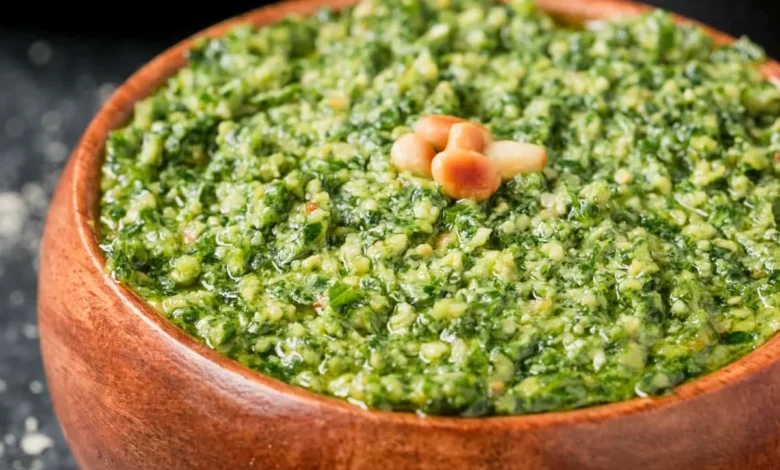
The Evolution of Pesto in Modern Dietetics
Pesto alla Genovese, the traditional preparation, relies heavily on fresh basil, pine nuts, garlic, hard cheese—typically Parmigiano-Reggiano or Pecorino—and olive oil. The emergence of the Vegan Kale Pesto variant is not merely a dietary substitution but a response to the increasing demand for "superfood" integration. Kale, a member of the Brassica oleracea family, is widely recognized by nutritionists for its high concentration of vitamins A, K, and C, as well as essential minerals such as calcium and potassium.

By substituting basil with kale, chefs and home cooks are able to increase the nutritional density of their meals while maintaining the aromatic profile of a classic sauce. The substitution of dairy-based cheese with nutritional yeast—a deactivated yeast product rich in B-vitamins—has become a staple technique in vegan culinary arts, providing the necessary umami flavor profile that traditional cheeses previously offered.

Chronology of Preparation and Implementation
The preparation process for Vegan Kale Pesto is designed for high-efficiency environments. Based on standard culinary methodology, the sequence of operations is as follows:

- Preparation of Aromatics: The process begins with the maceration of garlic cloves in fresh lemon juice. This step is critical; the acidity of the lemon neutralizes the harsh, sulfurous bite of raw garlic, mellowing the flavor profile while acting as a preservative for the vibrant green color of the kale.
- Toast and Temper: Pine nuts (or alternative seeds like walnuts or sunflower seeds) are lightly toasted in a pan. This step is essential to release the natural oils, which contribute to the sauce’s characteristic nutty depth.
- Mechanical Emulsification: Using a high-speed food processor, the kale leaves, toasted nuts, and garlic-lemon mixture are pulsed into a coarse paste.
- Final Emulsion: The final phase involves the slow, steady addition of high-quality extra-virgin olive oil. This creates a stable emulsion, ensuring the sauce achieves a uniform, velvety texture that adheres well to pasta or spreads effectively on bread.
Supporting Nutritional Data
From a caloric and nutritional standpoint, this dish serves as a balanced component of a meal. A standard serving of Vegan Kale Pesto contains approximately 183 kcal. The macronutrient profile typically includes 6g of carbohydrates, 4g of protein, and 17g of fats, primarily derived from monounsaturated sources like olive oil and nuts.

Data from recent market research indicates that plant-based sauces are growing at a compound annual growth rate (CAGR) of nearly 8% in the food industry. This growth is attributed to the "10-minute" preparation window, which aligns with current consumer trends favoring "quick-scratch" cooking—a method where home cooks prepare high-quality meals from scratch using minimal time and equipment.

Culinary Applications and Industry Implications
The culinary utility of kale pesto extends beyond the traditional association with pasta. Food industry analysts observe that such pestos are increasingly utilized as functional spreads. Due to its dense consistency, it is highly effective on toasted ciabatta, as a base layer for vegan pizza, or as a finishing element for roasted root vegetables.

Professional chefs have noted that the bitter profile of kale makes it an excellent pairing for sweet or acidic ingredients, such as sun-dried tomatoes or balsamic glazes. This versatility has led to its inclusion in high-end plant-based menus, where the goal is to replicate the mouthfeel of traditional Italian staples without the reliance on animal-derived fats.

Storage, Preservation, and Food Safety
As a fresh, unpasteurized condiment, Vegan Kale Pesto requires careful storage protocols. The high oil content and raw nature of the ingredients make it susceptible to oxidation, which can lead to browning and flavor degradation.

- Refrigeration: When stored in an airtight, sterilized glass container, the pesto maintains its integrity for approximately seven days. It is recommended to pour a thin layer of olive oil over the surface before closing the lid to create a barrier against air, thereby preventing oxidation.
- Freezing: For long-term storage, the mixture is highly stable in the freezer. Culinary experts recommend using ice cube trays to portion the pesto into single-serve blocks. Once frozen, these blocks can be transferred to a freezer-safe bag, where they will remain viable for up to three months. This method allows for immediate access to fresh-tasting sauce for future meals, reducing food waste and supporting batch-cooking habits.
Economic and Environmental Impact
The shift toward kale-based pestos also carries environmental implications. Kale is a hardy crop that is frequently grown in local temperate climates, reducing the carbon footprint associated with the long-distance transport of more delicate herbs like basil. Furthermore, by utilizing the stems and leaves of the kale plant, cooks are participating in a "zero-waste" culinary movement, utilizing parts of the vegetable that are often discarded in other recipes.

From an economic perspective, the ingredients—kale, nutritional yeast, and standard nuts—are generally more accessible and cost-effective than the pine nuts and aged cheeses required for traditional recipes. This accessibility democratizes high-quality, plant-based cooking, allowing for a broader demographic to engage in gourmet-style preparation within their own homes.

Conclusion
Vegan Kale Pesto represents a successful intersection of nutritional necessity and culinary tradition. By leveraging the specific textures and flavor profiles of kale, garlic, and nutritional yeast, the recipe provides a robust, flavorful, and convenient solution for modern home cooks. As the demand for plant-based alternatives continues to climb, preparations that focus on fresh, whole-food ingredients will likely remain at the forefront of the culinary landscape. The simplicity of the process, coupled with the nutritional benefits and long-term storage viability, positions this recipe as a staple for both the casual home cook and the health-conscious professional.