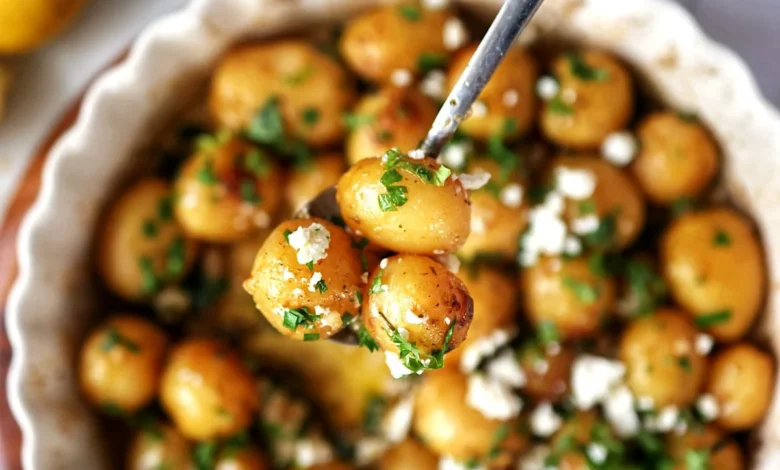
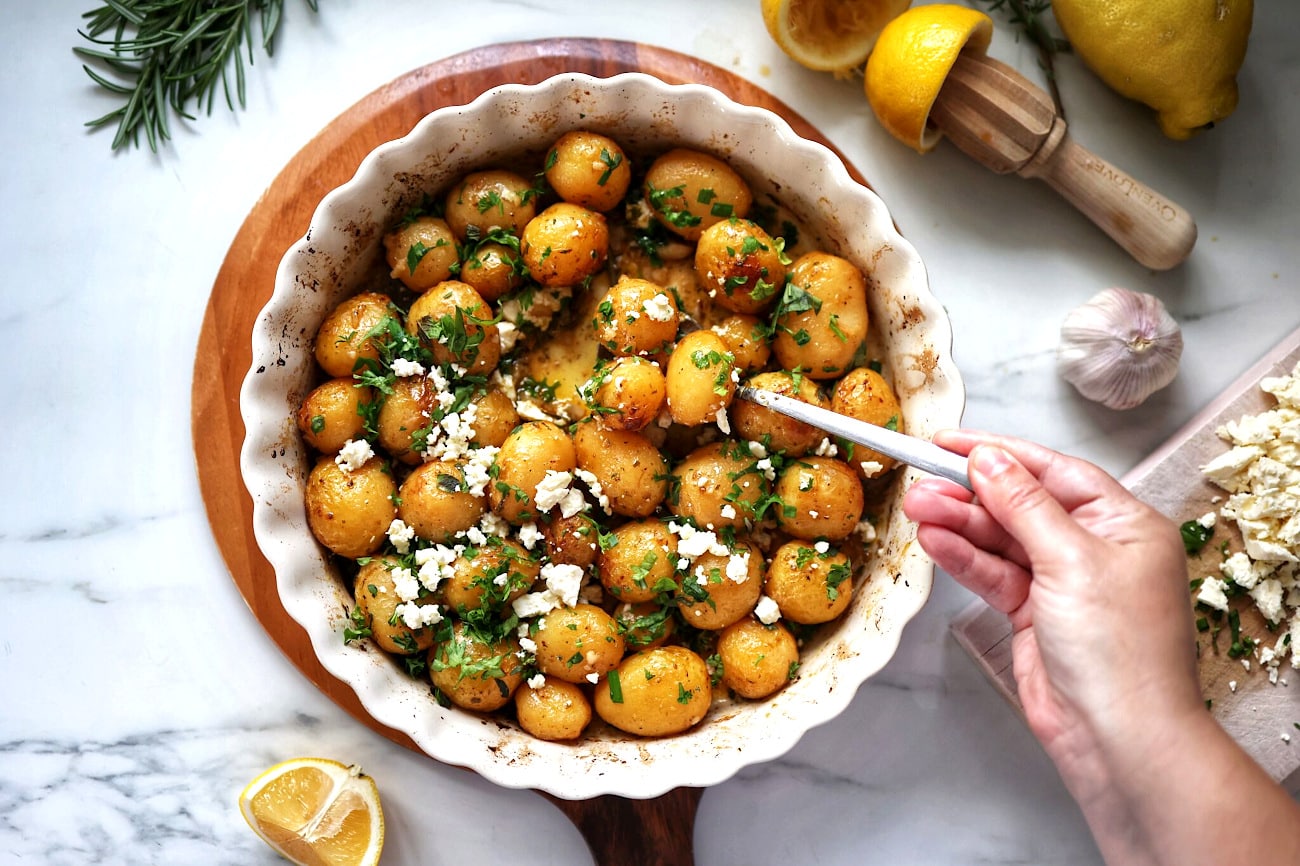
The global culinary landscape continues to experience a sustained surge in the popularity of Mediterranean gastronomy, with traditional comfort foods finding new prominence in contemporary home kitchens. Among the enduring staples of this culinary tradition, Greek-style roasted potatoes have long held a position of reverence. A newly popularized variation of this classic dish—featuring whole baby potatoes roasted with high-grade olive oil, freshly squeezed lemon juice, crushed garlic, and regional herbs, subsequently elevated with a finishing layer of crumbled feta cheese and fresh parsley—is capturing the attention of culinary enthusiasts and professional chefs alike. Developed by food writer and recipe innovator Elena-Greta Apostol, this refined iteration bridges the gap between rustic Mediterranean heritage and modern culinary preferences for vibrant, textural contrasts in everyday cooking.
Background and Cultural Context of Greek Potato Cookery
To understand the significance of this contemporary recipe, one must examine the historical role of the potato within Greek cuisine. While the potato is not native to the Mediterranean—having been introduced to Greece in the early 19th century by Ioannis Kapodistrias, the first governor of independent Greece—it quickly became a foundational element of domestic cooking. Legend holds that Kapodistrias initially struggled to convince skeptical citizens to cultivate the tubers until he ordered them placed under guard in public view, prompting locals to steal them and realize their agricultural and nutritional value.
In traditional Greek households, potatoes are rarely treated as a mere side dish; they are frequently elevated through slow-roasting methods that allow them to absorb copious amounts of olive oil, lemon, stock, and oregano. This technique, known traditionally as patates sto fourno, yields a distinct textural profile where the edges of the potato caramelize and crisp, while the interior achieves a custard-like tenderness. Apostol’s modern adaptation builds upon these foundational techniques by utilizing whole baby potatoes, which eliminate the need for chopping while maximizing the surface area-to-volume ratio for optimal crisping. Furthermore, the deliberate integration of fresh feta cheese—a staple Protected Designation of Origin (PDO) product of Greece—introduces a complex saline tang that cuts through the rich olive oil and brightens the citrus notes.
Recipe Anatomy, Specifications, and Preparation Methodology
The published recipe is tailored for standard domestic preparation, requiring a total time of one hour and ten minutes, split into ten minutes of active preparation and one hour of roasting time. Designed to yield four servings, the dish relies on a precise balance of lipids, acids, and aromatics.
The preparation begins with the selection of uniform, small-sized baby potatoes to ensure even cooking throughout the roasting process. Unlike larger russet or Yukon Gold varieties that typically require peeling and cubing, baby potatoes are kept whole, retaining their nutrient-dense skins which contribute both dietary fiber and a rustic textural bite. The potatoes are tossed thoroughly in extra virgin olive oil—a cornerstone of the Mediterranean diet, valued not only for its robust flavor profile but also for its high concentration of monounsaturated fatty acids and polyphenols.
The flavor architecture relies heavily on the dual action of fresh lemon juice and minced garlic. The acidity of the citrus breaks down the outer starches of the potato during the initial stages of heat exposure, facilitating the absorption of the aromatic compounds. Concurrently, a specialized Mediterranean seasoning blend—comprising dried oregano, thyme, sea salt, and cracked black pepper—infuses the lipid base. As the roasting cycle progresses, the high ambient heat of the oven induces the Maillard reaction on the exterior skin of the potatoes, creating a golden crust while the interior starches gelatinize into a creamy consistency.
Upon removal from the heat source, the dish receives its signature finishing touches: a scattering of finely chopped flat-leaf parsley and a generous topping of crumbled sheep or goat’s milk feta cheese. The residual heat from the freshly roasted potatoes gently softens the feta without completely melting it, preserving its crumbly texture and sharp, briny flavor profile.
Nutritional Implications and the Mediterranean Diet Model
From a nutritional perspective, this preparation aligns closely with the dietary frameworks championed by public health organizations studying longevity and chronic disease prevention in the Mediterranean basin. The Mediterranean diet, recognized by UNESCO as an Intangible Cultural Heritage of Humanity, emphasizes the consumption of plant-based foods, healthy fats, and minimal processed ingredients.
Potatoes, often maligned in contemporary low-carbohydrate diet trends, are a nutrient-dense source of complex carbohydrates, potassium, Vitamin C, and Vitamin B6. When prepared with extra virgin olive oil rather than saturated animal fats, the dish provides a favorable lipid profile. Olive oil is rich in oleic acid, which has been associated with reduced markers of systemic inflammation and cardiovascular protection. Additionally, the inclusion of fermented dairy in the form of feta cheese introduces bioactive peptides and probiotics, while contributing essential calcium and protein to the meal.
Dietitians and culinary nutritionists note that dishes like lemon-herb roasted potatoes serve as an effective gateway for increasing vegetable and whole-food consumption. By pairing carbohydrate-dense roots with the high-antioxidant properties of fresh garlic, lemons, and herbs, home cooks can achieve a satiating side dish that satisfies both sensory and nutritional demands.
Gastronomic Pairing and Culinary Versatility

The culinary appeal of Apostol’s recipe lies significantly in its versatility across various protein and vegetarian main courses. Traditionally, Greek lemon potatoes are served alongside heavy celebratory meats such as slow-roasted leg of lamb or whole-roasted suckling pig. However, the brightness imparted by the lemon juice and fresh herbs renders this particular iteration adaptable to a wider array of proteins.
Culinary pairing recommendations suggest serving the potatoes alongside grilled chicken thigh skewers marinated in yogurt and garlic, baked sea bream or branzino accompanied by homemade tzatziki, or pan-seared lamb chops. For vegetarian diners, the inclusion of feta cheese elevates the dish from a simple side to a satisfying vegetarian main course, particularly when paired with a robust horiatiki (traditional Greek salad) dressed simply with olive oil and red wine vinegar.
Industry Response and the Evolution of Food Blogging
The dissemination of recipes such as Greek roasted baby potatoes with lemon and feta reflects a broader transformation in how culinary knowledge is created, shared, and consumed globally. Food blogging platforms have largely replaced traditional print media as the primary source of daily recipe inspiration for home cooks. Creators like Elena-Greta Apostol—who transitioned from a successful career in corporate advertising to full-time food content creation—utilize digital ecosystems to document regional heritage recipes while adapting them for accessible, modern home cooking.
Food industry analysts observe that modern recipe consumers increasingly demand transparency, cultural context, and visual fidelity in online cooking content. Articles that bridge personal narrative with precise technical instructions tend to garner higher engagement, fostering a sense of community among readers who share their culinary attempts through comment sections and social media channels. This participatory culture ensures that regional specialties, such as specialized Mediterranean potato preparations, continue to evolve while retaining their core traditional identities.
Broader Economic and Agricultural Implications
The global appetite for Mediterranean ingredients—including extra virgin olive oil, Greek oregano, and authentic feta cheese—carries tangible economic impacts for agricultural producers in Southern Europe. Greece remains one of the world’s leading producers of high-quality olive oil and holds exclusive rights to the term "feta" within the European Union under PDO regulations, which protect the regional authenticity of the sheep and goat milk cheese.
Increased international interest in authentic Mediterranean recipes drives export markets for these regional agricultural goods, supporting small-scale farmers and olive growers across Greece. As consumers increasingly seek out authentic ingredients to replicate online recipes in their home kitchens, demand for certified geographical indication (GI) products continues to expand globally.
Conclusion and Future Outlook
The enduring popularity of dishes like Greek roasted baby potatoes with lemon and feta demonstrates the timeless appeal of Mediterranean cookery. By combining simple, high-quality agricultural staples with precise culinary techniques—balancing acidity, fat, salt, and aromatics—home cooks can achieve restaurant-quality results with minimal equipment. As food culture continues to embrace both heritage preservation and modern adaptation, recipes that honor traditional roots while offering contemporary textural upgrades will remain a staple of domestic kitchens worldwide.