Two Decades of Thanksgiving Mastery: Smitten Kitchen Marks 20 Years of Holiday Innovation with Simplified Classics and Ultimate Pecan Pie Bars

As the culinary landscape continues to evolve through shifting consumer trends and the rapid proliferation of digital food media, few platforms have maintained the sustained authority and cultural relevance of Smitten Kitchen. Celebrating its twentieth anniversary of holiday content, the pioneering food blog has chronicled two decades of Thanksgiving recipe development, transitioning from elaborate, multi-step culinary undertakings to streamlined, high-efficiency methodologies designed for the modern home cook. This milestone offers a timely lens through which to examine broader shifts in domestic cooking culture, characterized by an increasing demand for efficiency, ingredient transparency, and time-management strategies tailored to contemporary kitchen constraints.

Evolution of a Holiday Blueprint
Established in the mid-2000s during the nascent era of independent food blogging, Smitten Kitchen—led by its founder and principal recipe developer—emerged as a trusted digital resource for scratch-cooking enthusiasts navigating the complexities of traditional home entertainment. Over the past twenty years, the seasonal approach to Thanksgiving has undergone a profound transformation. Early years were frequently defined by intricate culinary techniques, lengthy preparation timelines, and complex multi-dish choreography that often tested the limits of standard residential kitchen appliances.
However, longitudinal analysis of the platform’s recipe archive reveals a deliberate, organic simplification trend. Culinary evolution within the brand mirrors a broader macroeconomic and sociological shift among home cooks: a transition away from performative complexity toward optimized execution. Modern holiday preparation, as articulated through two decades of iterative recipe development, prioritizes maximum flavor return on investment while ruthlessly eliminating redundant steps and excessive stove and oven real estate utilization.

This philosophy is prominently reflected across the core components of the modern Thanksgiving menu:
- The Turkey: Moving away from complicated multi-day marination protocols, the contemporary standard favors a six-ingredient dry-brined bird that delivers a burnished finish alongside deeply caramelized roasting-pan alliums.
- The Stuffing: Eschewing elaborate from-scratch bread-baking projects in favor of accessible, high-quality commercial challah paired with foundational aromatics and balanced fat ratios.
- Side Dishes: Reductivist approaches to vegetable preparations—such as streamlined carrot dishes utilizing standardized quantities—demonstrate that elevated results do not require prohibitive preparation hours.
The Journey of the Pecan Pie: From Classic to Confectionery Engineering
Perhaps no single recipe illustrates this two-decade trajectory more clearly than the platform’s journey with pecan pie. The dessert has evolved through three distinct iterations, each reflecting specific constraints and culinary priorities of its era.

Initially, the recipe debuted as a traditional single-crust pecan pie serving eight individuals—a portion size frequently criticized by home cooks for lacking adequate yield during large family gatherings. To address this limitation, a subsequent iteration appeared in the second bestselling cookbook, Smitten Kitchen Every Day. This version took the form of a chocolate pecan slab pie designed for larger parties. While successfully scaling up the yield, the recipe demanded a significant labor investment, requiring two distinct homemade crusts, an intricate pastry lattice, and a specialized chocolate layer.
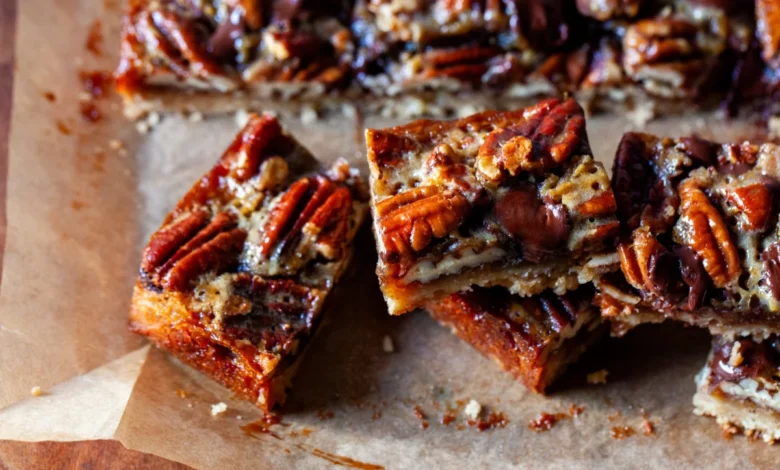
Recognizing the friction points of labor-intensive baking during an already high-stress holiday window, the recipe underwent final engineering to arrive at its current format: the streamlined Pecan Pie Bars. By adapting the beloved elements of the slab pie—such as toasted pecans, honey, dark brown sugar, vanilla bean, dark chocolate chips, flaky sea salt, and browned butter incorporated into both the shortbread base and the filling—the formulation eliminates structural complexities without compromising sensory impact. The result is a bar cookie optimized for make-ahead storage, efficient portioning, and simplified logistics.

Recipe Profile: Pecan Pie Bars
For culinary historians and home cooks seeking to replicate this milestone dessert, the definitive formulation requires precise measurement and adherence to structural methodologies designed to balance richness, texture, and structural integrity.
Shortbread Crust and Pecan Filling Specifications
The foundational shortbread crust relies on a standardized proportion of flour, sugar, salt, and browned butter, which is pressed directly into a parchment-lined 9-by-13-inch baking pan to facilitate seamless removal. The pecan layer utilizes a high nut-to-filling ratio to ensure a dense, gooey, yet manageable texture. The inclusion of apple cider vinegar serves a vital chemical function, cutting through the concentrated sweetness of the honey and dark brown sugar matrix.

Step-by-Step Preparation Chronology
- Thermal Preparation: Preheat the oven to 350°F (175°C). Line a 9-by-13-inch baking pan with a large sheet of parchment paper, ensuring it presses firmly into corners and extends up the sides.
- Nut Toasting: If utilizing raw pecans, spread them evenly on a baking sheet and toast for 8 to 10 minutes until aromatic, then set aside.
- Butter Browning: In a medium-large saucepan over medium-high heat, melt the butter. Allow it to melt, foam, and develop toasted brown specks at the edges. Remove from heat immediately, relying on residual thermal energy to reach a medium brown hue. Carefully incorporate 2 tablespoons of water to stabilize the mixture.
- Crust Construction: Combine flour, sugar, and salt in a large mixing bowl. Measure 1 cup of the prepared brown butter, retaining the remainder in the saucepan, and stir into the dry ingredients until a soft, crumbly dough forms. Scatter evenly across the prepared pan and bake for 15 to 17 minutes until golden at the edges.
- Filling Emulsion: To the remaining brown butter in the saucepan, add brown sugar, honey, heavy cream, flaky salt, cider vinegar, and vanilla bean, whisking thoroughly. Introduce eggs one at a time, ensuring complete integration. Fold in the toasted pecan halves and dark chocolate chips.
- Assembly and Baking: Pour the pecan mixture uniformly over the warm crust, top with additional flaky sea salt, and bake for 25 to 30 minutes until edges are fully set and the center retains a slight firmness with minimal movement. Cool completely on a wire rack before utilizing parchment edges to lift and slice into uniform portions.
Industry Implications and Cultural Legacy
The longevity of Smitten Kitchen underscores a broader structural shift within digital culinary publishing. As social media platforms increasingly favor ephemeral, short-form video content emphasizing visual shock value, enduring text-and-photography recipe blogs maintain value by functioning as reliable digital encyclopedias for domestic cookery.
Industry analysts note that platforms surviving multiple technological eras do so by adapting to the shifting psychological needs of their audiences. Over twenty years, the audience for holiday cooking advice has evolved from aspiring culinary perfectionists seeking restaurant-quality technical challenges into time-constrained modern households prioritizing reliability, stress reduction, and repeatable success.

By systematically documenting this evolution—moving from complex culinary displays to elegant, highly engineered minimalism—the platform has established a blueprint for sustainable digital food media. As home cooks continue to navigate the logistical challenges of holiday entertaining, the emphasis on tested, adaptable, and respectful use of domestic time remains the defining legacy of two decades of Smitten Kitchen.