The Human Capital Revolution: How High-Investment Labor Models Are Reshaping the Post-Pandemic Restaurant Industry

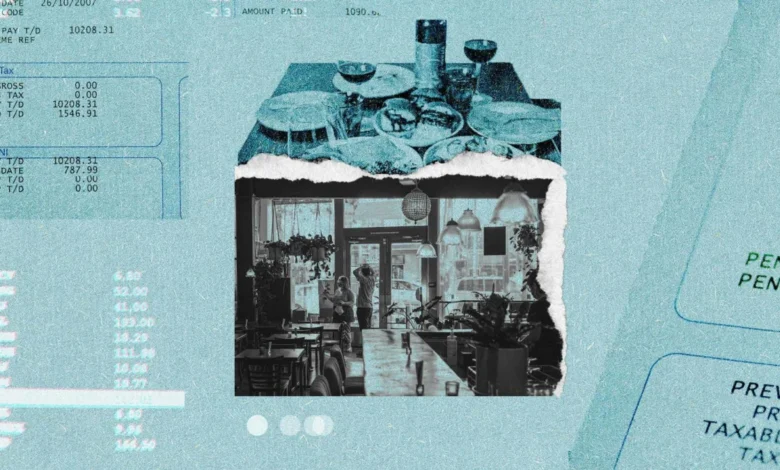
For decades, the American restaurant industry has operated on a razor-thin margin of error, often prioritizing low labor costs and high turnover as necessary evils of the business. However, the seismic disruptions of the COVID-19 pandemic have forced a radical reassessment of this traditional model. While many operators spent the last two years cutting costs and narrowing menus to survive, a burgeoning group of restaurateurs has discovered a counterintuitive path to profitability: investing significantly more in their employees. By raising wages, offering comprehensive benefits, and restructuring the workweek, these businesses are finding that a well-compensated, stable workforce is not an expense to be minimized, but a primary driver of revenue and long-term sustainability.
The Bell’s Experiment: A Pivot Toward Radical Reinvestment
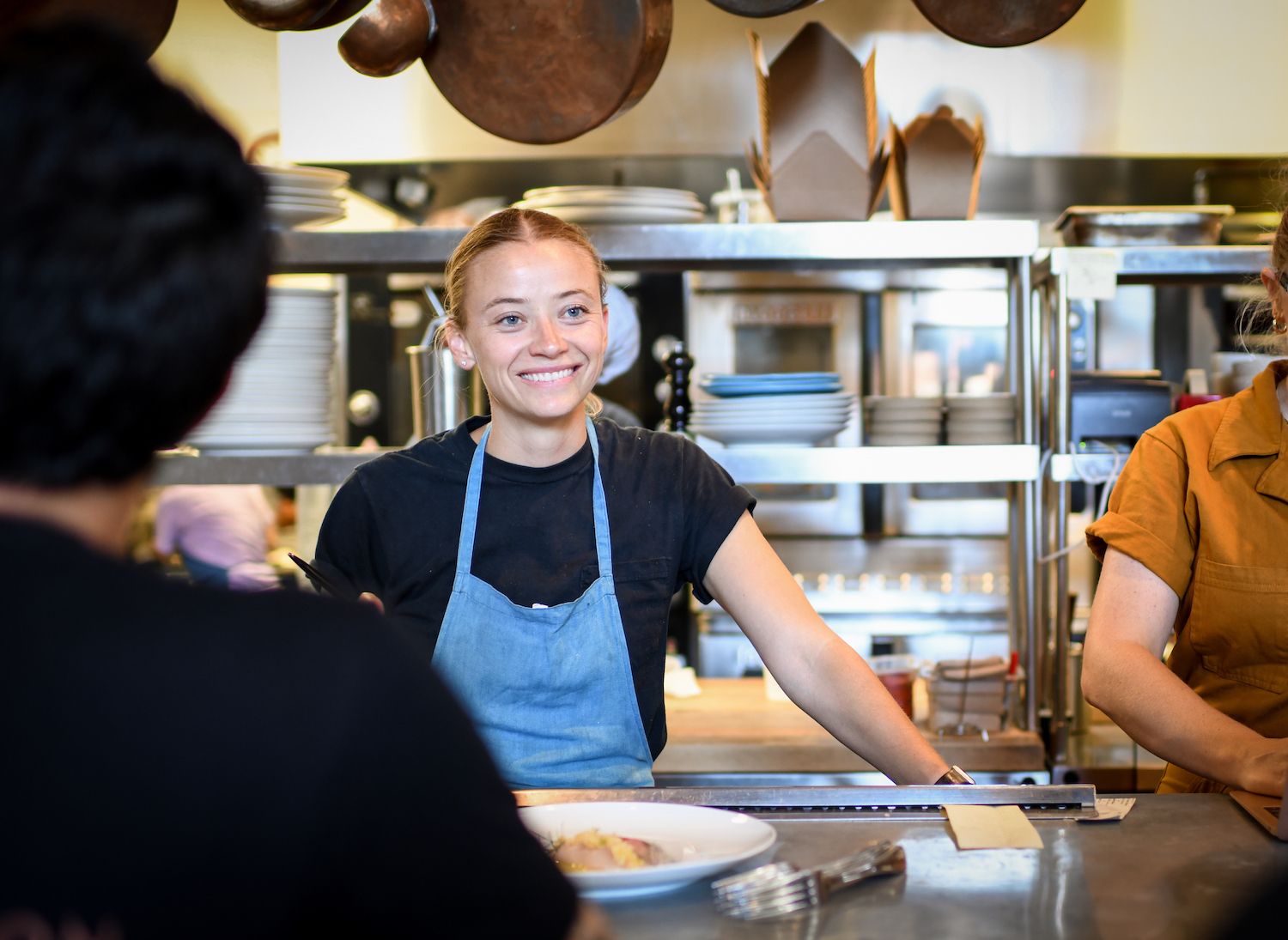
In June 2020, as the first wave of the pandemic decimated the hospitality sector, Greg and Daisy Ryan, co-owners of the French-inspired bistro Bell’s in Los Alamos, California, faced a crossroads. Rather than retreating into survival mode, they opted for a drastic overhaul of their business’s financial structure. They hiked average wages to $27 an hour and introduced a suite of benefits that were previously unheard of in small-scale independent dining: fully paid healthcare coverage and 80 hours of paid time off (PTO).
This decision was made at a time when the broader industry was on life support. According to the Bureau of Labor Statistics (BLS), the food service industry was down nearly 820,000 jobs by March 2022 compared to pre-pandemic levels. The Ryans, however, wagered that by eliminating the financial instability of their staff, they could build a more resilient business.
The results were transformative. By the end of 2021, Bell’s revenues had surged from approximately $1 million in 2019 to $3 million. Their staff size doubled, and employee retention stabilized at an extraordinary 95 percent. The Ryans are now working to implement a retirement program with a 4 percent matching fund, aligning with California’s state-mandated retirement legislation (CalSavers) but exceeding it in voluntary contributions.
The Financial Mechanics of High-Road Employment
To afford these increased labor costs, which often exceed the industry standard of 30 percent of total revenue, operators like the Ryans have had to rethink the "back-of-the-envelope" math of restaurant management. The Bell’s team utilized a Google spreadsheet to calculate the exact revenue needed from every seat to break even while guaranteeing living wages.
This led to the adoption of a pre-fixe dinner menu, a strategy that has gained traction across the country as a means of controlling food waste and labor efficiency. By offering a $75 five-course menu, the restaurant can predict ingredient needs with surgical precision, sourcing specific quantities of local produce and seafood rather than relying on commodity wholesalers for a rotating a la carte menu.
Furthermore, the implementation of a 20 percent service fee in lieu of traditional tipping has provided a transparent and guaranteed revenue stream. While this fee is taxed as business income, it removes the volatility of customer-controlled gratuities, allowing the business to fund a stable payroll. Greg Ryan notes that the menu price serves as the break-even point, while supplemental sales—such as wine, caviar, and bread—generate the restaurant’s actual profit.
Addressing the Crisis of Retention and the "Great Resignation"
The pandemic-era labor shortage, often termed the "Great Resignation," was particularly acute in hospitality. Workers, exhausted by grueling hours, low pay, and the health risks of the pandemic, left the industry in record numbers. The BLS data highlights a fundamental disconnect: while demand for dining returned, the willingness of workers to endure the old "dysfunctional model" did not.
For Tim Taney, co-owner of Slidin’ Dirty in Troy, New York, the financial logic of the high-investment model became clear through the lens of retention. Taney estimated that training a single new employee cost his business at least $500 per month in lost productivity and administrative overhead. By expanding his benefits package to include employer-covered health insurance and YMCA memberships, Taney saw his turnover drop to near zero, with only one employee leaving over the course of a year.
"It’s a significant savings," Taney observed. While the benefits package is a major line item, the reduction in recruitment and training costs creates a "virtuous circle" where the savings partially subsidize the perks.
Diversifying Revenue Streams to Support Labor Costs
In Oakland, California, Stella Dennig of the restaurant and wine bar Daytrip has adopted a similar philosophy. Daytrip’s labor costs range between 40 and 48 percent of total expenses—nearly 20 points higher than the conventional industry benchmark. To support a base wage of $16 to $18 an hour (bolstered by a pooled 20 percent service fee) and a $300 monthly healthcare stipend, Dennig has diversified the restaurant’s revenue streams.

Daytrip operates natural wine and beer clubs and hosts pop-up nighttime wine bars that require minimal back-of-house labor. By creating "low-labor" revenue channels, the business can afford the "high-labor" demands of a full-service sit-down dinner.
"All I’m doing right now is what feels like the bare minimum to me," Dennig said, noting that the bar for labor standards in the industry has historically been unacceptably low. Her approach suggests that for modern restaurants to succeed, they must function more like multi-channel retail and service hubs rather than just traditional kitchens.
Structural Innovation: The Four-Day Workweek
Beyond wages and healthcare, some operators are focusing on the "time poverty" that often drives talent away from the culinary arts. Jason Berry, co-founder of the Washington D.C.-based Knead Hospitality + Design, launched an experiment at Mi Vida and Succotash National Harbor involving four-day workweeks for managers and chefs.
Under this model, staff work 12-hour shifts for four days and handle administrative tasks like scheduling remotely. While this requires hiring additional management—at an estimated cost of $80,000 per new hire—Berry argues the investment pays for itself by eliminating recruiter commissions, which typically run 15 percent of a new hire’s salary.
Berry posits that a well-rested staff provides superior service and maintains better "institutional knowledge." For example, a chef who isn’t burnt out is more likely to notice subtle seasonal changes in ingredients, such as the increasing heat levels of chiles in October, and adjust recipes accordingly. "They’re less exhausted, they’re more focused on their teammates, they’re training better," Berry said. "Does that translate into more revenue? I think it does."
The Psychological Impact and Professionalization of Service
The shift toward high-investment labor is also changing the identity of the restaurant worker. Micah Fendley, a veteran server at Bell’s with 20 years of experience, received his first-ever health insurance card through the restaurant’s new program.
Fendley’s experience highlights the mental health benefits of these changes. After a paid winter break—another rarity in the industry—Fendley returned to work feeling "well rested" and respected. This sense of professional dignity is a key factor in reducing the "churn" that has historically plagued American dining rooms.
Anne McBride, vice president of programs at the James Beard Foundation, emphasizes that professionalization doesn’t always require massive capital outlays. According to a recent report by the foundation, many workers left the industry due to a lack of clear career progression. By instituting transparent structures for raises and promotions, restaurants can transform "gigs" into "careers," thereby securing their workforce without necessarily upending their entire financial structure.

Chronology of the Industry Shift
- Pre-2020: The industry relies on low-wage labor and high turnover; thin margins (3-5%) are the norm.
- March 2020: COVID-19 lockdowns begin; millions of restaurant workers are furloughed or laid off.
- June 2020: Early adopters like Bell’s begin implementing high-wage, high-benefit models during the initial reopening phase.
- 2021: The "Great Resignation" takes hold; labor shortages become the primary obstacle to restaurant recovery.
- Late 2021: Establishments like Daytrip and Knead Hospitality formalize service fees and four-day workweeks to attract talent.
- 2022-Present: Data emerges showing that restaurants with higher labor investments are seeing faster revenue growth and higher Michelin-level accolades.
Broader Implications and the Role of Luck
While the success of these models is compelling, the Ryans and other operators acknowledge that their path was paved by specific advantages. Bell’s benefited from owning its building, which locked in real estate costs, and from the influx of federal aid such as a $93,000 Paycheck Protection Program (PPP) loan and a $150,000 Economic Injury Disaster Loan (EIDL). Furthermore, the publicity of a Michelin star and "Best New Chef" awards provided a steady stream of high-spending clientele.
However, the core takeaway for the broader industry remains: the old model of labor exploitation is no longer sustainable in a post-pandemic economy. As inflation increases food costs and consumers become more discerning, the "human element" of hospitality—the staff—has become the most valuable asset a restaurant possesses.
For Greg Ryan, the goal is to continue moving toward a corporate-style benefits package, including dental and vision insurance. The objective is to ensure that employees are no longer viewed as "cogs in the machine," but as partners in a high-performing business. As the industry continues to evolve, the "Bell’s Model" and its counterparts suggest that the future of dining lies not in cutting costs, but in the radical reinvestment in the people who make the experience possible.