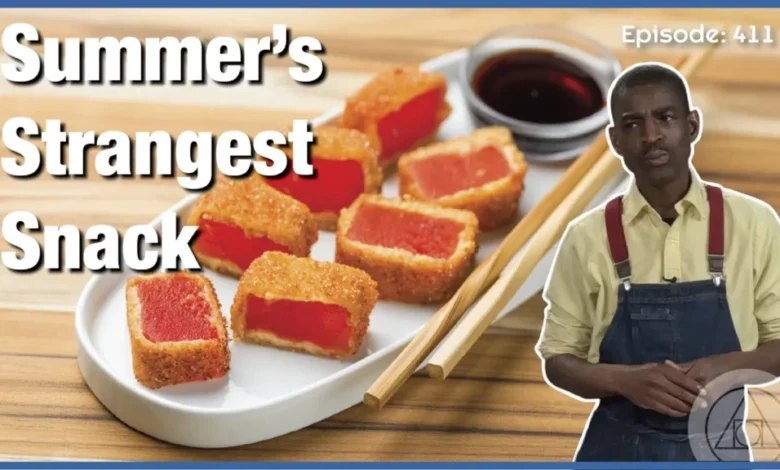
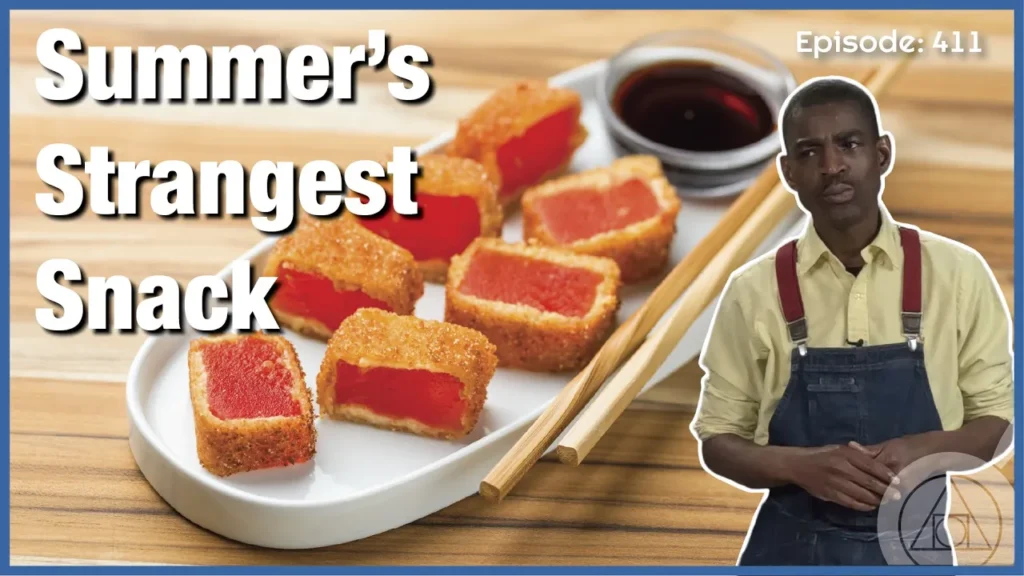
The culinary landscape has long been defined by the tension between tradition and innovation, particularly regarding the preparation of fresh produce. Watermelon, cantaloupe, and honeydew—staples of summer dining globally—have historically been served raw, chilled, or as components of salads and desserts. However, the latest episode of the culinary series We Transform Food (Episode 411) has challenged these conventions by demonstrating the technical feasibility and sensory outcomes of deep-frying various types of melon. This experiment, while unconventional, touches upon the broader scientific principles of heat transfer, moisture reduction, and the Maillard reaction in high-water-content fruits.
The Physics of High-Moisture Frying
To understand the transformation described in the We Transform Food experiment, one must first look at the chemical composition of melons. Melons are composed primarily of water, often exceeding 90% by weight. Standard deep-frying involves submerging a food item in oil heated to temperatures typically ranging between 350°F and 375°F (175°C to 190°C).
When a high-water-content food like melon is introduced to hot oil, the rapid vaporization of surface moisture creates a barrier of steam. If the fruit is not properly protected by a batter or coating, the structural integrity of the melon collapses almost instantly, leading to an explosion of steam and oil splatter. The episode utilizes a specific batter formulation—likely a high-viscosity, flour-based mixture—that acts as a thermal buffer. This coating creates a semi-permeable crust that prevents the internal moisture from escaping too rapidly, while simultaneously allowing the heat to penetrate the flesh.
As the internal temperature rises, the pectin in the melon cell walls undergoes a process of softening. This results in the "creamy" texture described by the culinary team, effectively turning the fruit into a semi-solid custard. This process is chemically similar to the poaching of fruits, though the speed of the deep-frying process creates a distinct contrast between the crisp exterior and the softened interior.
Chronology of Culinary Innovation: From State Fairs to Modernist Kitchens
The history of deep-frying fruit is not entirely new, though its application to melons remains niche. The tradition of "fair food," particularly in the United States, has popularized deep-fried versions of traditionally raw items. In the 1990s and early 2000s, the emergence of deep-fried Oreos and deep-fried butter at state fairs prompted a wave of experimentation with unconventional ingredients.
- 2000–2010: The rise of molecular gastronomy, led by figures like Ferran Adrià and Heston Blumenthal, encouraged chefs to treat fruit with the same technical rigor as proteins. This period saw the normalization of sous-vide fruit and flash-frozen desserts.
- 2015–2020: The growth of digital food media, exemplified by platforms like Modernist Pantry, transitioned these high-level techniques into the domestic sphere. The focus shifted from merely "cooking" food to "transforming" its physical state through gadgets and hydrocolloids.
- 2024: The release of We Transform Food Episode 411 represents the current stage of this progression: applying industrial frying techniques to produce items that are traditionally viewed as incompatible with high-heat fat cooking.
Supporting Data: Moisture Content and Thermal Conductivity
The success of frying melon is heavily dependent on the sugar content (Brix) and water activity of the fruit. According to food science databases, a standard watermelon contains roughly 6% to 9% sugar, while cantaloupes can range from 8% to 12%. The higher the sugar content, the lower the freezing point and the more susceptible the fruit is to caramelization.
When frying, the sugars undergo non-enzymatic browning. Because melons have a delicate structure, the frying duration must be calibrated to a window of seconds rather than minutes. Research into the thermodynamics of fruit frying suggests that if the internal temperature exceeds 212°F (100°C) for too long, the fruit loses its structural identity entirely, becoming a puree. The We Transform Food methodology emphasizes the use of "flash-frying," a technique designed to brown the exterior while keeping the core intact.
Reactions and Industry Implications
The culinary community remains divided on the practice of frying melons. Proponents of modernist techniques argue that such experiments are essential for expanding the flavor profiles of seasonal produce. By intensifying the natural sweetness through heat, chefs can create dishes that bridge the gap between fruit and savory-sweet appetizers.
Conversely, traditionalists often point to the loss of nutritional value. Heat-sensitive vitamins, such as Vitamin C and certain B vitamins, are susceptible to degradation at high temperatures. While the fat content of the fruit increases due to oil absorption, the nutritional density—specifically regarding fresh fiber and water-soluble vitamins—diminishes. From a culinary perspective, critics argue that the freshness of a melon is its primary appeal, and altering its state via hot oil is a "solution looking for a problem."
However, from an industry perspective, the ability to utilize "off-grade" or aesthetically imperfect melons by transforming them through heat provides a potential avenue for waste reduction. If a melon is bruised or visually unappealing, its internal flavor profile may still be optimal for processing.
The Role of Modernist Pantry
Modernist Pantry, the organization behind the series, serves as an educational bridge between laboratory-grade food science and home cooking. By focusing on specific gadgets—such as precision fryers, vacuum sealers, and texturizers—the organization aims to democratize techniques that were previously exclusive to high-end laboratory kitchens.
Their approach typically involves:
- Deconstruction: Breaking the fruit down into its base components.
- Stabilization: Using hydrocolloids or binders to ensure the product survives the cooking process.
- Transformation: Applying heat or pressure to achieve a result that is objectively different from the raw state.
Future Prospects for Fruit Preparation
The experiment with deep-fried melon serves as a case study for the broader trend of "ingredient manipulation." As consumers seek more novel dining experiences, the demand for produce that has been subjected to unconventional cooking methods is likely to increase. We are already seeing this in the popularity of smoked watermelon "hams" and dehydrated fruit leathers.
The implications for the hospitality industry are significant. Restaurants, particularly those focusing on plant-forward menus, are constantly looking for ways to provide "meaty" or "substantial" textures using vegetables and fruits. By mastering the art of frying high-moisture items, chefs can create menu items that are vegetarian-friendly while maintaining the satisfying "mouthfeel" of deep-fried proteins.
Conclusion
The question of whether one should deep fry a melon is ultimately a matter of culinary preference, but the question of whether one can has been answered in the affirmative by the We Transform Food series. Through a combination of precise batter application, controlled temperature, and rapid frying techniques, melons can be effectively transformed into a dish that defies traditional expectations.
While it is unlikely to replace the classic fruit salad in household kitchens, the experiment highlights the importance of understanding the physical properties of food. By treating fruit not as a fixed entity but as a malleable material, chefs and home cooks alike can unlock new sensory dimensions, proving that even the most common ingredients retain the capacity to surprise when approached with technical curiosity. As the series continues to explore these boundaries, the focus will likely remain on the intersection of gadgetry, chemistry, and the age-old desire to make food more memorable.