Two Decades of Culinary Science: Hervé This Releases Comprehensive Summary of Paris Molecular Gastronomy Seminars

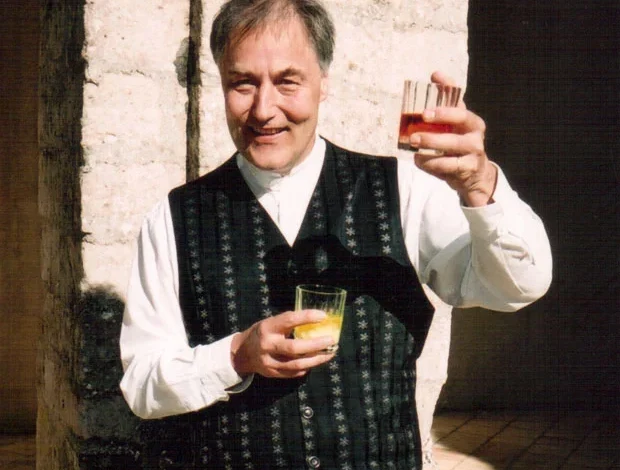
The intersection of physical chemistry and culinary arts has reached a significant milestone with the official release of a retrospective document detailing twenty years of molecular gastronomy seminars in Paris. Compiled and distributed by French physical chemist Hervé This—a foundational figure in the discipline—the newly available reports offer a condensed yet comprehensive look at two decades of systematic kitchen experimentation. The findings, made accessible in both French and English translations, bridge the gap between traditional cooking techniques and rigorous scientific inquiry, serving as a vital resource for professional chefs, food scientists, and academic educators alike.
Main Facts and Overview of the Release
The newly published documentation encapsulates hundreds of monthly seminars conducted in Paris, where scientists, culinary professionals, and enthusiastic amateurs gathered to test, analyze, and deconstruct common culinary assumptions. The English summary, alongside its more detailed French counterpart hosted by AgroParisTech, provides brief analytical overviews of experiments targeting everything from emulsion stability to the thermal denaturation of proteins.
Hervé This, who formally requested the wide dissemination of these documents, designed the summaries to inspire further practical experimentation and theoretical research. While the concise English edition provides immediate takeaways, the extensive French documentation contains exhaustive experimental parameters, environmental controls, and methodological breakdowns. For culinary institutions and chemistry departments, this archive represents a treasure trove of data that transforms everyday kitchen phenomena into measurable scientific variables.
Historical Context and Chronology of Molecular Gastronomy
To understand the weight of this twenty-year retrospective, one must examine the origins of molecular gastronomy as a formalized scientific discipline. The term itself was coined in the early 1990s by Hervé This and the late Oxford physicist Nicholas Kurti. Recognizing that food science traditionally focused on industrial processing and nutritional content rather than the domestic and restaurant kitchen, This and Kurti sought to establish a dedicated field for studying the physical and chemical transformations that occur during cooking.
In 1992, This and Kurti organized the first International Workshop on Molecular Gastronomy held in Erice, Sicily. This gathering brought together prominent scientists and Michelin-starred chefs—such as the late Joël Robuchon and Hervé This himself—to foster a dialogue between culinary practice and laboratory science. The Erice workshops established a framework for examining traditional culinary adages, separating verified physical principles from entrenched culinary folklore.
Building upon the momentum of the Erice workshops, This initiated the monthly Paris seminars at AgroParisTech. These sessions operated on a continuous, collaborative model: participants proposed everyday culinary claims—ranging from the ideal temperature for whipping egg whites to the precise behavior of salt added to boiling water—and designed controlled experiments to test them. Over the subsequent twenty years, these monthly meetings generated an immense body of empirical data, which has now been systematically organized into the newly released archival documents.
Methodology and the Deconstruction of Culinary Lore
The core methodology of the Paris seminars centers on the empirical verification of "culinary precis" or kitchen maxims. Generations of cooks have relied on handed-down traditions, such as searing meat to "lock in juices," adding oil to pasta water to prevent sticking, or resting dough for specific durations. While some of these practices are grounded in sound thermodynamics or biochemistry, others prove to be baseless culinary myths upon rigorous testing.
By isolating variables such as heat transfer, mass transport, and molecular bonding, the seminar participants subjected everyday cooking to the scientific method. For example, investigations into foams and emulsions have provided clearer insights into the stabilization of protein matrices, directly influencing how modern pastry chefs and savory line cooks manipulate textures. Similarly, studies on the diffusion of solutes during stock-making have offered quantifiable metrics for optimizing flavor extraction without prolonged simmering times.
Although critics of molecular gastronomy have occasionally characterized the movement as overly reductionist or reliant on esoteric laboratory equipment, This has consistently maintained that the discipline’s primary objective is fundamentally educational and exploratory. The emphasis has rarely been on modernist gimmickry, but rather on understanding the profound chemistry already occurring in ordinary home kitchens.
Implications for Culinary Education and Industrial Science
The release of the twenty-year seminar summaries carries wide-ranging implications for multiple sectors, most notably culinary arts education and secondary science curricula. As culinary institutes increasingly integrate food science into their core training programs, educators require reliable, evidence-based instructional materials. The AgroParisTech seminar archives offer educators a vast array of ready-made demonstration concepts that illustrate chemical principles through edible mediums.
In secondary and university-level chemistry education, the document serves as an innovative pedagogical tool. Abstract chemical concepts—such as pH variations, enzymatic reactions, and polymer cross-linking—often present challenges for student engagement. By utilizing culinary contexts documented in This’s summaries, instructors can design laboratory exercises that use familiar food items to demonstrate complex scientific phenomena.
Furthermore, the commercial food and hospitality industries stand to benefit from the systematic categorization of these findings. Modern product development teams and research chefs continually seek data on flavor release, texture modification, and thermal efficiency. The insights cataloged over two decades of Paris seminars provide a foundational knowledge base that can accelerate product innovation and optimize kitchen workflows on an industrial scale.
Future Outlook and Ongoing Kitchen Investigations
As the culinary world digests these newly accessible archives, the scientific community emphasizes that the work of molecular gastronomy remains ongoing. The publication of the twenty-year summary is not a conclusion, but rather a benchmark in an evolving discipline. Food scientists and chefs continue to confront new variables, ranging from the sustainability of alternative proteins to the physical chemistry of plant-based cooking techniques.
Hervé This and his contemporaries have established a permanent precedent: that even the most minute culinary claims and long-held kitchen beliefs can, and should, be systematically questioned, tested, and documented. With these bilingual summaries now freely available to the global public, the legacy of the Paris seminars is poised to inspire a new generation of curious minds, ensuring that the dialogue between the test tube and the frying pan remains as vibrant as ever.