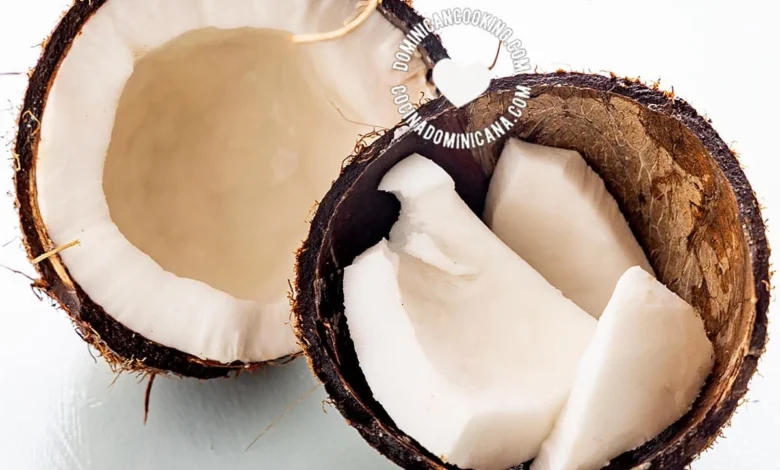
The culinary integration of fresh coconut meat and water remains a cornerstone of tropical gastronomy, yet the mechanics of breaking down the mature drupe often present a formidable barrier for home cooks. Unlike its pre-packaged retail counterparts, a whole mature coconut requires a systematic approach combining physics, simple household tools, and precise kinetic force to extract its valuable internal resources safely. Culinary experts and food historians note that while modern industrial processing has streamlined coconut availability, mastering the traditional manual extraction technique remains an essential skill for preserving the authentic texture and lipid profiles required in traditional regional recipes.
The methodology for processing a mature coconut has evolved from heavy machetes and stones used in agrarian tropical societies to refined, standardized kitchen techniques adapted for modern households. Historically, populations in regions such as the Caribbean, Southeast Asia, and parts of Central America relied on specialized blades to harvest, husk, and crack the fruit. In contemporary domestic settings, however, safety regulations and standard kitchen inventories have shifted the process toward common household implements: a flat-head screwdriver, a standard household hammer, old towels for kinetic absorption, and a vegetable peeler. This adaptation ensures that home cooks worldwide can achieve professional-grade results without investing in commercial-grade agricultural hardware.
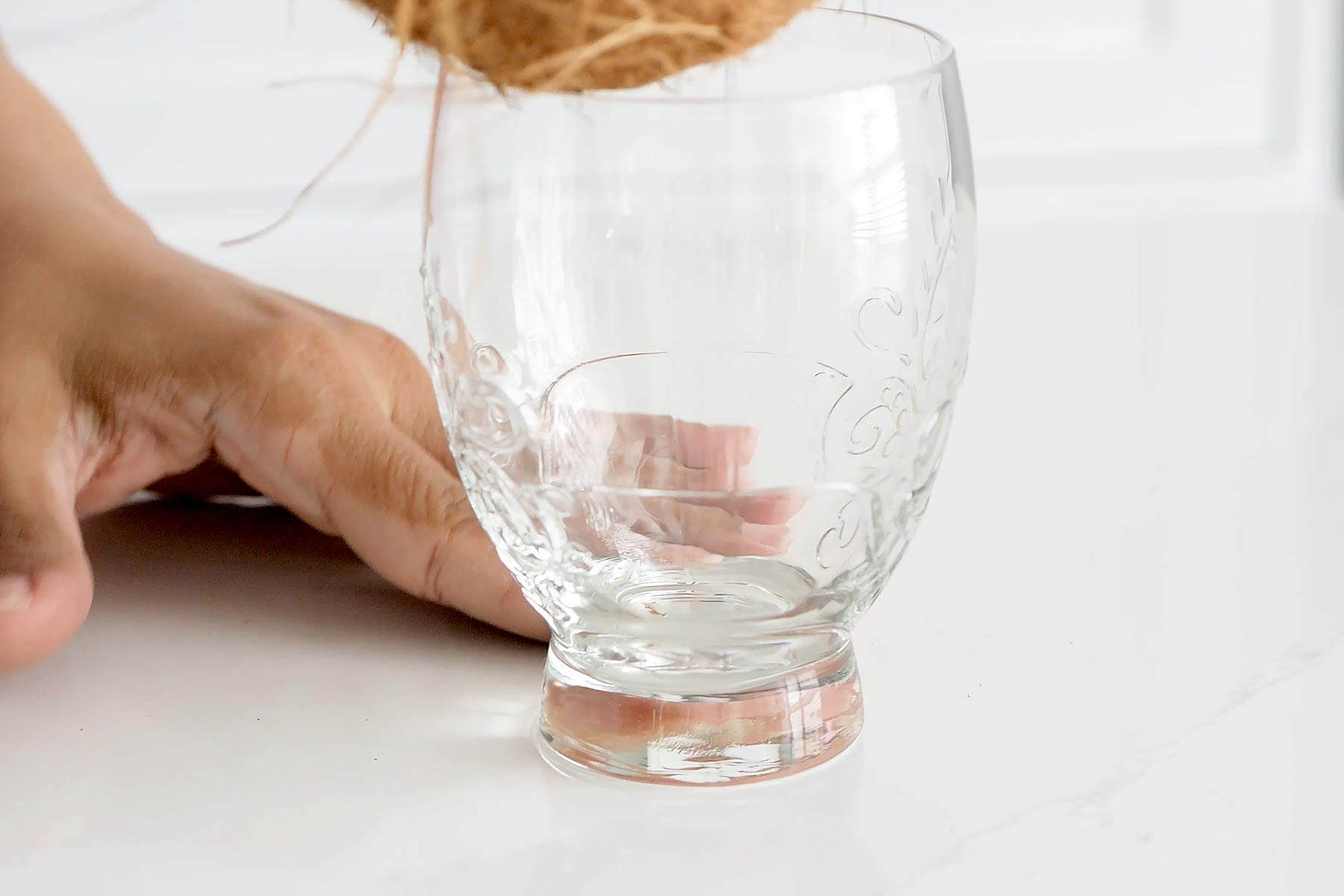
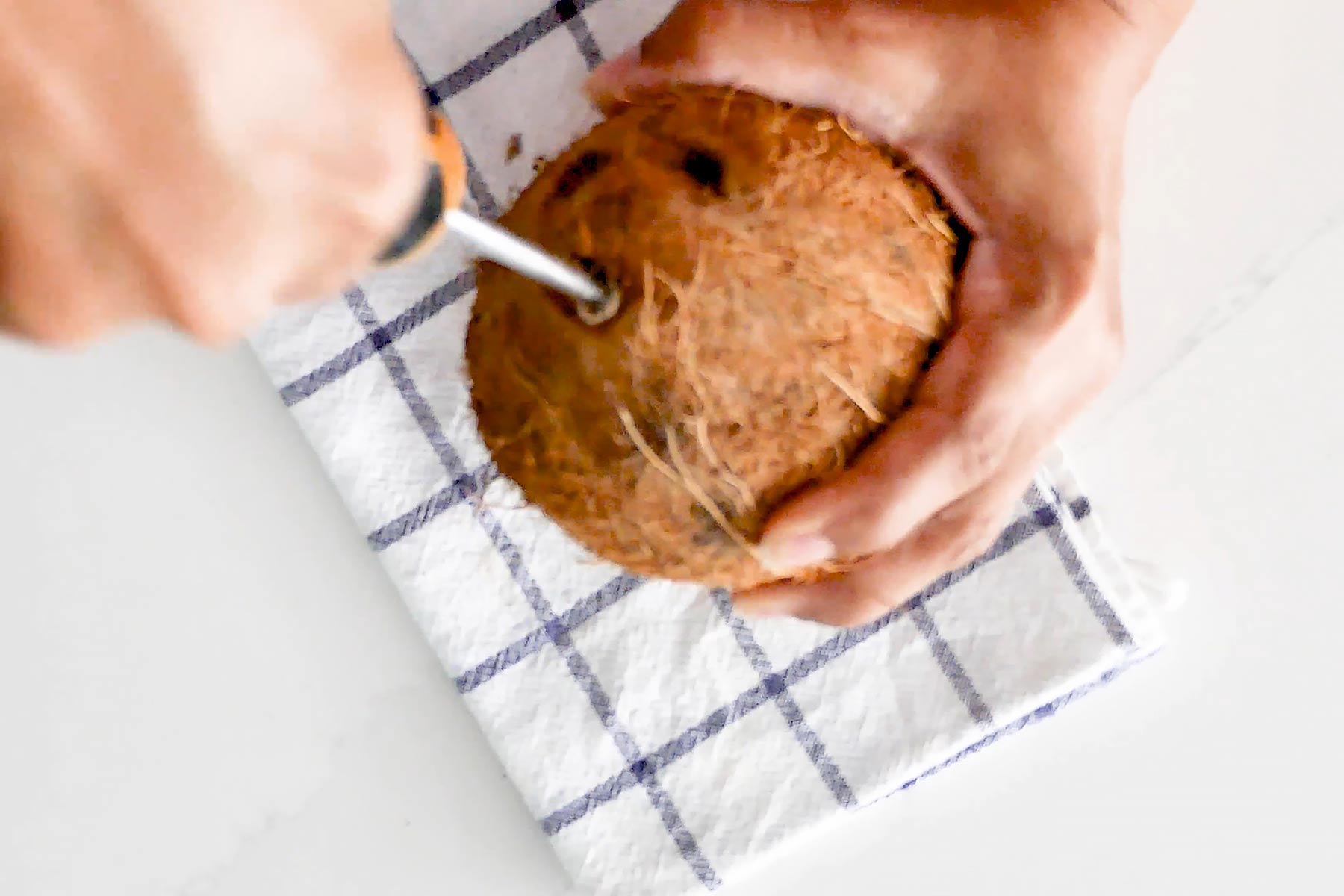
To execute the extraction process safely and efficiently, practitioners follow a rigorous, step-by-step chronology. The operation begins with identifying the anatomical features of the coconut, specifically the three germination pores, commonly referred to as the "eyes," located on the apex of the shell. These points represent the thinnest areas of the endocarp. Culinary technicians advise using a clean, flat-head screwdriver—or a similarly sturdy metal spike—to puncture the softest of these three eyes. By applying moderate downward pressure and twisting the tool, the operator breaches the inner chamber, allowing the trapped coconut water to be drained entirely. Placing the punctured coconut upside down over a vessel ensures that the liquid is cleanly separated and collected without contamination from exterior husk debris or shell fragments.
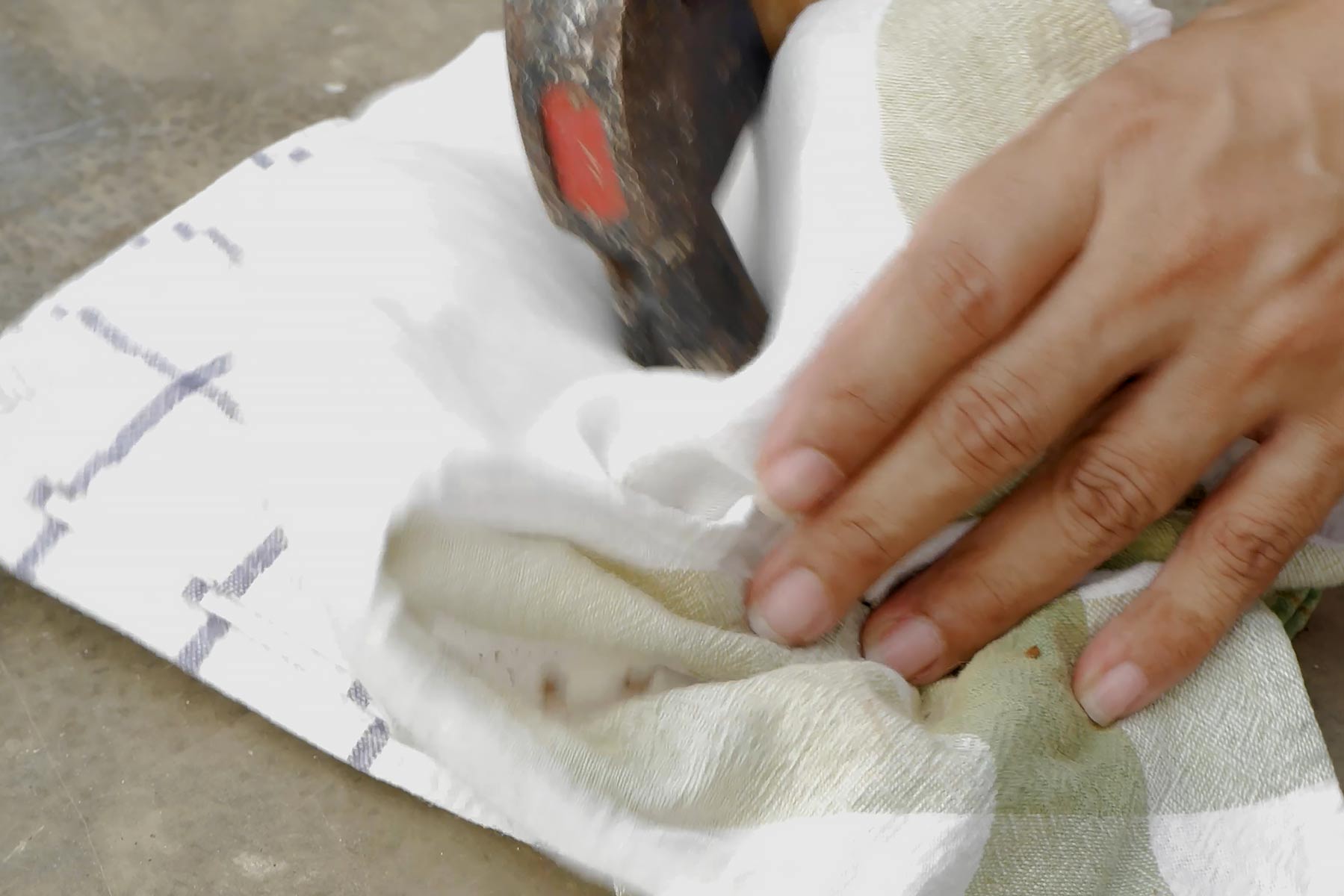
Following the extraction of the liquid, the structural phase of the process requires the application of targeted blunt force. Because ceramic, wood, and composite flooring materials are highly susceptible to damage from heavy impacts, standard culinary protocols dictate that the operation be conducted on a stable, shock-absorbing foundation, such as a concrete floor overlaid with folded heavy-duty textiles. The coconut is typically wrapped in a protective cloth to contain flying shards before the application of kinetic energy. The operator strikes the coconut along its equator—the circumferential line perpendicular to the axis of the eyes—using a standard claw or ball-peen hammer. Repeated, moderate blows along this perimeter induce a clean structural fracture, splitting the spherical shell into two manageable hemispheres. Subsequent localized taps along the newly formed edges allow the operator to fragment the halves further, reducing the surface area and preparing the pieces for meat extraction.
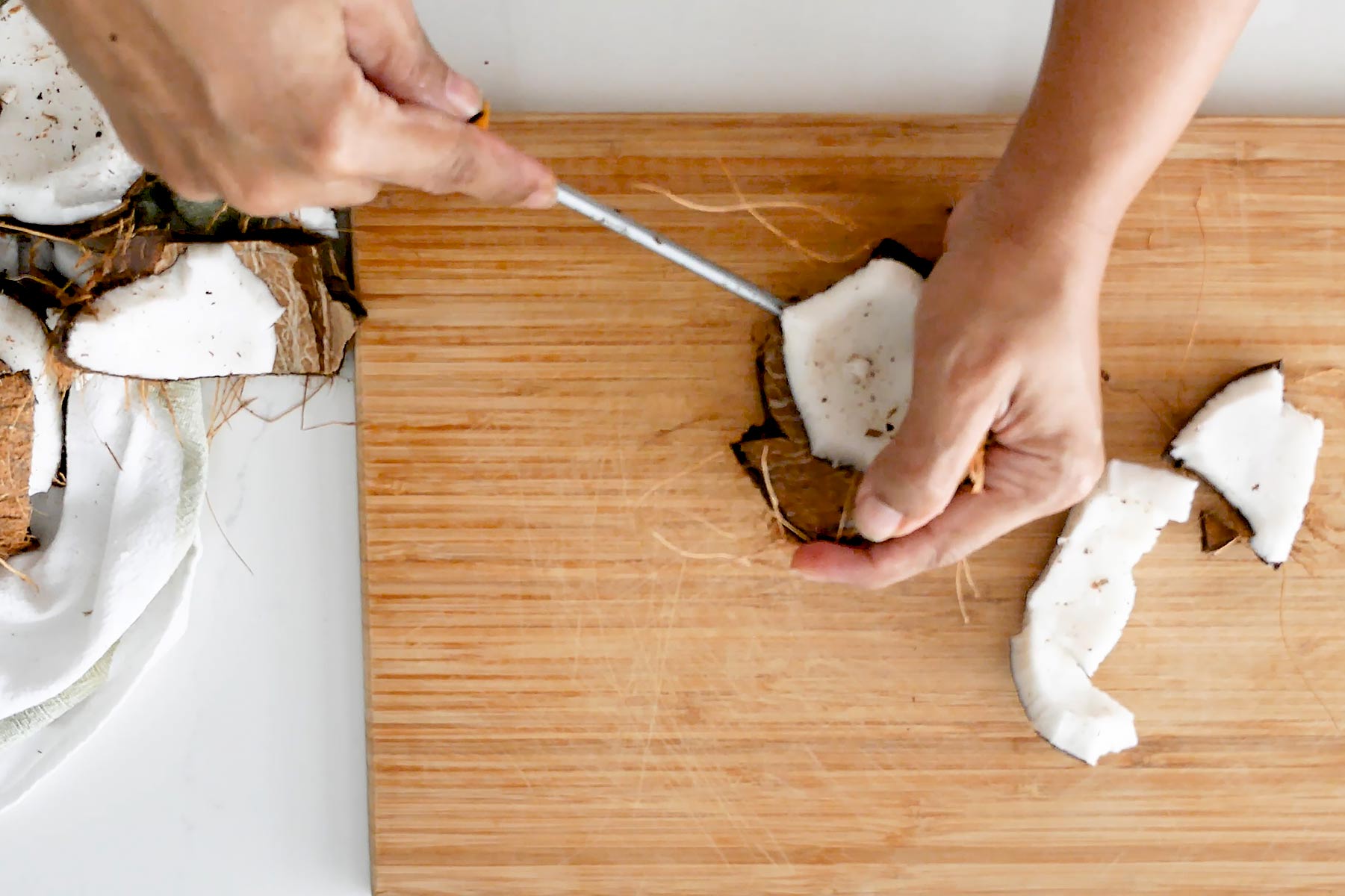
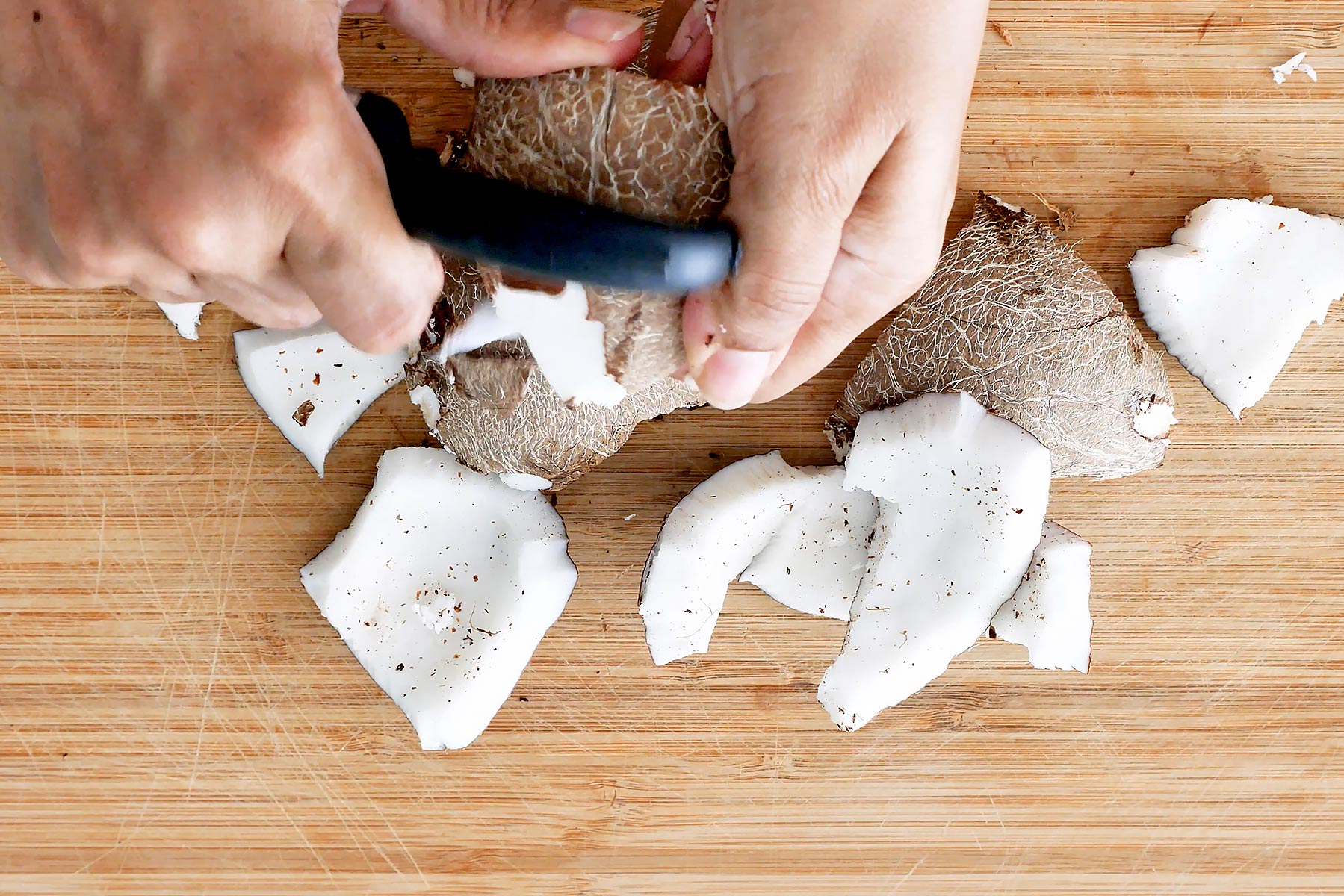
The separation of the endosperm, or coconut meat, from the rigid lignified endocarp represents the most delicate phase of the operation. Culinary analysts recommend inserting the flat-head screwdriver as a lever between the inner wall of the shell and the white meat, applying gentle torque to break the natural adhesion without compromising structural integrity or risking hand injuries from jagged edges. Once the meat sections are freed from their protective casing, the exterior skin—a thin, fibrous brown testa—is systematically removed using a standard swivel vegetable peeler. This step is critical for culinary applications that demand a pristine, snow-white appearance, such as specialized pastries, milks, and delicate infusions. Following a thorough rinse under potable running water to eliminate residual particulate matter, the cleaned meat is air-dried on clean textiles.
Industry data and nutritional studies underscore the importance of proper post-extraction storage to maintain the high lipid and moisture content characteristic of fresh coconut. Raw coconut meat contains significant levels of medium-chain triglycerides (MCTs), primarily lauric acid, along with dietary fiber and essential minerals. Because of its high oil content, fresh coconut is susceptible to rapid oxidation and microbial spoilage at ambient room temperatures. Culinary safety guidelines advise that processed coconut meat can be safely stored in refrigeration units for short durations, typically not exceeding two to three days, provided it is wrapped tightly to prevent dehydration. For extended culinary use, commercial and domestic kitchens rely on freezing techniques, sealing the meat in moisture-barrier packaging to preserve quality for up to one month, though culinary purists maintain that immediate utilization yields optimal flavor profiles and textural authenticity.

From a broader economic and culinary perspective, the domestic processing of whole coconuts reflects a growing consumer trend toward scratch cooking and ingredient transparency. While canned and carton-based coconut milk and desiccated flakes offer convenience, chefs and culinary educators emphasize that industrial preservation methods often involve thermal processing and stabilizing additives that alter the subtle aromatic compounds found exclusively in fresh fruit. By standardizing safety procedures for manual extraction, culinary platforms empower home cooks to incorporate fresh tropical ingredients into a wider array of global dishes, ranging from savory stews to artisanal confections, thereby bridging the gap between traditional agricultural practices and modern home kitchens.