Unlocking the Science of the Perfect Brew: A Deep Dive into Coffee Extraction

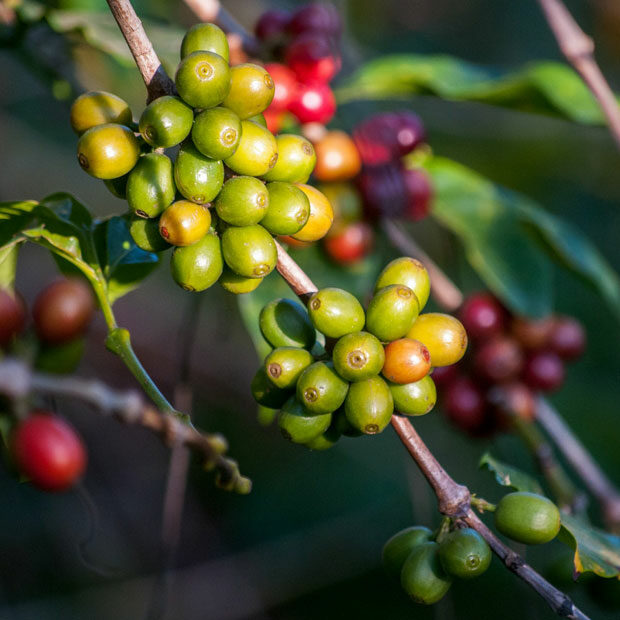
The pursuit of an exceptional cup of coffee has evolved significantly, transitioning from a mere daily ritual to a precise, scientifically informed endeavor. This shift, largely driven by the "third wave of coffee" movement, has prompted enthusiasts and professionals alike to delve into the intricate chemistry and physics that underpin coffee extraction. What began as a personal quest for a better brew, often sparked by the inconsistencies of home preparation, has mirrored a broader industry trend towards meticulous control and understanding of every variable. This deep dive explores the critical parameters that govern coffee extraction, from bean to cup, illuminating how scientific principles are transforming the art of brewing.
The Rise of Specialty Coffee and the Scientific Method
The global coffee landscape has undergone a profound transformation over the past two decades, marked by the emergence of the "third wave of coffee." This movement, originating in the late 20th and early 21st centuries, emphasizes high-quality, single-origin beans, transparent sourcing, and meticulous roasting and brewing techniques. It moved beyond the mass-produced commodity coffee (first wave) and the proliferation of espresso-based drinks (second wave), fostering a culture where coffee is appreciated for its nuanced flavors, much like fine wine. This heightened appreciation naturally led to a demand for greater consistency and excellence, paving the way for a more scientific approach to brewing.
For many, including seasoned chemists, this journey into coffee science often begins with a personal awakening. The transition from occasional coffee consumption to a daily necessity, perhaps fueled by demanding professional lives and lengthy commutes, frequently coincides with a developing palate for more sophisticated flavors. The Scandinavian region, known for its vibrant third-wave coffee scene, offers a prime example of this cultural shift, with services like monthly coffee subscriptions from various regional roasters introducing consumers to a diverse array of specialty beans. This exposure to high-quality, lightly roasted, and single-sourced coffees quickly highlights the stark difference between a merely functional caffeine delivery system and a complex sensory experience.
The 2020 Catalyst: A Journey into Precision Brewing
The year 2020, with its unprecedented global disruptions, inadvertently provided many with an opportunity for introspection and the refinement of personal routines. For coffee enthusiasts, reduced social interactions often translated into more dedicated time for reading, contemplation, and, critically, experimenting with coffee. Experiences like a "Coffee Advent Calendar," offering 24 days of blind coffee tastings, underscored the profound impact of origin and processing methods on flavor profiles. Such exercises are invaluable, providing immediate feedback on one’s ability to discern subtle differences and revealing the inherent variability even among seemingly similar beans. The adage "when you win, you win – when you lose, you learn" perfectly encapsulates this experiential learning process.
The introduction of new equipment, such as various coffee hand grinders alongside a trusty old electric model, can initially disrupt a well-established routine. This period of "panta rhei"—everything flows, or everything is in flux—can be frustrating, as reproducible results become elusive. However, this frustration often serves as a powerful catalyst for deeper inquiry. The realization of one’s own inconsistencies in preparing pour-over coffee, for instance, compels a dive into the underlying principles of extraction. This intellectual curiosity, particularly for individuals with a scientific background, can quickly lead down a "rabbit hole" of information, revealing the vast and rapidly expanding body of knowledge in coffee science.
Indeed, the field of coffee extraction has seen an explosion of research and practical applications over the last decade. While earlier explorations into various forms of extraction (water, oil, ethanol, beer brewing, espresso) provided a foundational understanding, the current depth of scientific literature, particularly concerning pour-over and drip coffee, is staggering. This wealth of information, ranging from academic publications to highly detailed blog posts by industry experts, offers unprecedented insights into optimizing brewing parameters.
Foundational Metrics: Brew Ratio and Total Dissolved Solids
At the heart of reproducible coffee brewing are two fundamental metrics: brew ratio (BR) and total dissolved solids (TDS). These parameters provide a quantitative framework for understanding and controlling the brewing process.
Brew Ratio (BR)
The brew ratio is a straightforward yet powerful concept, defining the amount of water used relative to the amount of ground coffee. Expressed as the ratio of water mass to coffee mass (e.g., 1000g water / 60g coffee = BR 16.7), it serves as the "recipe" for coffee, much like Baker’s percentage in baking. Typical brew ratios for black coffee generally fall within the range of 15-25. Its utility lies in its scalability, allowing brewers to easily adjust recipes for different batch sizes while maintaining consistency.
Total Dissolved Solids (TDS)
While brew ratio defines the input, Total Dissolved Solids (TDS) quantifies the output – the strength of the brewed coffee. TDS measures the percentage of solid material dissolved in the coffee beverage. Anecdotally, many brewers discover a sensitivity to overly strong coffee, where a slight dilution can dramatically transform a "bitter" cup into one bursting with "fruity flavors." This observation highlights the importance of precise strength measurement.
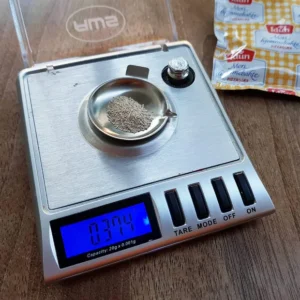
Traditionally, measuring dissolved solids involved gravimetric analysis: evaporating a coffee sample to dryness and weighing the residue. However, this method is impractical for daily use due to the small amounts involved (typically 1.2-1.5% TDS, corresponding to 12-15 grams per liter) and the need for highly accurate, expensive laboratory balances.
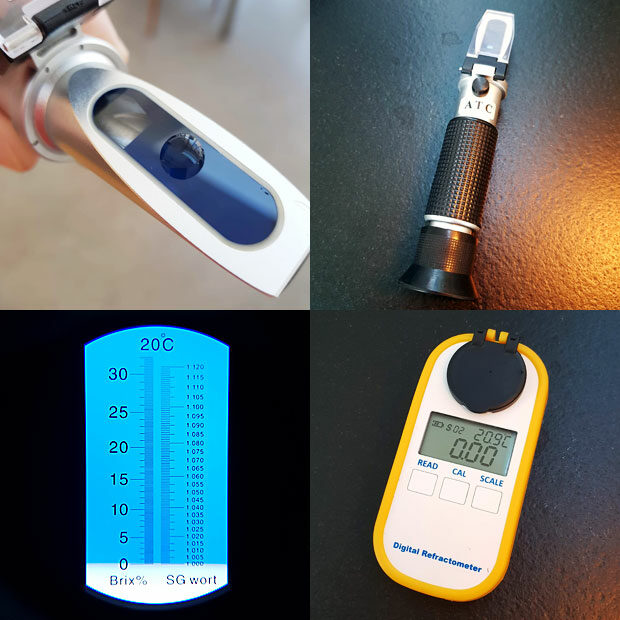
A more accessible and practical method utilizes refractometry. Light travels at different speeds through pure water versus water containing dissolved solids, a principle that can be measured to determine concentration.
- Handheld Refractometers: These affordable analog devices typically display results in %Brix, a scale originally used for sugar concentration. A conversion factor (approximately %TDS = %Brix x 0.85) allows for coffee strength estimation. While offering a resolution of 0.0-0.2 %Brix, they provide a good initial assessment, confirming if a brew falls within the typical 1.2-1.5% TDS range. They are particularly useful for identifying if perceived bitterness or astringency is, in fact, due to excessive strength. Beyond coffee, these versatile instruments have multiple kitchen applications, such as calibrating sugar content for sorbets (aiming for around 26 %Brix) or measuring specific gravity in homebrewing.
- Digital Refractometers: Offering superior accuracy (e.g., 0.01 °Brix readout) and often automatic TDS conversion, digital models provide the precision needed for fine-tuning. However, their higher cost makes them a more significant investment.
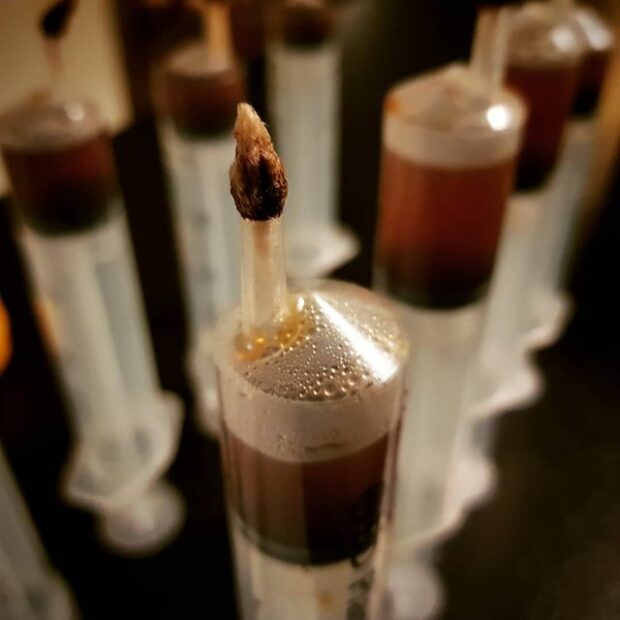
For accurate TDS measurements, especially during extraction studies, samples must be hot-filtered to halt the extraction process and then cooled completely before measurement. A simple DIY solution involves using plastic syringes with a cotton plug for hot filtering and cooling, minimizing evaporation and ensuring accurate readings without expensive lab-grade filters. The fact that a normal cup of black coffee is over 98% water, a surprising revelation for many, underscores the subtle impact of these dissolved solids on flavor.
Deciphering Extraction Yield: EY and EEY
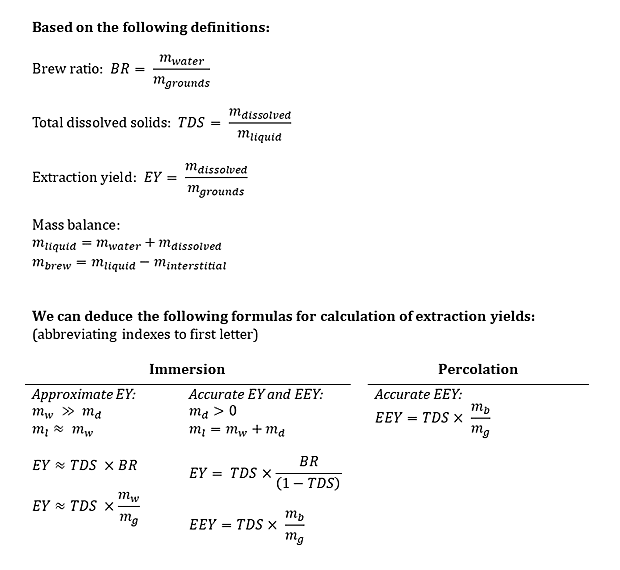
Once TDS is measured, calculating the extraction yield (EY) becomes the next crucial step. Extraction yield quantifies the percentage of soluble material removed from the coffee grounds relative to the initial mass of coffee used. However, the calculation can be complex, particularly distinguishing between immersion and percolation brewing methods. To address this, two key definitions are employed:
- Extraction Yield (EY): This refers to the total mass of dissolved solids extracted from the coffee grounds into the entire liquid mass used for brewing. In immersion brews (like French press), where all liquid is mixed, EY represents the overall extraction efficiency from the grounds.
- Effective Extraction Yield (EEY): This focuses specifically on the mass of dissolved solids that actually make it into the final cup. For percolation brews (like pour-over), where some liquid remains absorbed by the grounds (interstitial liquid) and doesn’t reach the cup, EEY provides a more practical measure of what the consumer experiences and an economic perspective on bean utilization.
For percolation brews, EY and EEY are often considered equivalent in practical terms, as the interstitial liquid’s dissolved solids are not part of the final beverage. However, in immersion brews, EY will generally be higher than EEY because the total liquid mass (including what remains in the grounds) is considered for EY, while EEY only accounts for the liquid in the cup. This distinction is crucial for understanding the economic efficiency and the nuanced flavor profiles of different brewing methods.
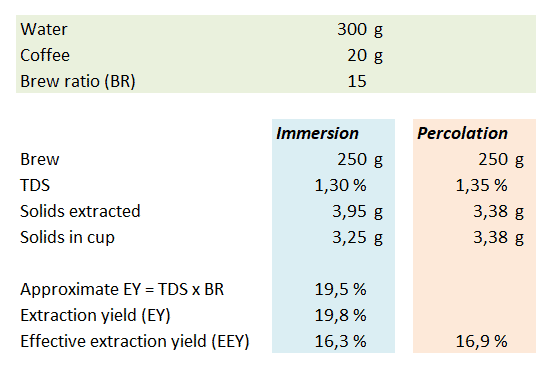
Consider an example: using 20g of coffee and 300g of water to produce 250g of brewed coffee.
- Immersion Brew (e.g., French Press): If the immersion brew measures 1.30% TDS, the total dissolved solids (m_dissolved) in the entire liquid mass (300g water + m_dissolved) is approximately 3.95g. This results in an approximate EY of 19.5% (TDS x BR = 1.30% x 15) and a more precise EY of 19.8% (TDS x BR / (1-TDS)). However, the effective extraction yield (EEY) in the 250g cup would be 3.25g (1.30% x 250g), corresponding to 16.3%.
- Percolation Brew (e.g., Pour-over): If the percolation brew measures 1.35% TDS in the 250g cup, the dissolved solids are 3.38g (1.35% x 250g). This gives an EEY of 16.9%.
This comparison illustrates that while the immersion method might extract more solids into the total liquid mass (3.95g), the percolation method is often more efficient at delivering solids to the final cup (3.38g for this example). The difference in the absolute amount of extracted solids (e.g., 3.95g vs. 3.38g) between methods is a key reason for their distinct taste profiles, as varying chemical compounds are extracted at different rates and concentrations.
It’s also important to acknowledge factors often disregarded in these calculations, such as water evaporation during brewing (which impacts the brew ratio) and the inherent water content (1-4%) in roasted coffee beans, which can subtly affect precise yield calculations. The accuracy of these yield calculations is heavily dependent on the precision of coffee grounds weighing and TDS measurement. For instance, a handheld refractometer’s 0.1% TDS uncertainty can lead to a significant +/- 1.7% uncertainty in EY for a 15g coffee dose, highlighting the need for higher-grade equipment for meticulous control.
The Crucial Role of Grind: Particle Size Distribution (PSD)
The grinding of coffee beans is a critical step, fundamentally altering the surface area available for extraction. However, the process is far from uniform; a roasted bean shatters into a range of particle sizes, from large "boulders" to microscopic "fines" (typically defined as particles smaller than 100 µm). Understanding the particle size distribution (PSD) is paramount because it directly influences both extraction efficiency and flow rate in percolation methods.
Measuring and Visualizing PSD:
While specialized lab equipment (e.g., MicroTrac, Sympatec) provides highly accurate PSD measurements, home brewers and cafés can use mechanical sifters (like those from Kruve) or even image analysis tools (such as Python apps developed by experts like Jonathan Gagné). A key challenge is that fines tend to agglomerate, potentially leading to underestimation.
Crucially, the way PSD is visualized impacts its interpretation:
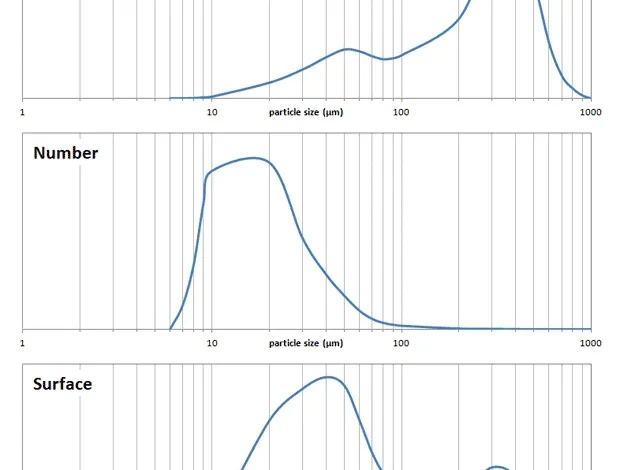
- Volume Distribution: Often presented as the default, it shows the proportion of total volume occupied by different particle sizes. While accurate, it can mislead, as the small volume of fines might appear insignificant.
- Number Distribution: This view reveals the sheer quantity of fine particles. It dramatically shifts the perception, making it clear that even if their volume is low, there are many more fines than larger particles.
- Surface Area Distribution: This is arguably the most relevant visualization for extraction, as chemical extraction occurs at the particle surface. It vividly demonstrates that for many grinds, more than half of the total extraction surface area can come from particles smaller than 100 µm. This is particularly significant given preliminary research (e.g., by Matt Perger of Barista Hustle) suggesting that coffee particles are only extracted to a depth of approximately 100 µm. This implies that the core of larger particles remains unextracted, representing "wasted" coffee. Despite this, larger particles are vital for creating a permeable filter bed, preventing clogging and ensuring adequate flow in pour-over methods.
Impact of Grind on Extraction and Flow:
The ideal grind size and distribution are highly debated. For pour-over, a narrow particle distribution is generally favored, as it leads to more consistent extraction and reduces clogging by minimizing fines. Too many fines can dramatically slow or stop filtration, leading to over-extraction and bitterness, while too coarse a grind results in under-extraction and sourness.
The choice of grinder significantly affects PSD. Cheap blade grinders, which violently chop beans, produce a highly inconsistent grind with a large proportion of fines and boulders. Burr grinders, which crush beans between abrasive surfaces, are superior. These come in various designs:
- Conical Burrs: Common in hand grinders and some electric models, they are compact and efficient.
- Flat Burrs: Often found in higher-end electric grinders, especially those with larger diameters, they can produce more uniform grinds. Different groove designs are optimized for espresso (which benefits from some fines for crema and body) versus pour-over (where fines are generally undesirable).
While home grinding offers the advantage of freshness, industrially ground coffee, processed by specialized cylindrical grinders, can achieve extremely narrow PSDs, potentially yielding a more uniform extraction. However, this benefit must be weighed against the rapid oxidation of ground coffee, which compromises flavor within days once exposed to air. To mitigate this, pre-ground specialty coffee is often packed in inert atmospheres (nitrogen) to preserve freshness.
Experimenting with grinding techniques, such as double grinding (a coarse grind followed by a finer one), could potentially narrow the PSD by reducing the stress on the burrs in a single pass. However, properly evaluating such experiments requires precise PSD measurement, which remains a challenge for most home users. Ultimately, for pour-over, the goal is often the finest possible grind that still allows for an acceptable flow rate without clogging the filter. The Aeropress, with its pressure-assisted filtration, offers a way to circumvent flow rate issues by allowing extraction to be stopped at a desired time.
Beyond the Grind: Ancillary Factors for Optimal Extraction
While brew ratio, TDS, EY, and PSD form the core of understanding coffee extraction, several other factors play crucial roles in defining the final cup’s quality.
Bean Freshness:
The mantra in specialty coffee is "use freshly roasted beans." Coffee beans, once roasted, are highly susceptible to oxidation. Exposure to oxygen causes oils to go rancid and other volatile flavor compounds to degrade, leading to stale, muted, or unpleasant flavors. Storing whole beans in airtight bags, ideally with residual air removed, and in cool conditions (even freezing for longer-term storage) can slow this process. However, once beans are ground, their vast surface area dramatically accelerates oxidation, making it imperative to grind only what is immediately needed for brewing. The flavor degradation of ground coffee can occur within hours or days.
Water Composition:
"Water is not water" is a fundamental truth in brewing. The mineral content and pH of brewing water profoundly influence the extraction of coffee compounds and, consequently, the final flavor. Minerals like magnesium and calcium can enhance the extraction of desirable flavor compounds, while excessive hardness or alkalinity can lead to dull or bitter notes. Soft water, conversely, may result in under-extracted or sour coffee. The scientific community, mirroring advancements in beer brewing, has developed specific water recipes for optimal coffee extraction, often starting with distilled water and adding precise amounts of mineral salts. For those in regions with naturally soft water, like parts of Scandinavia, the challenge shifts from removing minerals to adding the right balance to enhance extraction. Online calculators and dedicated resources, such as those found on Jonathan Gagné’s Coffee Ad Astra blog, provide guidance for tailoring water composition to specific brewing goals.
Temperature Dynamics:
Temperature is a critical variable, influencing both the solubility of compounds and the rate of diffusion during extraction. Generally, higher temperatures (close to 100°C) increase solubility and accelerate extraction, allowing more compounds to dissolve quickly. However, maximizing extraction isn’t always the goal for the "best possible cup," as some compounds extracted at very high temperatures might contribute undesirable flavors. Cold brew, for instance, intentionally uses lower temperatures, resulting in a slower extraction process (often overnight) and a distinct flavor profile, typically characterized by lower acidity and bitterness. It’s also important to note that the temperature at which coffee is tasted significantly affects sensory perception; sweetness and bitterness tend to diminish as a beverage cools, while sourness and saltiness remain more stable.
Filter Material:
The choice of filter material impacts both the clarity and mouthfeel of the brewed coffee.
- Paper Filters: These are highly effective at retaining fine particles and oils, resulting in a "cleaner" cup with less "muddy" mouthfeel (often described as "body" or "texture" when less pronounced). The difference is evident when comparing a French press (which allows more fines) to a Chemex (known for its thick paper filter). Paper filters come in bleached and unbleached varieties. While some prefer unbleached for environmental reasons, bleached filters typically contain fewer residual compounds (like lignin and hemicellulose, removed during the bleaching process) that could impart off-flavors. Modern bleaching processes largely avoid chlorine, using other oxidizing agents. The range of filter papers available, particularly laboratory-grade options like Whatman, highlights the scientific depth of filtration, with pore size being a critical trade-off between flow rate and particle retention. Wet filters swell, altering their pore size and filtration performance.
- Metal Filters: These allow more fine particles and oils to pass into the cup, contributing to a fuller body and mouthfeel, akin to an espresso. They are available for various drippers and the Aeropress, offering an alternative for those who prefer a richer texture.
- Cloth and Nylon Filters: While reusable and potentially more economical, these can discolor over time and may retain flavors if not meticulously cleaned.
The ability to perceive microscopic particles is remarkable; studies on chocolate, for example, show a "just noticeable difference" for particle sizes around 5 µm. This underscores why filter choice, even at a microscopic level, significantly impacts the sensory experience.
Towards a Masterful Brew: A Prioritized Approach
For anyone embarking on a journey into precision coffee brewing, a systematic approach to mastering the variables is essential. Based on the interdependencies and foundational impact of each parameter, a recommended order of exploration emerges:
- Brew Strength (TDS) & Extraction Yield (EY/EEY) and Grind Size (PSD): These three parameters are inextricably linked. Before optimizing any other aspect, understanding and controlling how much soluble material is extracted from the grounds and at what concentration is paramount. An incorrect grind size will lead to either under-extraction (sour, weak) or over-extraction (bitter, strong), making it impossible to evaluate other variables accurately. Achieving a consistent and appropriate grind size for the chosen brewing method is the first major hurdle.
- Freshness of Beans: Once basic extraction control is established, ensuring the use of freshly roasted and properly stored beans becomes critical. Even perfectly executed extraction cannot salvage stale coffee.
- Water Composition: With consistent extraction and fresh beans, adjusting water chemistry can unlock subtle nuances and optimize flavor profiles. This step requires a deeper understanding of mineral interactions and often involves experimenting with custom water recipes.
- Temperature: Fine-tuning brewing temperature can further refine extraction, influencing the balance of desirable compounds.
- Filter Material: The choice of filter, while significant, often represents a final layer of refinement, impacting clarity and mouthfeel.
It is logical to prioritize these parameters because fundamental issues with brew strength or grind size will mask the effects of other variables. Attempting to fine-tune water chemistry or filter type when extraction is inconsistent would be largely futile. The "Coffee Compass" from Barista Hustle serves as an excellent practical tool, guiding brewers through diagnostic questions to adjust parameters based on sensory feedback (e.g., "sour" suggests under-extraction, prompting finer grind or higher temperature; "bitter" suggests over-extraction, requiring coarser grind or lower temperature).
In conclusion, the journey from casual coffee drinker to a scientifically informed brewer is a rewarding one, driven by curiosity and a desire for excellence. The increasing availability of scientific data and specialized tools empowers enthusiasts to move beyond anecdotal methods, transforming the daily ritual into a precise, reproducible, and deeply satisfying experience. As research continues to unfold, the "rabbit hole" of coffee science promises even more profound insights into unlocking the full potential of every bean.