The Culinary Evolution of the Blondie
The fundamental distinction between a brownie and a blondie lies in the base components. Traditional brownies rely on cocoa solids or melted chocolate to provide both structure and flavor, resulting in a dense, dark, and often intense dessert. Conversely, the blondie—often described as the "vanilla" or "butterscotch" counterpart—derives its primary flavor from a combination of high-fat butter, light or dark brown sugar, and vanilla extract.

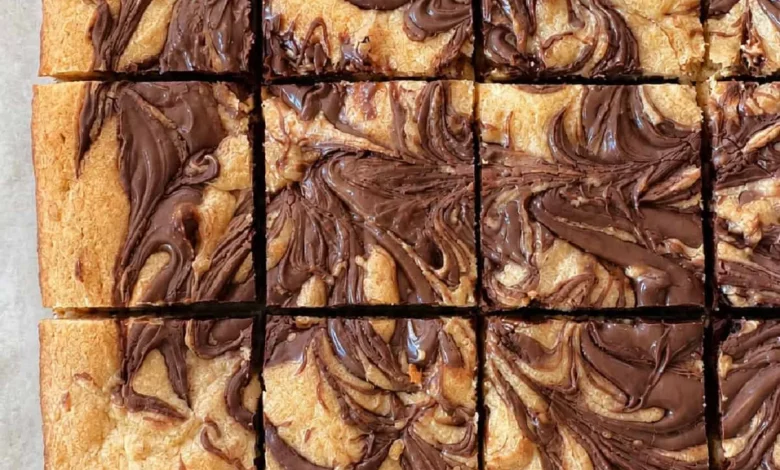
By substituting the traditional white-sugar-and-butter base with a formulation that incorporates brown sugar as the lead ingredient, bakers achieve a distinct molasses-like depth and a chewy, fudge-like consistency. The addition of Nutella—a spread composed primarily of sugar, palm oil, hazelnuts, and skimmed milk powder—introduces a secondary textural element. When swirled into the batter, the Nutella does not homogenize with the blondie mixture, creating distinct pockets of semi-soft, cocoa-infused hazelnut fat that contrast with the structural integrity of the baked bar.
Chronology of Popularity in Modern Baking
The integration of brand-name spreads into home-baked goods has been documented as a growing trend over the last decade. Market analysts note that as consumer interest in "elevated comfort food" has increased, so too has the demand for recipes that utilize high-recognition ingredients.

- Early 2000s: The rise of the "blondie" as a staple in American cafes and bakeries, moving beyond simple blondie-brownie hybrids.
- 2010–2015: The proliferation of social media platforms, such as Pinterest and Instagram, popularized visually appealing desserts, specifically those featuring "swirl" patterns or cross-sections that reveal distinct layers.
- 2020–Present: A post-pandemic shift toward home-centric culinary activities has solidified the Nutella blondie as a standard, reliable dessert, suitable for large-scale events like potlucks, school bake sales, and corporate functions.
Technical Composition and Ingredient Analysis
The chemical composition of a high-quality Nutella blondie requires precision to ensure the "chewy" characteristic is achieved without becoming dry. The inclusion of an extra egg yolk is a critical technical intervention. In baking chemistry, egg yolks contain high levels of fat and emulsifiers like lecithin. When added to a standard blondie batter, the extra yolk increases the lipid content, which inhibits the formation of a gluten network, thereby ensuring the final product remains soft rather than cake-like.
Data regarding the standard preparation of these bars suggests a baking window of approximately 20 to 25 minutes at 350°F (175°C). The objective is to achieve a "just set" center. Because the sugar content in both the blondie base and the Nutella is high, the Maillard reaction—the chemical reaction between amino acids and reducing sugars that gives browned food its distinctive flavor—is highly active. If left in the oven beyond the recommended time, the sugars will crystallize further, resulting in a brittle, dry texture that negates the desired "chew."

Nutritional Considerations and Consumption Patterns
From a nutritional standpoint, the Nutella blondie is a high-density, energy-rich food item. A standard 13×9-inch pan yields approximately 20 servings, with each serving containing roughly 288 kilocalories. The macronutrient profile reflects a diet high in carbohydrates (36g) and lipids (15g), primarily derived from the butter, egg yolks, and the oil content in the chocolate-hazelnut spread.
While these bars are often served at social gatherings, health-conscious consumers and culinary experts suggest moderation due to the high sugar content (24g per serving). However, the inclusion of hazelnuts provides trace amounts of monounsaturated fats and fiber, offering a marginal nutritional upgrade compared to traditional, fat-only confections.

The Role of Aesthetic Presentation in Culinary Media
One of the most frequently cited reasons for the success of this recipe in digital media is the "marbling" effect. When Nutella is spooned into the batter and dragged through with a knife or skewer, it creates a unique visual signature that serves as a hallmark of quality for the home baker. This aesthetic appeal has made the recipe a favorite for influencers and content creators, who rely on the "cross-section" visual to engage audiences. In the context of food photography, the contrast between the pale, golden-brown blondie base and the dark, glossy swirls of Nutella creates a high-contrast image that performs well across digital platforms.
Broader Implications for the Baking Industry
The sustained popularity of Nutella blondies highlights a broader shift in consumer behavior: the desire for "easy" yet "sophisticated" baking projects. The one-bowl preparation method, which requires minimal equipment, aligns with the modern demand for efficiency. Furthermore, the ability to substitute or modify the recipe—such as using homemade hazelnut spreads or adding sea salt to balance the sweetness—demonstrates the versatility of the blondie format.

From an industry perspective, the rise of such recipes suggests that consumers are increasingly looking for ways to utilize common pantry staples in unconventional ways. The Nutella blondie is not merely a recipe; it is a case study in how brand-loyalty and fundamental baking science can be combined to create a product that appeals to a wide demographic, ranging from novice home cooks to experienced pastry hobbyists.
Practical Tips for Optimal Results
For those attempting to replicate the results seen in professional food photography, several best practices are recommended by culinary experts:

- Room Temperature Ingredients: Ensuring that the butter and eggs are at room temperature is vital for the proper emulsification of the batter.
- Measuring Flour: Over-measuring flour is the most common cause of dry blondies. The "spoon and level" method is strongly advised to maintain the intended moisture content.
- Controlled Swirling: The Nutella should be slightly warmed to make it pourable, but not so hot that it liquefies and merges entirely with the batter. The goal is to maintain distinct ribbons of flavor.
- Cooling Period: The bars must be allowed to cool completely in the pan before being cut. The residual heat finishes the setting process, and cutting too early can lead to a messy, structural failure of the bars.
Future Projections
As the popularity of the Nutella blondie persists, market analysts anticipate that further variations will emerge, including gluten-free alternatives, vegan iterations using nut-based spreads, and the incorporation of textures like crushed pretzels or sea salt flakes to offset the sweetness. The enduring success of this recipe format underscores the fact that, regardless of culinary trends, the demand for comfort-based, reliable, and visually appealing desserts remains a cornerstone of domestic culinary culture. Whether served at a community potluck or enjoyed as a singular treat, the Nutella blondie remains a testament to the effectiveness of simple, high-quality ingredients working in tandem to produce a superior result.