The Great Soybean Paradox: How Escalating Tariffs, Agricultural Realities, and Misconceptions Exposed the Limits of America’s Crop Transition

When the Trump administration moved in the spring of 2025 to aggressively reinitiate the 2018 trade war with China, it triggered a massive logistical and economic shockwave across the American agricultural sector. The subsequent escalation of trade barriers saw tariff rates on Chinese imports stair-step upward from 20 percent to 54 percent, then 104 percent, and ultimately reaching a punishing 145 percent. China, which historically stood as the primary destination for American agricultural exports and as recently as 2022 purchased more than half of all U.S. soybean shipments, responded with retaliatory measures that eventually resulted in a total boycott of American soybeans.
Faced with millions of metric tons of stranded crops and the sudden evaporation of their largest international market, producers found themselves at the center of an intense public debate. Social media platforms quickly lit up with suggestions from observers who assumed the solution was simple: domestic consumers should absorb the surplus by shifting their diets toward plant-based alternatives. Posts urging patriotic citizens to consume more tofu, edamame, and soy-based meat substitutes circulated widely, implying that domestic food manufacturing could easily pivot to soak up millions of tons of abandoned beans.
However, this widespread public perception collided sharply with the complex economic and biological realities of modern agriculture. The notion that American farms could simply redirect millions of metric tons of export-bound soybeans into domestic human consumption exposed a profound public misunderstanding of how the global agricultural supply chain operates.
The Structural Mismatch of the Domestic Soy Market
The idea that U.S. consumers could eat their way through a trade-war-induced soybean surplus fails on multiple economic and structural fronts. Foremost among these is the size of the domestic market for direct human consumption of soy. Over the years, retail sales of tofu, tempeh, soy milk, and other traditional plant-based foods have remained relatively stagnant in the United States, consistently hovering at approximately 1 percent of all retail food and beverage sales.
This narrow domestic baseline means there is simply no existing infrastructure or consumer demand capable of absorbing a sudden influx of roughly 19 million metric tons—the approximate volume previously purchased by Chinese buyers. Even a dramatic, multi-fold surge in American adoption of plant-based diets would fall drastically short of clearing such an astronomical volume of grain.
More critically, however, the agricultural industry operates on a strict division between different types of soybean varieties. The commodity soybeans grown across millions of acres of American farmland are fundamentally distinct from the specialty beans cultivated to make human foods like soy sauce, edamame, and tofu.
"That’s a common misconception, that all soybeans are the same," explains Jonathan LaPorte, a farm business management educator at Michigan State University (MSU) Extension. While certain components of commodity soybeans eventually find their way into ultraprocessed foods as additives—such as soy flour, soy fiber, soy protein, and flavor enhancers like L-glutamic acid—the vast majority of the crop is engineered and harvested for entirely different purposes.
Commodity Soybeans: Powering Global Livestock and Industrial Chains
To understand the fate of the American soybean harvest, one must look at the macro-level statistics of global agriculture. Approximately 77 percent of all soybeans grown worldwide are destined to serve as feed for aquaculture fish and livestock. This massive volume sustains the global consumption of poultry, pork, and beef—averaging roughly 37 pounds of poultry, 33 pounds of pork, and 20 pounds of beef per person annually on a global scale. In the United States, consumption rates are even higher, with citizens eating an average of 119 pounds of poultry, 50 pounds of pork, and 59 pounds of beef each year.
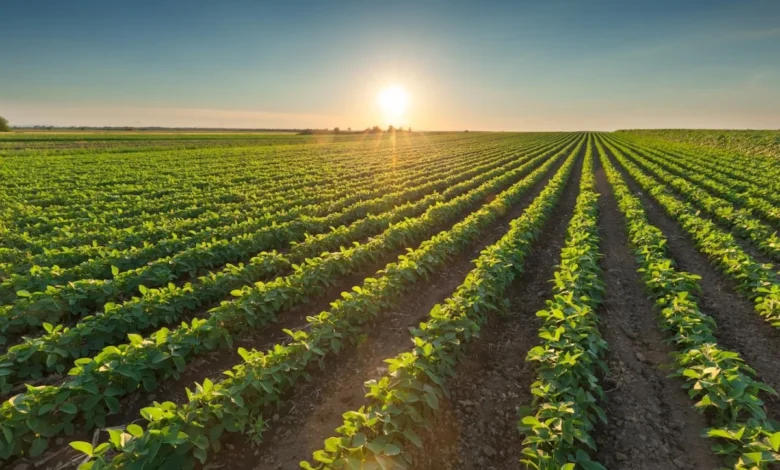
The footprint of this crop is immense. In 2023 alone, American farmers planted nearly 84 million acres of soybeans, frequently executing a crop rotation strategy with corn. Under this system, corn is grown in a field during one cycle, followed by soybeans in the next. In regions with extended growing seasons, some producers utilize a "double-cropping" method, rotating and harvesting both crops within a tight window of a few months. While Illinois and Iowa consistently rank as the top soy-producing states, tidy rows of leafy green soybean plants can be observed stretching across agricultural landscapes from North Dakota to New Jersey.
According to Eric Anderson, a soybean educator at MSU and a colleague of LaPorte, the crop’s history in the United States began with a different objective. Soybeans were originally introduced as a high-protein forage crop intended to feed dairy cattle rather than for harvesting bean-containing pods. However, through agricultural innovation in the mid-to-late 20th century, farmers began cultivating the plant for grain production.
Today, commodity soybean farmers predominantly plant genetically modified (GM) varieties specifically bred to tolerate heavy applications of herbicides such as glyphosate and dicamba. Alternatively, some growers cultivate non-GMO, high-oleic varieties to supply dairy and poultry producers who market their milk and meat as non-genetically modified. These high-oleic beans are also heavily utilized in the production of cooking oils—standard vegetable oil, for instance, is predominantly or entirely soybean oil. "Traditional soybeans don’t have as high of an oil content," LaPorte notes, making specialized high-oleic varieties necessary for commercial oil extraction.
The Processing Pipeline: From Grain Elevator to Meal and Oil
Following the harvest window in September and October, farmers typically transport their soybeans to a local grain elevator. These facilities act as vital logistical hubs that connect individual producers to the broader global marketplace. Grain elevators can store beans—charging the farmer a fee for storage—until market demand drives prices up to a profitable level.
Once processed, the soybean is crushed into two primary components: meal and oil. Darren Moody, senior director of market development for the United Soybean Board, explains that meal accounts for roughly 80 percent of a crushed bean and is technically considered a byproduct of the oil extraction process.
The vast majority of this meal—about 97 percent—is sold directly to livestock feed manufacturing companies. The remaining 3 percent is routed to industrial food processors like Cargill, where it undergoes further refinement into ingredients such as soy lecithin and soy protein isolate, which are commonly added to protein bars, baked goods, and other packaged foods. Meanwhile, producers specializing in high-oleic soybeans for the dairy sector often roast their beans before grinding, a process proven to increase the fat content in dairy milk.
The primary economic driver of the crushing process, however, is oil. Extracted from the meal using solvents such as hexane—a chemical frequently cited by critics within the modern wellness movement who raise concerns over processed seed oils—the resulting oil is largely diverted into the production of biodiesel. Beyond fuel, soybean oil is also utilized in manufacturing various industrial materials, including bio-based plastics, adhesives, and artificial turf.
Specialty Soybeans: The Niche Market for Human Consumption
In stark contrast to the massive scale of commodity soybean production, soybeans grown expressly for direct human consumption occupy a specialized segment known in the industry as "specialty" beans. These crops are frequently non-GMO and, less commonly, certified organic—distinctions that are clearly indicated on final food packaging.
Demand for specialty food-grade beans is relatively minor compared to the massive export and feed markets, with the bulk of production directed toward East Asian markets, particularly South Korea and Japan, according to Anderson. Specific varietals are bred and cultivated exclusively to become edamame, sprouts, tofu, natto, or miso. Because of these stringent quality requirements, human-grade beans are almost exclusively grown under contract. Farmers sign agreements with specific food manufacturers who pay a substantial premium for crops boasting higher protein content and cultivated with minimal chemical inputs.
Shevach Lambert, president of Surata Soyfoods—a 50-year-old tofu and tempeh manufacturer based in Eugene, Oregon, that distributes to natural food stores, restaurants, and universities across the Pacific Northwest—highlights the logistical complexities of sourcing food-grade ingredients. Lambert previously sourced organic beans through an Illinois broker but ultimately transitioned to contracting directly with a farm in Canada. He cites more rigorous and better-enforced organic standards in Canada as the primary motivation, noting that U.S. regulations often permit organic fields to sit in dangerously close proximity to conventional, GM commodity soybean farms where pollen drift poses a contamination risk.
Furthermore, manufacturing tofu and tempeh requires specific biological ratios. "We’re generally looking for a bean that’s at least 45 to 48 percent protein," Lambert explains. Traditional artisan tofu production involves soaking, rinsing, milling, cooking, and straining whole beans to extract soy milk, which is then treated with a coagulant to form curds, pressed, and cut. Conversely, industrial-scale producers frequently manufacture soy milk using defatted soy meal, which yields lower protein and fiber content. Tempeh production involves a different protocol, requiring beans to be soaked, split, cooked, and inoculated with a fungal culture that binds the beans into firm cakes overnight.
Environmental Footprint and Broader Implications
The widespread cultivation of approximately 4 billion bushels of industrial soybeans annually carries significant environmental ramifications. While industry advocates heavily promote the sustainability of soy production—pointing to practices used in organic and non-GMO cultivation—the reality of massive monoculture farming presents distinct ecological challenges.
According to data from the Environmental Working Group, fertilizer runoff resulting from the standard agricultural practice of rotating corn and soybeans contributes heavily to nitrate pollution in municipal drinking water supplies. This contamination has been linked by public health researchers to elevated cancer risks and conditions such as infant methemoglobinemia, commonly known as blue baby syndrome. Additionally, conventional soybean production can accelerate soil erosion and contribute to greenhouse gas emissions depending on land management practices.
A landmark 2022 research paper published in the Proceedings of the National Academy of Sciences (PNAS) examined the environmental consequences of expanding crop production for biofuels. The authors concluded that such initiatives led to substantial increases in nitrate leaching, phosphorus runoff, and soil erosion. Furthermore, the greenhouse gas emissions resulting from land conversion required to meet escalating biofuel demands were "enough to fully negate or even reverse any advantages of the fuel relative to gasoline."
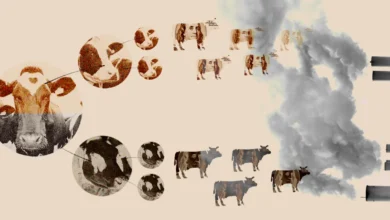
Despite these industrial environmental costs, comparative analyses by environmental organizations indicate that whole foods derived directly from soybeans maintain a significantly smaller ecological footprint than animal proteins sourced from methane-producing livestock fed on commodity soy. Moreover, the nutritional profile of whole soy foods often surpasses that of ultraprocessed industrial foods formulated with soybean derivatives.
As trade tensions persist and agricultural markets adapt to geopolitical turbulence, the American soybean remains a complex economic asset. Analysts suggest that the core challenge facing the agricultural economy is not finding a sudden domestic market for millions of tons of export-bound grain, but rather recognizing the profound divide between industrial commodity production and specialty food crops. As observers of the agricultural sector have noted, treating the soybean less as low-grade animal feed and more as a versatile agricultural resource could ultimately reshape how policymakers and the public view the future of global food systems.