How Restrictive Covenants and Corporate Tactics Fuel Food Insecurity in Low-Income Communities

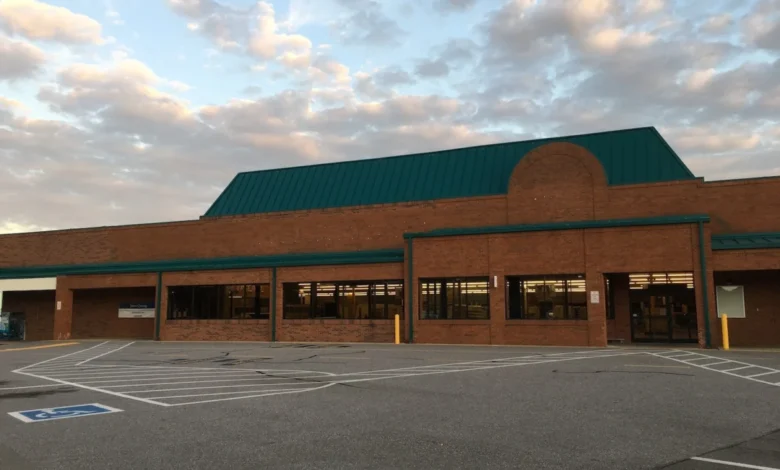
The landscape of American food access is often defined not by what is present, but by what is legally forbidden. Across the United States, major supermarket chains have utilized a little-known but highly effective legal tool known as a restrictive covenant to stifle competition, often at the direct expense of low-income residents. These provisions, embedded within property deeds and lease agreements, can prevent a vacated grocery space from being used by a competitor for decades, effectively engineering "food deserts" to protect corporate profit margins.
The issue gained renewed attention through the research of Karissa Kang, a law student at Yale University. Upon moving to New Haven, Connecticut, Kang observed a jarring disparity: while her hometown of Atlanta offered a plethora of grocery options, her new neighborhood in New Haven was served by a single national chain, Stop & Shop. For those without vehicles, the options were nonexistent. This observation led Kang to investigate the underlying mechanics of grocery competition, uncovering a systemic pattern of anti-competitive real estate practices that prioritize market dominance over community health.
The Mechanics of Exclusion: Understanding Restrictive Covenants
A restrictive covenant is a private agreement written into a property’s deed or lease that limits how the land can be used. In the context of the grocery industry, these clauses typically stipulate that if a supermarket vacates a location, the property cannot be sold or subleased to another food retailer. These restrictions often extend beyond full-service supermarkets to include bodegas, specialty markets, butcher shops, and even convenience stores.
The strategic logic for corporations is simple: by keeping a storefront empty or ensuring it is filled by a non-competing business—such as a clothing store or a gym—the departing chain ensures that its remaining locations in the region do not lose customers to a new rival. While this is a sound strategy for protecting a "slice of the grocery pie," the social cost is borne by the community, which loses its primary source of fresh produce and affordable nutrition.
According to research presented by Kang at a Yale Law School conference, these tactics are "solely and wholly intended to hinder competition." For a resident in a low-income neighborhood, the difference between a grocery store being a half-mile away versus two miles away is the difference between food security and hunger.
A History of Strategic Vacancy: Case Studies in Connecticut and Massachusetts
The use of restrictive covenants is not a new phenomenon, but its impact has intensified as the grocery industry has consolidated. Stop & Shop, a subsidiary of the Dutch conglomerate Ahold Delhaize, has been a frequent subject of scrutiny regarding these practices.
In 2012, in Stonington, Connecticut, Stop & Shop relocated its store but refused to sublease its former storefront to any entity that might sell food. This left a significant retail space vacant and forced residents to travel further for necessities. A similar, perhaps more egregious, instance occurred on Cape Cod. In Eastham, Massachusetts, Stop & Shop purchased 11 acres of land for $1.3 million. The purchase was allegedly made to prevent a competitor from developing the site. When the company eventually sold the land back to the town for $1.6 million, it included a deed restriction that prohibited the property from being used for any form of food sales—for humans or animals—in perpetuity.
In Greenfield, Massachusetts, the tactics took a different form. Stop & Shop reportedly paid a realtor for an entire decade to keep a specific property undeveloped, ensuring no competing supermarket could move in. Such "land banking" or "strategic vacancy" ensures that the corporate giant remains the only viable option for shoppers, regardless of the quality of service or price.
The Economic and Social Toll on Vulnerable Populations
The impact of these legal maneuvers is most acutely felt in "food deserts"—areas characterized by a lack of affordable, healthy food options. New Haven serves as a poignant example. The city’s non-academic population faces a poverty rate of nearly 26 percent, and food insecurity in its lowest-income neighborhoods is twice the national average.
When a major chain like Walmart or Stop & Shop enters a neighborhood, they often use their massive scale to offer prices that independent "mom and pop" stores cannot match. Once the local competition is driven out of business, the community becomes entirely dependent on the national chain. If that chain later decides the location is underperforming and closes it—while simultaneously placing a restrictive covenant on the building—the community is left with nothing.
Laurie Beyranevand, director of the Center for Agriculture and Food Systems at Vermont Law School, notes that the damage is multifaceted. "Having an empty storefront probably impacts people’s property values and increases the potential for there to be crime," she stated. Furthermore, the massive parking lots and infrastructure associated with supermarkets represent wasted urban space that could otherwise be repurposed for community centers, housing, or healthcare facilities.
Industry Defense and the Antitrust Debate
The grocery industry has long defended these practices as a standard part of commercial real estate strategy. In 2010, a spokesperson for Walmart—the largest grocer in the United States—stated that while the company welcomes competition, it should not be required to "provide infrastructure" for its rivals. This argument suggests that because a company invested in the initial development of a site, it should have the right to control its future use.
Historically, the American legal system has largely supported this view. Under the "Rule of Reason" in antitrust law, courts often look at whether a practice has a legitimate business justification. Protecting one’s investment is frequently seen as a valid justification, even if it results in a localized monopoly.
However, critics argue that this reflects a failure of modern corporate antitrust policy. The Institute for Local Self-Reliance (ILSR) found that U.S. residents spend 25 percent of their grocery budgets at Walmart alone. When a single company holds such significant market power, its use of restrictive covenants becomes a tool for market monopolization rather than mere investment protection.
Legislative Responses: From Washington D.C. to Vermont
As the federal government remains slow to act, some local and state governments have begun to intervene. In 2018, the Washington, D.C. Council passed the "Grocery Store Restrictive Covenant Prohibition Act." This law made it illegal to include provisions in a lease or deed that prohibit a property from being used as a grocery store.
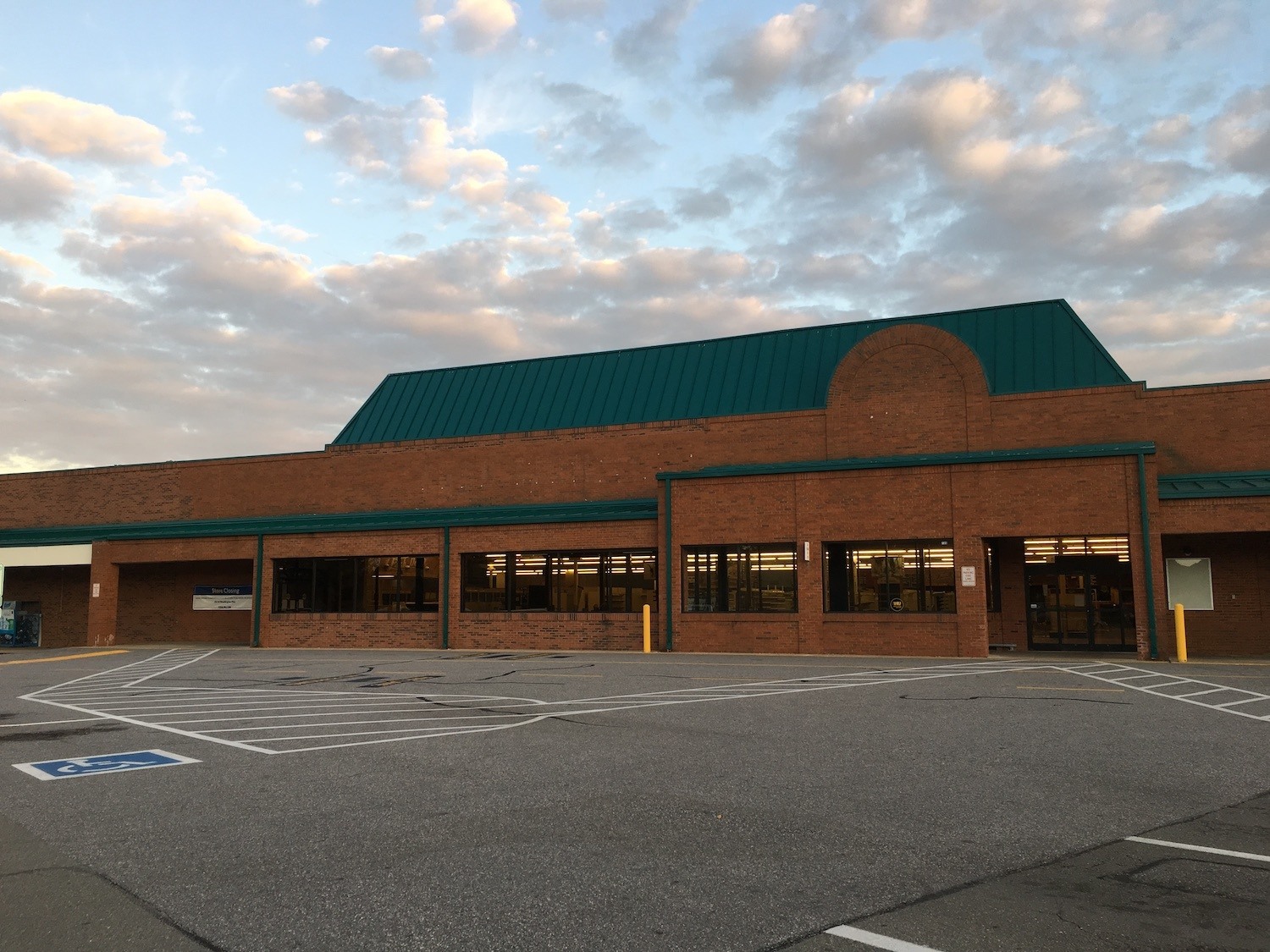
While the D.C. ban was a landmark victory for food justice advocates, legal experts like Beyranevand point out its limitations. Such laws are rarely retroactive; they apply only to new contracts, meaning existing restrictive covenants can continue to block competition for decades to come. Furthermore, a piecemeal, city-by-city approach is inefficient for a problem that is national in scope.
Other states have turned to land-use and zoning laws. Vermont’s "Act 250" is a prominent example of a law that requires significant review for large-scale developments. Such regulations can prevent grocery chains from buying up multiple parcels of land and leaving them vacant. Other proposed solutions include mandating "reuse plans" before a company is allowed to abandon a site, or giving municipalities the right of first refusal to purchase vacated grocery stores for the purpose of maintaining food access.
The Role of the Federal Trade Commission
At the federal level, the Robinson-Patman Act of 1936 remains a potential, though underutilized, tool. Originally designed to protect small businesses from price discrimination by large chains, the act could theoretically be invoked to challenge practices that systematically disadvantage smaller grocery competitors.
Legal scholars suggest that the Federal Trade Commission (FTC) could take a more aggressive stance by redefining "consumer welfare." For decades, the FTC has focused primarily on whether a merger or practice keeps prices low for consumers. However, advocates argue that "welfare" should also include access. If a corporate practice results in a resident having to take three buses to buy a head of lettuce, the low price of that lettuce is irrelevant.
Conclusion: The Path Forward for Food Sovereignty
The mystery of why certain neighborhoods are underserved by grocery stores is often solved not by looking at market demand, but by looking at property records. Restrictive covenants represent a invisible barrier to food sovereignty, allowing corporations to dictate the nutritional landscape of a city long after they have stopped serving it.
For residents in New Haven and across the country, the stakes are high. As Karissa Kang noted, even if a store moves only two miles away, that distance is an insurmountable wall for the elderly, the disabled, and the working poor. Until federal antitrust legislation or broad zoning reforms address the predatory use of real estate contracts, the "invisible fence" of the restrictive covenant will continue to define who gets to eat well in America.