Unlocking the Science Behind Ginger Milk Curd: Debunking Kitchen Myths for a Foolproof Culinary Delight

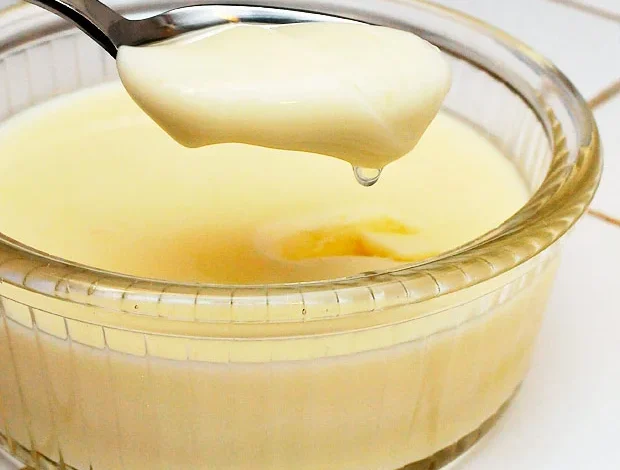
The unassuming traditional Chinese dessert known as Ginger Milk Curd, or Jiang Zhi Zhuang Nai (姜汁撞奶/薑汁燉奶), a seemingly simple concoction of just milk, ginger, and sugar, has long captivated palates with its delicate texture and piquant flavour. However, beneath its creamy surface lies a fascinating biochemical process that has historically perplexed home cooks and even seasoned chefs, leading to a frustratingly high rate of failure and the proliferation of contradictory "kitchen myths." Recent scientific investigations into the mechanics of this enzymatic gel formation are now demystifying the process, offering a foolproof approach to achieving this tender, aromatic delight consistently.
A Culinary Enigma: The History and Challenge of Ginger Milk Curd
Ginger Milk Curd traces its origins to the Cantonese culinary tradition, particularly in the Shunde district of Guangdong province. It is cherished not only for its comforting warmth and distinctive taste but also for its perceived health benefits, often served as a digestive aid or a soothing treat. The dessert’s allure lies in its minimal ingredient list and the seemingly magical transformation of liquid milk into a soft, wobbly gel within minutes, without the addition of conventional gelling agents like gelatin or agar-agar.
Yet, this apparent simplicity belies a profound scientific complexity. Accounts from aspiring home cooks frequently describe frustrating experiences, with success rates often reported as low as 50%, some even claiming to succeed only after numerous attempts or resorting to adding external stabilizers like egg whites. This inconsistency has fueled a wide array of often conflicting advice regarding preparation, from specific pouring techniques to precise temperatures, many of which are anecdotal and lack a scientific basis. It is precisely this landscape of uncertainty that gives rise to pervasive "kitchen myths," where correlation is mistaken for causation, and random successes or failures are attributed to irrelevant procedural variations.
The Scientific Breakthrough: Demystifying the Gelation Process
The key to unlocking the secret of Ginger Milk Curd lies in understanding the precise biochemical interaction between milk proteins and enzymes found in fresh ginger. This process falls into a broader category of food science where enzymes are employed to curdle milk, a principle famously utilized in cheesemaking with rennet.
At the heart of ginger’s gelling power are ginger proteases (GP), a group of proteolytic enzymes, with zingipain (EC 3.4.22.67) being a prominent member. Proteases are biological catalysts that break down proteins into smaller fragments. In the context of milk, these enzymes specifically target casein, the primary protein component responsible for milk’s stability.
The Role of Casein Micelles: Milk’s Structural Backbone
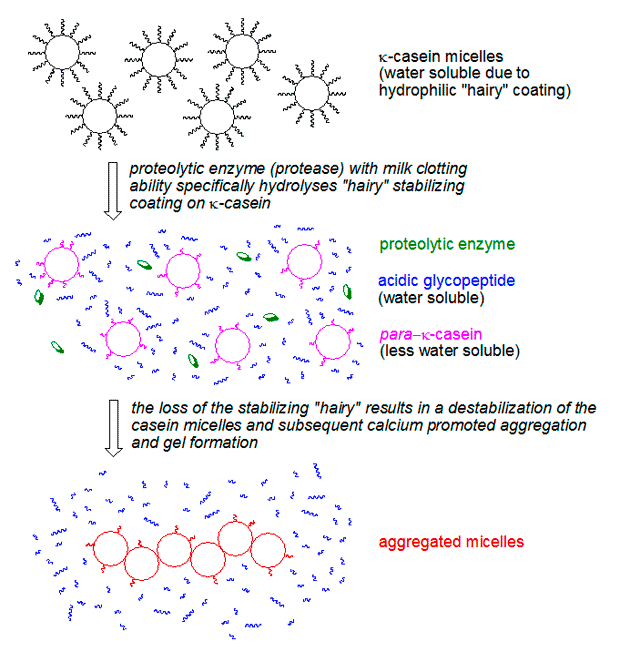
Milk is not simply a uniform liquid; it is a complex colloidal dispersion where casein proteins are organized into large spherical structures called micelles. These micelles, held together by calcium ions, are crucial for the stability of milk. Their outer surface is covered by κ-casein (kappa-casein), which possesses a water-soluble "hairy" layer (an acidic glycopeptide) that projects into the aqueous phase. This hydrophilic layer performs a dual function: it keeps the micelles dispersed in water and prevents them from aggregating and coalescing. Without this protective layer, milk would spontaneously curdle.
When ginger proteases are introduced to milk, their primary function is to cleave off this water-soluble portion of κ-casein, leaving behind a less soluble component known as para-κ-casein. This enzymatic hydrolysis effectively "shaves" the protective hairy layer from the casein micelles. Stripped of their stabilizing shield, the now destabilized micelles are free to collide and aggregate. The calcium ions naturally present in milk further facilitate the cross-linking of these "shaved" micelles, rapidly forming a three-dimensional protein network that traps water, resulting in the characteristic tender gel of Ginger Milk Curd. This entire process can occur within a mere 5-10 minutes, a testament to the efficiency of enzymatic catalysis.
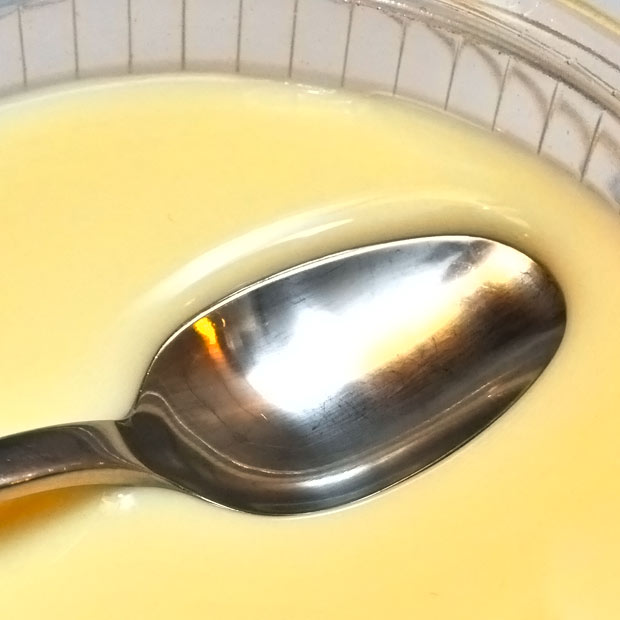
The resulting gel is inherently fragile and prone to syneresis, the phenomenon where a gel contracts and expels liquid (in this case, whey). This is often observed as clear drops of liquid accumulating around the edges of the curd or under a spoon, indicating the gel’s delicate structure.
The Critical Role of Temperature: A Narrow Window for Success
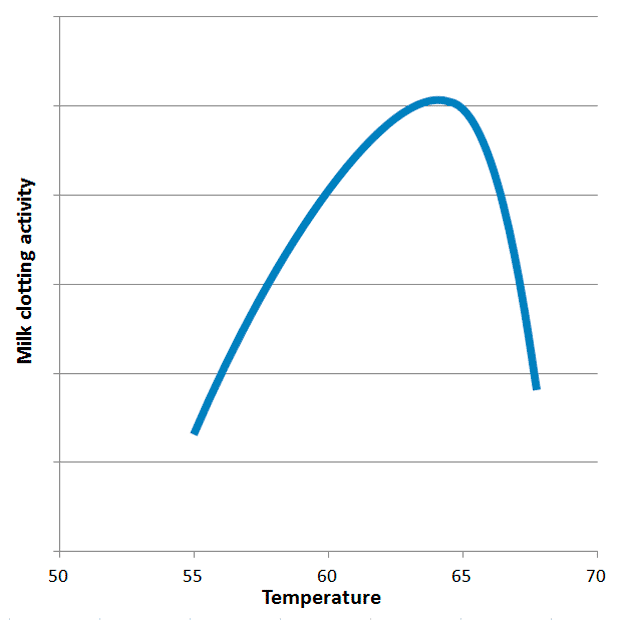
One of the most significant discoveries in understanding ginger milk curd is the extreme temperature sensitivity of ginger proteases. Unlike some enzymes that have broad activity ranges, GP exhibits optimal milk clotting activity (MCA) within a very narrow temperature window, specifically peaking around 63°C. Its activity rapidly declines above 65°C and below 60°C. Crucially, temperatures exceeding 70°C lead to rapid and irreversible denaturation of the enzymes, rendering them inactive.
This precise temperature requirement is the primary reason for the high failure rate observed in traditional recipes. Many instructions might advise heating milk to a "boil" or "near boil," which invariably pushes the temperature far beyond the optimal range, destroying the ginger proteases before they can act. While GP may exhibit general proteolytic activity (PA) outside this narrow window, this non-specific breakdown of proteins does not lead to the desired organized gel formation, but rather to a grainy or curdled texture.
For comparison, other plant-derived proteases also exhibit distinct temperature optima: kiwi proteases, for instance, are most active around 40°C, while melon proteases peak at 70°C. This highlights the unique biochemical fingerprint of ginger proteases and the necessity of precise temperature control for successful gelation.
Optimizing Ingredients for Gel Strength and Stability
Beyond temperature, several other factors influence the strength and consistency of the ginger milk curd:
- Milk Type: Research indicates that skimmed milk tends to produce a stronger gel than whole milk. This is because milk fat can interfere with the formation of the casein network. Furthermore, heating milk above 65°C, especially whole milk, causes whey proteins like lactoglobulins to denature and precipitate onto the κ-casein. This precipitation can hinder the enzymatic cleavage of κ-casein and impede the proper aggregation of micelles, leading to a weaker or failed gel.
- Calcium Concentration: Since calcium ions play a vital role in bridging the "shaved" casein micelles, a higher concentration of calcium in the milk can contribute to a stronger and more robust gel structure.
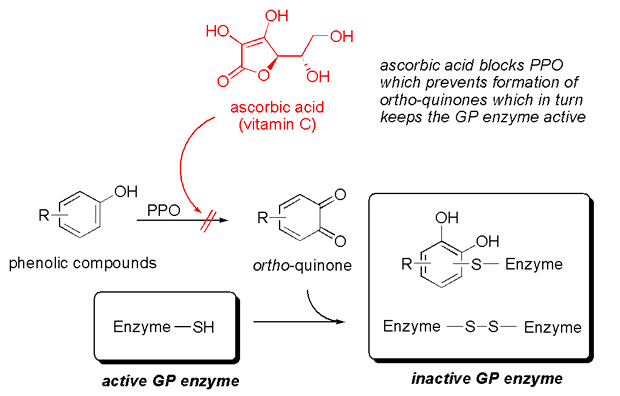
- Ginger Juice Freshness and Stability: The efficacy of ginger juice is not just about quantity but also quality and freshness. Ginger proteases in freshly squeezed juice have a remarkably short half-life – approximately 20 minutes at 30°C. This means that in a warm kitchen, half of the enzyme activity can be lost within 20 minutes of preparation, and only 25% remains after 40 minutes. This rapid degradation is due to another enzyme present in ginger: polyphenol oxidase (PPO). PPO is responsible for enzymatic browning, similar to what occurs in apples. Once ginger is grated, PPO oxidizes phenolic compounds into ortho-quinones, which then react with and inactivate the delicate ginger proteases.
Fortunately, this instability can be counteracted. A well-known culinary trick to prevent enzymatic browning in fruits like apples is the addition of ascorbic acid (vitamin C). Ascorbic acid acts as an antioxidant, blocking the action of PPO and thereby preserving the activity of the ginger proteases. Adding a mere pinch (approximately 0.2% by weight) of vitamin C to the freshly squeezed ginger juice can significantly extend its enzymatic activity, making it possible to prepare the juice slightly in advance if necessary.
Debunking the Myths: Science Versus Anecdote
With a clear scientific understanding, many long-standing kitchen myths surrounding Ginger Milk Curd can be definitively addressed:
- Myth: "Heat milk to boiling." Debunked: Boiling milk will denature the ginger proteases, leading to failure. The optimal temperature is a precise 60-65°C.
- Myth: "Pour milk slowly/gently." Debunked: While gentleness is good, pouring from a height ensures rapid and thorough mixing of the milk and ginger juice, which is crucial for uniform gelation.
- Myth: "Do not stir after pouring." Confirmed: Stirring after the initial mixing disrupts the delicate formation of the casein network, preventing proper gelation and resulting in a grainy texture.
- Myth: "Use old ginger for better results." Debunked (partially): While older ginger might have a higher concentration of enzymes, the instability of these enzymes due to PPO means that freshly squeezed juice, ideally from robust ginger, is paramount. The benefits of "old" ginger are likely outweighed by enzyme degradation if not handled correctly.
- Myth: "The preparation requires ‘a lot of skills and a pinch of luck’." Debunked: While skill in precise temperature control is important, "luck" is replaced by scientific understanding.
The Foolproof Recipe: A Science-Backed Approach
Armed with this scientific knowledge, a consistently successful Ginger Milk Curd is no longer a matter of chance. The most vital piece of equipment for this recipe is a digital kitchen thermometer, ensuring precise temperature control.
Foolproof Ginger Milk Curd Recipe:
-
Ingredients:
- 250 mL skimmed milk
- 18 g fresh ginger juice (approximately 31 g peeled ginger or 43 g raw ginger)
- 20 g sugar
-
Instructions:
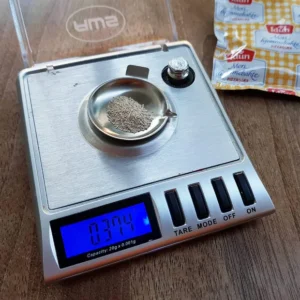
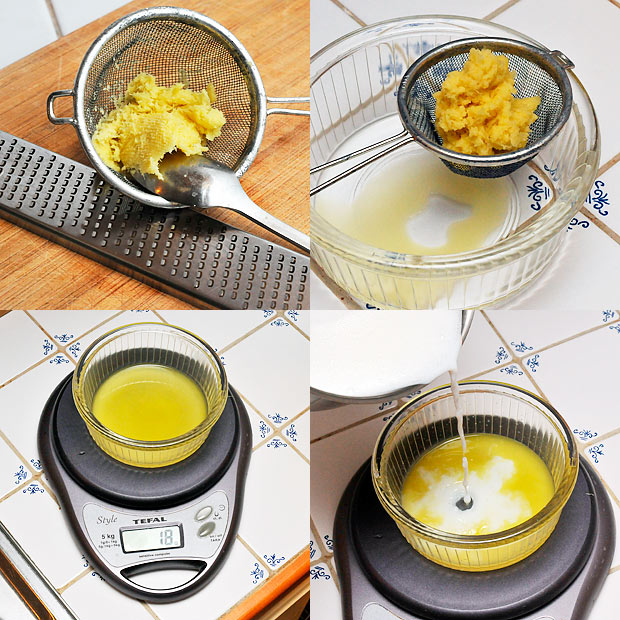
- Prepare Ginger Juice: Peel fresh ginger and grate it finely using a microplane or a very fine grater. Squeeze out the juice through a sieve or cheesecloth directly into your serving bowl. Aim for 18g of pure ginger juice. Note: Prepare the ginger juice immediately before use to maximize enzyme activity, or add a tiny pinch (approx. 0.2%) of ascorbic acid if preparing in advance.
- Heat Milk: In a clean saucepan, combine the skimmed milk and sugar. Heat gently over medium-low heat, stirring occasionally to dissolve the sugar. Continuously monitor the temperature with a digital kitchen thermometer.
- Achieve Optimal Temperature: Heat the milk precisely to 65°C. Remove from heat immediately once this temperature is reached. Do not exceed 70°C.
- Combine and Set: Quickly pour the heated milk from a height (about 15-20 cm) directly into the bowl containing the ginger juice. This high pour facilitates instant and thorough mixing of the milk and ginger proteases.
- Allow to Set: Do NOT stir the mixture after pouring. Leave the bowl undisturbed at room temperature. Within 5-10 minutes, a tender, fragile gel will form.
- Serve: The ginger milk curd can be served immediately while warm or chilled in the refrigerator for a refreshing dessert.
This recipe maintains a milk-to-ginger juice ratio of approximately 14:1. While more ginger juice can be used for a stronger flavour, it may become overpowering. Reducing the ginger juice amount requires further experimentation to ensure sufficient enzyme concentration for gelation.
Broader Implications and Future Explorations
The scientific understanding of ginger milk curd extends beyond a single dessert, offering broader implications for food science and culinary innovation. The ability of plant-derived proteases to curdle milk presents exciting possibilities for developing vegetarian and vegan alternatives to animal rennet in cheesemaking, a field already seeing advancements with enzymes from kiwi and melon.
Furthermore, this simple dessert serves as an excellent pedagogical tool, illustrating complex biochemical principles like enzyme kinetics, protein denaturation, and gel formation in a tangible, delicious way. It empowers culinary enthusiasts to move beyond rote recipes and engage with the scientific underpinnings of their cooking.
For those eager to delve deeper, avenues for further experimentation remain. These include investigating the optimal amount of ginger juice for varying milk volumes, assessing the impact of different milk fat percentages (e.g., semi-skimmed milk) on gel strength, exploring the effect of added calcium salts, and precisely quantifying the shelf-life extension provided by ascorbic acid in ginger juice.
Ultimately, the journey from kitchen myth to scientific certainty transforms Ginger Milk Curd from a temperamental treat into a reliable culinary masterpiece. By embracing the precise science of temperature, enzyme activity, and protein structure, cooks can confidently reproduce this beloved dessert, proving once again that the most profound culinary magic often lies in the elegance of biochemistry.