Tragedy of Errors: Re-Examining the 1987 Bintaro Train Crash and the Burden of Systemic Failure

In the complex ecosystem of modern public transportation, catastrophic accidents are rarely born from a single, isolated human error. More often, they are the tragic culmination of layered systemic vulnerabilities, operational oversights, and structural inadequacies that converge at a single, fatal moment. Yet, in the aftermath of disaster, the machinery of justice and public scrutiny frequently isolates a few individuals, laying the entirety of the blame upon their shoulders while institutional shortcomings escape fundamental reckoning. This phenomenon of scapegoating remains one of the most sobering lessons in the history of transportation safety, echoing profoundly through the decades since the fateful morning of October 19, 1987.
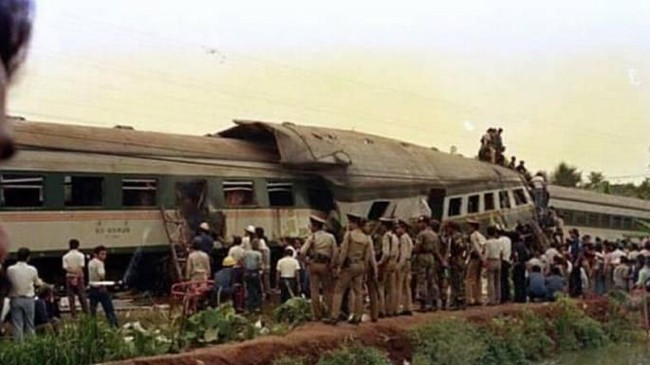
That morning etched itself into the annals of Indonesian history as the Bintaro train crash, a horrific head-on collision between two passenger trains in South Jakarta that claimed the lives of over a hundred people and left hundreds more seriously injured. Among those swept into the eye of the storm was Slamet Suradio, the engineer operating Train 225. In the wake of the disaster, Slamet was swiftly designated as a primary criminal suspect, transforming a working-class railwayman into the face of a national catastrophe. However, a deeper examination of the historical record, court testimonies, and journalistic investigations from the era reveals a far more complex reality—one defined by overloaded carriages, grueling working hours, flawed communication protocols, and archaic infrastructure.
The Anatomy of a Head-On Collision
The disaster unfolded on a stretch of track in Bintaro, where Train 225, traveling from Rangkasbitung toward Tanah Abang, collided head-on with Train 220, moving in the opposite direction from Tanah Abang toward Merak. At the time of the impact, Train 225 was moving at an estimated speed of 45 kilometers per hour, while Train 220 was traveling at approximately 25 kilometers per hour. Due to the alignment of the tracks and the lack of advanced visibility systems, neither engineer was immediately aware that another locomotive was hurtling toward them on the same single track until it was far too late to avert disaster.
Slamet Suradio miraculously survived the catastrophic impact, though he sustained severe physical injuries. Almost immediately, institutional investigations led by the police and the Joint Investigation Team for Railway Accident Events (Gappka) focused heavily on operational personnel. Ultimately, authorities singled out four employees of the state railway company, Perusahaan Jawatan Kereta Api (PJKA), holding them criminally responsible for the tragedy.
The accused included the Station Controller (PPKA) of Sudimara, the Station Controller of Kebayoran, the conductor of Train 225, and Slamet Suradio himself. According to contemporary reports from the newspaper Waspada published on October 24, 1987, the Sudimara station controller was deemed at fault for transmitting a notification regarding the relocation of the crossing point from Sudimara to Kebayoran to the train’s conductor and engineer without securing prior formal authorization from the Kebayoran station controller. Conversely, the Kebayoran station controller was faulted for dispatching Train 220 without confirming arrangements with Sudimara.
Slamet’s alleged infraction centered on his decision to move Train 225 forward after receiving word about the crossing alteration, purportedly without a direct, verified command from either the station controller or the train’s leading conductor. Meanwhile, the conductor of Train 225 was accused of failing to exercise his duty to halt the locomotive despite knowing that official clearance from the station controller had not been formally finalized.
Beyond the Cab: Uncovering Systemic Realities
As the legal proceedings advanced into 1988, the courtroom testimony began to peel back layers of institutional neglect that extended far beyond the actions of the four defendants. The trials exposed a web of systemic pressures that had silently compromised the safety of the railway network long before the two trains entered the same track.
Chief among these revelations was the severe issue of passenger overcrowding. Both trains were operating vastly over capacity, carrying hundreds of undocumented ticketless travelers—commonly referred to as "penumpang gelap"—alongside those who had formally purchased tickets. Records indicated that Train 225 was officially carrying around 700 ticketed passengers, while Train 220 carried approximately 500 ticketed individuals, excluding the uncounted masses who packed the vestibules, hung from the sides, and even climbed onto the roofs. This massive passenger load not only strained the braking capacity and performance of the locomotives but also heightened the human toll when the collision finally occurred.
Furthermore, the judicial scrutiny began to examine the punishing labor conditions imposed on railway operational staff. Citing reports from the newspaper Neraca on August 22, 1988, presiding judges scrutinized the grueling schedules that engineers like Slamet were forced to endure. Testimony revealed that Slamet had already been on duty since the early morning hours, having operated a train from Tanah Abang to Merak starting around 6:00 AM on October 19. Rather than receiving adequate rest, he was immediately assigned to subsequent runs under the institutional assumption that experienced personnel could seamlessly manage continuous shifts, regardless of fatigue.
"For instance, Slamet, he had just operated a train on October 19 around 06:00 WIB on the Tanah Abang-Merak route, but was allowed to immediately run subsequent trains because he was considered accustomed to it, until the collision finally occurred," Neraca reported.
When viewed objectively, the Bintaro tragedy was underpinned by an accumulation of unaddressed hazards: rigid and archaic scheduling frameworks, poor crowd management, antiquated communication systems between stations, unreliable signaling mechanisms, and the dangerous absence of double-track infrastructure on high-density routes. A single track necessitated flawless, fail-safe communication protocols; when human error or bureaucratic miscommunication occurred, the lack of technological safeguards meant catastrophe was inevitable.
Judicial Outcomes and Lifelong Consequences
Despite the mounting evidence pointing toward systemic and infrastructural deficiencies, the judicial system maintained its focus on individual accountability. The trials concluded with convictions for the four PJKA employees. According to reports from Waspada on August 22, 1988, Slamet Suradio received the harshest penalty, sentenced to five years in prison. His co-accused received lesser sentences ranging from 10 months to 2.5 years behind bars.
For Slamet Suradio, the verdict marked the total dissolution of his personal and professional life. Beyond serving his prison sentence, he was stripped of his position as a railway engineer and terminated from PJKA without receiving his rightful pension benefits. The social stigma of the disaster alienated him from his family and community, casting a long shadow over the remainder of his days. Decades later, having lived through the quiet obscurity of a disgraced former public servant, Slamet passed away in June 2026, carrying the psychological burden of the tragedy to his final resting place.
Historical Implications and Modern Lessons
The 1987 Bintaro disaster remains a watershed moment in the history of Indonesian transportation. It laid bare the dangers of prioritizing operational continuity over passenger safety and worker welfare. The narrative surrounding Slamet Suradio and his colleagues serves as a critical historical case study in the ethics of accountability.
In the decades following the tragedy, Indonesia’s railway sector has undergone profound transformations. The transition toward modern signaling systems, the implementation of stricter operational protocols, the gradual construction of double-track networks, and significant improvements in workforce management reflect hard-learned lessons from the past. Modern transport safety management now emphasizes "blameless reporting cultures" and systemic analysis—acknowledging that punishing frontline workers does nothing to fix underlying structural flaws.
Ultimately, revisiting the Bintaro tragedy is not merely an exercise in historical memory, but a necessary reminder of the human cost associated with institutional neglect. It challenges modern society to look beyond immediate scapegoats and evaluate the deeper, systemic pillars upon which public safety and worker dignity truly rest.