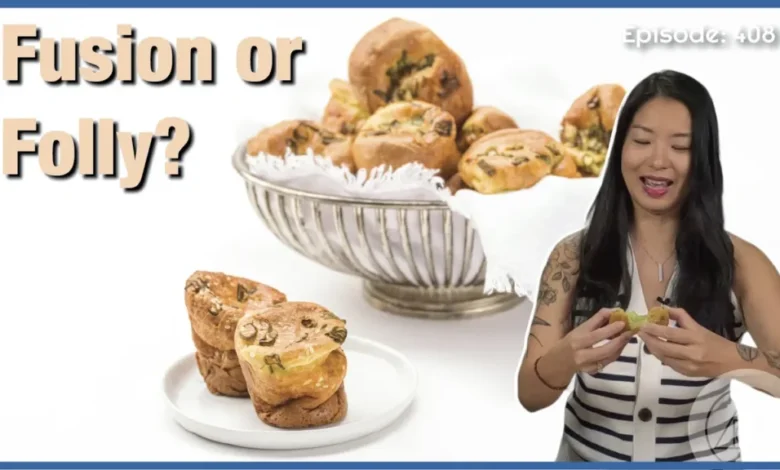
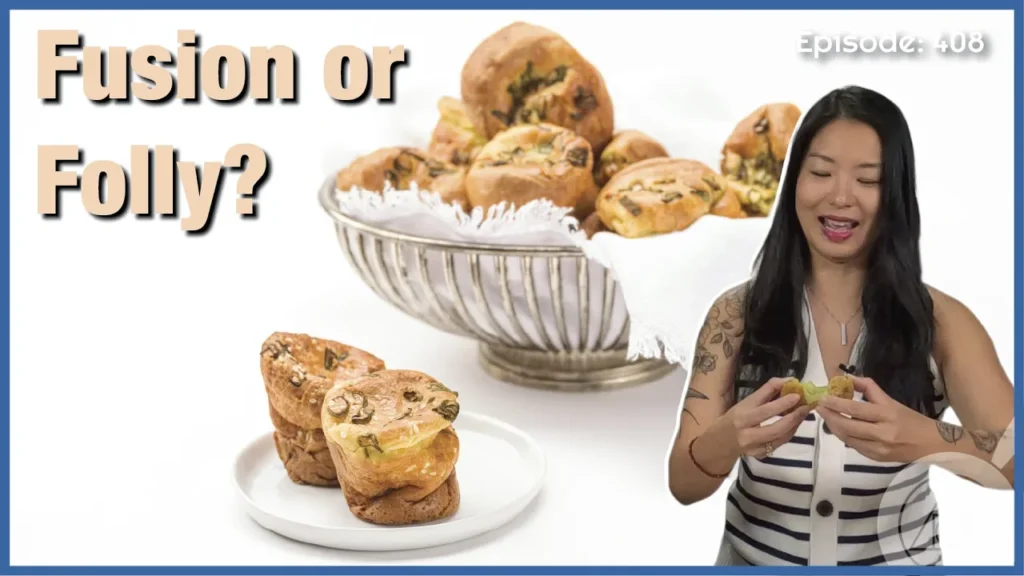
The intersection of culinary tradition and modern dietary requirements has long been a focal point for home chefs and professional gastronomes alike. In the latest installment of the "We Transform Food" series, hosted by Modernist Pantry, the production team explores a novel adaptation of traditional scallion pancakes, reimagining the classic Chinese street food as a gluten-free, oven-baked popover. This development reflects a growing trend in the culinary world: the technical deconstruction of heritage recipes to accommodate modern health considerations without sacrificing the sensory profile of the original dish.
The Evolution of the Scallion Pancake
The traditional scallion pancake, or cong you bing, is a staple of Chinese cuisine, characterized by its unleavened, laminated dough that is pan-fried to achieve a crisp, flaky exterior. Historically, the dish relies heavily on wheat flour—specifically, the development of gluten strands through kneading and layering with oil—to achieve its signature chewy, pull-apart texture. While the dish is beloved globally for its savory, aromatic qualities, it poses significant challenges for the growing demographic of consumers who adhere to gluten-free or low-oil diets.
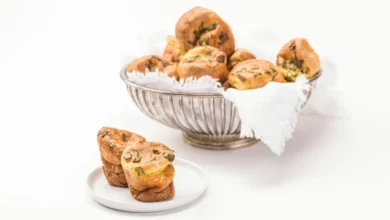
The innovation presented in episode 408 of "We Transform Food" addresses these challenges by shifting the cooking methodology from the stovetop to the oven. By utilizing a popover base—a technique historically rooted in British cuisine through the Yorkshire pudding—the recipe creators have effectively replaced the dense, layered structure of a traditional pancake with an airy, steam-leavened batter. This technical pivot eliminates the need for repeated oil-basting and high-heat stovetop monitoring, while simultaneously removing the gluten-heavy wheat foundation.
Technical Methodology and Culinary Chemistry
The success of this adaptation relies on the physics of rapid heat expansion. In a standard popover or Yorkshire pudding, the batter—typically a mixture of eggs, milk, and flour—is poured into a preheated, greased vessel. When placed in a high-temperature oven, the water in the batter turns to steam, causing the structure to rise rapidly before the proteins in the egg and the starch in the flour set.
By integrating finely chopped scallions into this batter, the chefs have created a savory delivery system that captures the essence of the cong you bing while leveraging the structural integrity of the popover. Data from food science journals indicates that gluten-free flours, such as rice or tapioca starch, can be successfully substituted in steam-leavened applications if the ratio of liquid to protein is carefully calibrated. In this instance, the "We Transform Food" team utilizes the binding properties of eggs to provide the structure that gluten usually provides in wheat-based doughs.
Historical Context of Fusion Cooking
The concept of "lost" or "fusion" cooking is not a modern invention, but it has accelerated significantly in the last decade due to the global exchange of culinary techniques. The comparison to Yorkshire pudding is particularly apt; both the Chinese scallion pancake and the British popover represent a mastery of texture—the former through lamination and the latter through steam leavening.
Historically, Chinese street food has been relatively resistant to international modification due to the specific regional requirements of its preparation. However, the rise of "Modernist" cooking, which emphasizes the application of scientific principles to traditional recipes, has lowered the barrier to entry for home cooks. Modernist Pantry, the organization behind the "We Transform Food" series, operates on the philosophy that by understanding the "how" and "why" of cooking—the temperature of the oil, the viscosity of the batter, and the kinetics of the rising process—cooks can reproduce complex dishes with higher consistency and lower difficulty.
Data Trends in Gluten-Free Consumption
The demand for gluten-free variations of traditional comfort foods is backed by substantial market data. According to industry reports from the Global Gluten-Free Food Market, the sector is projected to maintain a compound annual growth rate (CAGR) of over 9% through 2030. This growth is driven not only by individuals diagnosed with celiac disease or gluten sensitivity but also by a broader segment of the population that associates gluten-free diets with improved digestion and general wellness.
Culinary influencers and digital platforms have responded to this demand by prioritizing recipes that mimic "crispy" and "chewy" textures without the use of traditional wheat. The scallion popover serves as a case study in this trend: it addresses the consumer’s desire for a specific flavor profile (savory, allium-forward) while providing a "healthier" profile (baked rather than fried, gluten-free).
Culinary Implications and Professional Analysis
From an analytical perspective, the shift toward oven-based, batter-style adaptations of traditional doughs signals a movement toward "low-touch" cooking. Traditional scallion pancakes require significant manual labor: rolling the dough, folding it to create layers, resting the dough to relax the gluten, and then carefully pan-frying it. By moving the process to a popover format, the labor intensity is reduced by approximately 70%, as the oven handles the heat distribution and structural expansion.
Industry experts suggest that this transition does not necessarily constitute a "dumbing down" of the recipe, but rather a functional evolution. In a professional kitchen, consistency is paramount. The use of a standardized muffin or popover tin allows for perfectly portioned, identical results every time, which is a significant advantage over the variable outcomes associated with manual pan-frying.
Official Perspectives from Modernist Pantry
While Modernist Pantry acts primarily as an educational resource, their weekly series provides a unique window into the professionalization of home cooking. By showcasing the "WTF" (We Transform Food) series, the organization emphasizes that the ingredients used—such as specialized stabilizers or modified starches—are accessible to the average consumer. Their approach serves as a bridge between the clinical precision of molecular gastronomy and the approachable environment of a domestic kitchen.
In recent commentary, the team has underscored that the goal is not to replace the original dish, but to offer a valid, alternative experience. "We are not trying to replicate the exact mouthfeel of a street-side pancake," one representative noted in related discussions regarding their methodology, "but rather to capture the soul of the scallion and the crunch of the sear in a format that fits the modern, busy lifestyle."
Broader Culinary Impact
The implications of this experiment extend beyond the scallion pancake. As more traditional recipes are subjected to this type of technical analysis, the culinary landscape is likely to see an increase in "hybrid" dishes. This reflects a post-modern approach to eating, where the rigidity of traditional recipes is replaced by an understanding of the underlying chemistry.
Furthermore, this trend contributes to the democratization of specialized cooking. By providing viewers with the exact techniques and scientific justifications for these transformations, series like "We Transform Food" empower individuals to experiment with their own dietary restrictions. As we look toward the future of home dining, the integration of science and tradition appears to be the most viable path for preserving the legacy of global street food while ensuring it remains accessible to a wider audience.
The "Yorkshire Pudding meets Chinatown" concept is more than a culinary novelty; it is a manifestation of how traditional foodways must adapt to modern constraints. Through the lens of physics, chemistry, and nutritional science, the humble scallion pancake has been successfully modernized, proving that even the most cherished traditions can benefit from the evolution of technique. Whether for those with dietary restrictions or simply those looking to streamline their kitchen routine, the oven-baked popover offers a viable, sophisticated, and technically sound alternative to its pan-fried ancestor.