United States Records Notable Decline in Residential Food Waste as Global Leaders Gather for 10th Annual Stop Food Waste Day

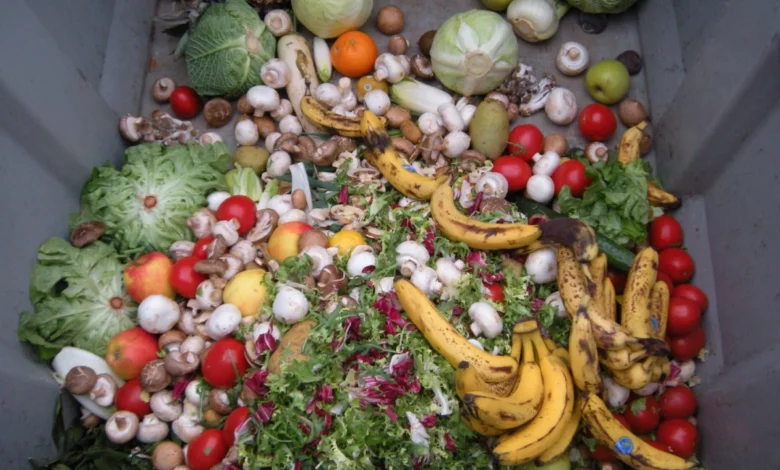
The United States has achieved a measurable reduction in food waste over the past year, according to newly released data from ReFED, a national nonprofit dedicated to ending food loss and waste through data-driven solutions. Between 2023 and 2024, the total volume of surplus food in the country decreased by 2.2 percent, a shift driven largely by a significant 950,000-ton reduction in residential food waste. This downward trend highlights an evolving consciousness among American consumers regarding the environmental and economic costs of discarded food, setting a promising tone for the upcoming 10th Annual Stop Food Waste Day Celebration scheduled for April 29 in Charlotte, North Carolina.
Analysis of the 2024 ReFED Report and National Trends
The latest findings from ReFED provide a comprehensive snapshot of the American food system’s efficiency. While the 2.2 percent decrease represents progress, the report also underscores the magnitude of the challenges that remain. In 2024, the total value of surplus food—food that is grown but never consumed—reached approximately US$380 billion. For the average American consumer, this translates to an annual expenditure of US$762 on food that is ultimately thrown away.
The reduction in residential waste is particularly significant because the household level has historically been one of the most difficult sectors of the food chain to influence. Experts attribute this decline to a combination of factors, including rising grocery prices which have incentivized more careful meal planning, and an increase in municipal composting and food recovery programs. Furthermore, the 950,000-ton reduction in home-based waste suggests that public awareness campaigns and improved food storage education are beginning to yield tangible results.
Surplus food is not merely an economic loss; it is a primary driver of environmental degradation. When food rots in landfills, it produces methane, a greenhouse gas significantly more potent than carbon dioxide in its short-term warming potential. The ReFED data suggests that even marginal improvements in food management can contribute substantially to national climate goals, including the joint commitment by the U.S. Department of Agriculture (USDA) and the Environmental Protection Agency (EPA) to halve food waste by 2030.
The 10th Annual Stop Food Waste Day: A Decade of Action
As the data reflects a shift in consumer behavior, industry leaders and advocates are preparing to convene for the 10th Annual Stop Food Waste Day. This year’s event, co-hosted by the global food service provider Compass Group, the nonprofit Food Tank, and the local sustainability initiative Envision Charlotte, marks a decade of efforts to institutionalize food waste reduction across the globe.
The celebration will be held at the Innovation Barn in Charlotte, North Carolina. The choice of venue is symbolic; the Innovation Barn serves as a flagship for the circular economy, housing various projects focused on zero-waste living, composting, and material repurposing. The event is designed to serve as both a retrospective of the movement’s growth and a strategic planning session for future interventions in the food system.
Since its inception, Stop Food Waste Day has grown from a corporate social responsibility initiative into a global day of action observed by businesses, schools, and individuals in dozens of countries. The 2024 iteration aims to bridge the gap between high-level policy and grassroots action, emphasizing that while systemic changes are necessary, individual "citizen eaters" hold the power to stabilize the food system.
Chronology of the Food Waste Movement and Event Programming
The movement to address food waste has gained significant momentum over the last ten years. In 2015, the United Nations included food waste reduction as a key target within the Sustainable Development Goals (SDG 12.3), aiming to halve per capita global food waste at the retail and consumer levels. This international framework provided the impetus for events like Stop Food Waste Day to scale their impact.
The schedule for the April 29 event reflects a multi-disciplinary approach to the issue. The afternoon will feature a series of panels and presentations from a diverse array of stakeholders:
- Corporate and Culinary Leadership: Representatives from Compass Group, including Palmer Brown, Chris Ivens-Brown, and Amy Keister, will discuss the logistics of reducing waste in large-scale food service operations. They will be joined by Michiel Bakker of the Culinary Institute of America to discuss how professional culinary training is evolving to prioritize "root-to-stem" cooking.
- Innovation and Technology: Harry Tannenbaum of Mill, a company specializing in high-tech kitchen composting solutions, will join discussions on how technology can simplify food waste management for households.
- Logistics and Recovery: Eliza Blank from Farmlink and Richard Armenia of Feeding Charlotte will highlight the logistical challenges of "food rescue"—the process of diverting surplus food from farms and retailers to hunger relief organizations.
- Youth and Community Advocacy: The program includes "Youth Changemakers" such as Cate Brinley and Eleanor Zhang, representing a generation that views food waste as an urgent climate justice issue. Local perspectives will be provided by Chayil Johnson of Community Matters Cafe and Kris Steele of Crown Town Compost.
The event will also feature a keynote or special appearance by Sam Kass, the former White House Chef and Senior Policy Advisor for Nutrition Policy. Kass has been a long-time advocate for integrating food policy with environmental health, often arguing that the way we eat is the most powerful tool available for combating climate change.
Perspectives on Resource Respect and Interconnectedness
A central theme of the upcoming celebration is the shift from viewing food waste as a disposal problem to viewing it as a matter of "resource respect." Amy Keister, Global Director of Sustainability for Compass Group, has frequently emphasized that the movement is about more than just keeping scraps out of landfills.
In previous discussions, Keister noted that the impetus for reducing waste often stems from ancestral wisdom and a fundamental understanding of the effort required to produce food. She argues that modern food systems have created a "disconnect" between consumers and the labor, water, and soil health required to bring a product to market. By reducing waste, consumers are essentially restoring a sense of value to the entire supply chain, acknowledging the work of farmers, processors, and transporters.
This perspective is supported by food equity advocates who point out the irony of high waste levels in a country where millions face food insecurity. The $380 billion in surplus food represents a massive untapped resource that, if managed through better recovery networks, could significantly alleviate hunger in local communities.
Broader Economic and Environmental Implications
The implications of the ReFED data and the Stop Food Waste Day discussions extend into several critical areas of public policy and economic health.
Economic Impact
The $762 per person lost to food waste represents a significant "waste tax" on American households. In an era of economic volatility, reducing this waste serves as a direct form of financial relief. Furthermore, for the hospitality and retail sectors, waste reduction is synonymous with margin improvement. Companies that successfully implement waste-tracking technologies often see a direct correlation with increased profitability, suggesting that sustainability and fiscal responsibility are increasingly aligned.
Environmental Stewardship
According to the EPA, food waste is the single most common material found in municipal landfills, taking up approximately 24 percent of landfill space. Beyond methane emissions, the environmental footprint of wasted food includes the 5.6 trillion gallons of water used to grow it and the energy consumed in its refrigeration and transport. The 2.2 percent reduction noted in the ReFED report is a step toward "decoupling" economic growth from environmental degradation.
Policy and Infrastructure
The progress made in 2024 highlights the need for continued investment in infrastructure. While residential waste is down, the "mid-stream" waste—occurring at the processing and distribution levels—requires different interventions, such as standardized date labeling laws. Currently, a patchwork of "sell-by," "use-by," and "best-before" dates leads to consumer confusion and unnecessary disposal of perfectly safe food. Federal legislation to standardize these labels is often cited by ReFED and Food Tank as a "low-hanging fruit" for policy improvement.
Conclusion and Future Outlook
The 10th Annual Stop Food Waste Day Celebration in Charlotte serves as a critical checkpoint for a movement that has matured significantly over the last decade. The data from 2024 suggests that the United States is beginning to turn the tide on residential food waste, yet the $380 billion surplus remains a stark reminder of the work ahead.
By bringing together corporate giants like Compass Group with grassroots innovators and youth activists, the event at the Innovation Barn aims to foster a "systems-thinking" approach. The goal is to move beyond temporary fixes and toward a food system where surplus is minimized by design, and where any remaining excess is seamlessly diverted to those in need or returned to the earth through composting.
As the global community looks toward the 2030 goal of halving food waste, the upcoming discussions in Charlotte will likely focus on scaling local successes to a national level. The reduction of 950,000 tons of residential waste proves that collective individual action can influence national statistics, providing a blueprint for future environmental and social interventions within the global food system.
Related posts: