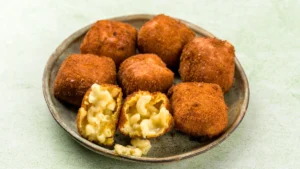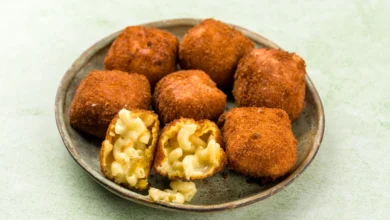
The pursuit of the perfect deep-fried mac and cheese has long been a culinary challenge, often resulting in messy, structural failures rather than the desired crispy, golden-brown appetizer. Modernist culinary techniques have recently provided a solution to this classic kitchen predicament, utilizing chemical emulsifiers to stabilize cheese sauces against high-heat frying. By incorporating sodium citrate and sodium hexametaphosphate, home chefs and professional cooks can now achieve a stable, molten core that remains contained during the deep-frying process, effectively eliminating the common issue of cheese leakage.
The Science of Culinary Stability
At the heart of this culinary development is the chemistry of emulsification. Traditional mac and cheese relies on a roux-based béchamel sauce to hold the cheese and starch together. However, when subjected to the rapid, intense heat of a deep fryer, the protein networks in traditional cheeses often break down, causing the fat to separate and the sauce to liquefy. This phenomenon, known as "breaking," leads to the "blowout" effect where the cheese filling escapes its breaded shell.
The introduction of sodium citrate serves as a powerful emulsifying salt. It alters the pH of the cheese, allowing the proteins to remain suspended in the fat without separating. When paired with sodium hexametaphosphate—a sequestering agent—the resulting cheese sauce becomes significantly more heat-stable. This combination allows for a high-viscosity cheese sauce that can withstand the thermal shock of a 375°F (190°C) fryer without losing its integrity.
Chronology of Modernist Cooking
The integration of laboratory-grade chemicals into home kitchens, often referred to as "Modernist Cooking," gained significant traction in the early 2010s following the publication of the seminal work Modernist Cuisine by Nathan Myhrvold. Since then, the movement has shifted from high-end, avant-garde restaurants to mainstream home cooking.
In the case of deep-fried mac and cheese, the evolution followed a distinct timeline:
- 2000s: Standardized frying of mac and cheese became a staple of state fair and pub menus, typically characterized by high failure rates and inconsistent texture.
- 2010–2015: Professional chefs began experimenting with hydrocolloids and emulsifying salts to create "cheese whiz" style sauces that were superior in flavor to processed alternatives.
- 2016–2020: The rise of online culinary education platforms began disseminating these "Modernist" techniques to amateur cooks.
- 2024: The refinement of specific ingredient ratios, such as the use of sodium hexametaphosphate, has reached a point where the technique is now accessible to the average home cook, as demonstrated in recent educational series like "We Transform Food."
Supporting Data and Structural Integrity
To understand the success of this method, one must look at the structural requirements of a deep-fried item. The coating (typically panko or breadcrumbs) requires a firm interior to adhere to. If the interior is too thin or too oily, the crust loses its crunch upon contact with the heat.
Data from culinary testing facilities suggests that by maintaining a sauce viscosity of approximately 15,000 to 20,000 centipoise (cP) at room temperature, the filling is robust enough to survive the breading process—which usually involves flour, egg wash, and breadcrumbs—without collapsing. Sodium citrate acts to keep this viscosity stable even as the internal temperature of the mac and cheese rises during the frying cycle. Furthermore, sodium hexametaphosphate acts as a secondary buffer, ensuring that the calcium ions within the dairy are not allowed to precipitate, which would otherwise result in a grainy texture.
Official Perspectives on Culinary Innovation
Experts at Modernist Pantry, the organization behind the "We Transform Food" series, emphasize that the goal of these techniques is not to complicate cooking, but to provide predictable results. Culinary scientists argue that the "fear of failure" is the primary barrier preventing home cooks from attempting complex dishes like fried appetizers. By introducing chemical stability, the variable of human error is significantly reduced.
"The objective is to demystify the science," noted a spokesperson associated with the project. "When a chef understands why a sauce breaks, they gain control over the outcome. Emulsification is not just a lab concept; it is the difference between a soggy, messy snack and a professional-grade appetizer."
Broader Impact and Industry Implications
The ripple effect of applying food science to comfort food is significant. In the restaurant industry, the ability to prepare, chill, and fry high-quality, stable mac and cheese bites reduces food waste and increases kitchen efficiency. By utilizing these stabilizing agents, restaurants can prepare large batches of filling in advance, knowing that the structural integrity of the product will remain intact even after being frozen and subsequently fried.
Furthermore, this trend signals a shift in consumer expectations. As the barrier between professional laboratory techniques and home cooking continues to dissolve, there is a growing demand for ingredients that were once exclusively available to food manufacturers. Sodium citrate, once a specialty item found only in industrial processing, is now a common staple in the pantry of hobbyist cooks who value precision.
The Role of Technology in Culinary Education
The dissemination of these techniques is largely facilitated by digital media. Where once a cook would need to consult a textbook on food chemistry, they can now watch a video series that provides step-by-step instructions on the exact ratios required for success. This democratizes high-end culinary training. The "We Transform Food" series, specifically, highlights the utility of gadgets and additives, focusing on how they transform mundane ingredients into memorable experiences.
This educational model is critical for the future of gastronomy. By explaining the "why" behind the "how," these programs create a generation of cooks who are better equipped to troubleshoot their own recipes. The specific case of deep-fried mac and cheese is a perfect "gateway" project; it is high-reward, visually appealing, and demonstrates the immediate efficacy of the ingredients involved.
Analyzing the "Blowout" Prevention
The "blowout" in a fryer is essentially a localized steam explosion. As water content in the cheese sauce turns to steam, it expands rapidly. If the cheese sauce is not properly emulsified, the proteins cannot stretch to accommodate this expansion, resulting in a rupture of the outer crust.
The inclusion of sodium hexametaphosphate addresses this by strengthening the protein matrix of the cheese. When the cheese is melted into the sauce, the emulsifiers ensure a homogenous mixture where fat and water are permanently bonded. Consequently, when the mac and cheese is submerged in hot oil, the internal pressure generated by the steam is contained by a uniform, elastic protein structure. This allows the heat to crisp the exterior breading while the interior maintains its creamy, molten state without compromising the structural boundary.
Conclusion and Future Outlook
The fusion of comfort food and food science represents a maturing of the culinary landscape. As techniques for stabilizing cheese sauces become standardized, it is likely that we will see further innovations in fried snacks. The shift toward using emulsifying salts to solve long-standing kitchen failures is indicative of a broader trend: the utilization of chemical principles to enhance, rather than replace, the traditional cooking experience.
Whether for home entertainment or restaurant menu development, the "science-first" approach to deep-frying mac and cheese offers a template for success. As more cooks gain access to these additives and the knowledge required to use them effectively, the definition of "homemade" comfort food will continue to evolve, blending the nostalgia of classic dishes with the reliability of modern food technology. This trajectory suggests a future where culinary disappointments are replaced by consistent, high-quality results, regardless of the complexity of the dish being prepared.