The Invisible Front Line: How America’s Failure to Protect Farmworkers Threatens the Entire Food Supply

When the New World screwworm—a parasitic insect capable of inflicting devastating, necrotic wounds on livestock, wildlife, and occasionally humans—reemerged within the continental United States, it triggered a wave of public anxiety. Consumers immediately raised alarms regarding personal susceptibility, pet safety, and the integrity of commercial meat supplies. Yet, amid this widespread panic, public discourse largely bypassed the demographic facing the most acute and immediate danger: agricultural workers.
This oversight is emblematic of a systemic flaw in how public health and agricultural policy intersect. The laborers responsible for planting, tending, and harvesting the nation’s food supply are systematically exposed to a multitude of occupational hazards, including heavy machinery, dangerous livestock, chronic pesticide exposure, and extreme thermal stress. Despite bearing disproportionate risks of pathogen and parasite exposure, farmworkers are frequently treated as an afterthought in eater-centric policy conversations concerning food safety and public health. Decades of labor exemptions have isolated these workers from fundamental safety guarantees, compounding vulnerabilities driven by low wages, rural isolation, and fear of legal repercussions or deportation.
Crucially, the compartmentalization of farmworker health as distinct from general public health is a perilous fallacy. Worker health is public health; neglecting agricultural laborers in disease surveillance and protection frameworks ultimately endangers the broader population. As climate change accelerates the proliferation of vectors such as ticks, biting insects, and waterborne parasites, this systemic neglect becomes increasingly untenable with every passing season.
The Resurgence of the New World Screwworm
The New World screwworm (Cochliomyia hominivorax) is the larval stage of a blowfly that deposits its eggs within open wounds or natural orifices of warm-blooded mammals. Upon hatching, the larvae burrow into muscular tissue, feeding on living flesh while creating characteristic corkscrew-shaped wounds that leave hosts highly susceptible to secondary bacterial infections and, if untreated, death.
For decades, the United States Department of Agriculture (USDA) successfully maintained a biological firewall against the parasite through an ambitious sterile insect technique (SIT). Because female screwworm flies mate only once in their lifetime, the continuous aerial release of millions of laboratory-sterilized male flies over the Darien Gap—the narrow isthmus connecting South and Central America—effectively suppressed wild populations and prevented northward migration.
However, this biological barrier has weakened in recent years. Climate anomalies have fostered favorable conditions for fly population booms, while heightened human and animal migration through the Darien region has facilitated the transport of active cases beyond historical containment zones. Simultaneously, budget constraints and administrative cuts at the USDA have impeded the production and deployment of sterile flies, accelerating the outbreak’s northward spread.
Chronology of the 2026 Outbreak
- Early 2026: Increased movement through Central America correlates with a surge in regional screwworm cases, with over 2,500 reported infections and several fatalities recorded across Mexico and Central America.
- June 2026: The USDA confirms the presence of the New World screwworm in Texas livestock, marking the first domestic reemergence since the eradication programs of the 20th century. Subsequent detections follow in domestic canines, goats, and sheep.
- Summer to Fall 2026: Official animal case counts drop precipitously following targeted local interventions; however, long-term preventative measures, including expanded sterile fly production facilities, remain incomplete.
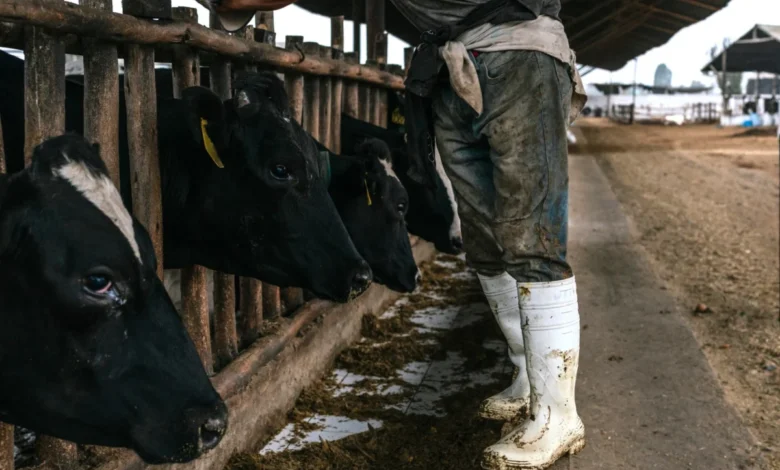
Ranch hands, livestock handlers, and farmworkers operating in close proximity to animals occupy the highest tier of infection risk. While agricultural workers routinely utilize protective garments against standard biting insects, the microscopic abrasions, scratches, and insect bites inherent to daily ranch work provide ample opportunity for screwworm infestation. Furthermore, agricultural laborers residing on-farm face heightened vulnerabilities due to substandard housing conditions. Inadequate structural maintenance, including compromised window screens and poor ventilation, allows vectors unrestricted access during non-working hours.
Despite these clear exposure pathways, official federal mitigation strategies have largely omitted direct interventions for workers. Review of current USDA communication channels reveals resources tailored for livestock producers, veterinarians, travelers, and pet owners, with minimal targeted guidance for the frontline laborers handling infected animals.
The Surge in Tick-Borne Pathogens
While the reemergence of the New World screwworm represents a striking return of a historical eradication target, farmworkers simultaneously grapple with escalating, persistent threats from vector-borne diseases transmitted by ticks. Climate change—manifested through milder winters, elevated white-tailed deer populations, and diminished predator densities—has driven an explosive expansion of tick populations throughout the United States.
Consequently, incidence rates of Lyme disease and alpha-gal syndrome have surged. Lyme disease, a tick-borne bacterial infection, causes debilitating symptoms including high fever, severe fatigue, joint pain, and, if left untreated, long-term neurological and cardiovascular complications. Agricultural surveys indicate that outdoor laborers in high-risk regions, such as the Northeast, frequently experience multiple infections, leading to prolonged physical debility. Because agricultural employment is often seasonal, contracting a debilitating illness during peak harvest windows can devastate a worker’s annual income.
Concurrently, the northward migration of the lone star tick has driven the proliferation of alpha-gal syndrome, a condition resulting in a severe, potentially life-threatening allergy to alpha-gal sugars found in red meat and dairy products.
While the general public mitigates tick exposure by limiting time in high-risk environments, outdoor agricultural laborers possess no such operational flexibility. They must rely entirely on personal protective equipment, chemical repellents, and rigorous post-shift self-examinations. Despite these risks, employers are under no federal mandate to provide personal protective equipment or repellents, leaving workers to independently shoulder the financial and health burdens of environmental exposure.
Waterborne Parasites and the Cyclospora Crisis
The interconnected nature of worker welfare and consumer food safety was underscored during the large-scale public health investigation into a multi-state cyclospora outbreak. Cyclosporiasis, a intestinal illness caused by the microscopic parasite Cyclospora cayetanensis, manifests as severe gastrointestinal distress, explosive diarrhea, and prolonged fatigue. The parasite is transmitted exclusively via fecal-oral routes, typically through the contamination of agricultural irrigation or processing water. On produce with complex surface structures, such as leafy greens, herbs, and soft fruits, the parasite thrives in elevated temperatures.
The outbreak sickened more than 15,000 individuals, making it the largest recorded event of its kind in U.S. history. Epidemiological tracing linked significant clusters of the outbreak to lettuce operations managed by Taylor Farms in Mexico.
In the immediate wake of the outbreak, public commentary occasionally attributed the contamination to improper hygiene among field workers. However, public health experts, labor advocates, and agricultural unions emphasized that the crisis was fundamentally a failure of agricultural infrastructure rather than individual worker hygiene. Investigations highlighted persistent structural deficiencies across the agricultural sector, including inadequate access to potable water, handwashing stations, and mandated rest facilities.
In many jurisdictions, workers compensated under piece-rate systems—where pay is determined strictly by volume harvested—face severe disincentives to pause work for sanitation breaks. This systemic pressure increases the likelihood of contamination and places vulnerable laborers at the epicenter of public health failures.
Public health specialists have noted that farmworkers are frequently the first population exposed to agricultural pathogens due to their direct contact with soil, water, and crops. Yet, because these workers often lack paid sick leave, health insurance, or legal protections, symptomatic individuals continue working out of economic necessity. This dynamic delays the detection of emerging pathogens by formal surveillance systems until the contamination has breached the commercial food supply and affected the broader consumer base.
Dr. Tyler B. Evans, a prominent public health specialist, observed in recent commentary that society has constructed dual, bifurcated monitoring systems—one for food safety and another for agricultural labor health—to track what is functionally a single, integrated point of failure.
Historical Precedents and Economic Implications
The structural vulnerability of food system workers is not unprecedented. During the initial phases of the COVID-19 pandemic, meatpacking facilities deemed non-essential in other contexts were kept operational via federal directives. The ensuing outbreaks within processing plants transformed these facilities into major epicenters of community transmission, resulting in high hospitalization and mortality rates among workers before broader public health interventions took effect.
Economists and public health analysts argue that treating agricultural labor as an externalized cost of food production creates systemic fragility. When safety protocols, healthcare access, and basic infrastructure are denied to the primary handlers of the food supply, the resulting vulnerabilities inevitably propagate outward, threatening consumer safety and market stability.
Addressing these systemic risks requires harmonizing agricultural labor standards with public health mandates. Proposed structural reforms include:
- Mandated Occupational Protections: Enforcing federal standards for extreme heat, vector exposure, and environmental hazards that require employers to furnish necessary protective equipment.
- Infrastructure Investment: Requiring legally compliant, accessible sanitation, handwashing, and potable water facilities in all active agricultural fields.
- Integrated Disease Surveillance: Expanding public health monitoring to include mandatory, barrier-free health screenings for agricultural workers, ensuring early detection of zoonotic and waterborne pathogens before they enter commercial supply chains.
- Economic Security: Reforming piece-rate compensation structures and guaranteeing paid sick leave to eliminate the economic coercion that forces symptomatic individuals to continue laboring.
Ultimately, the security of the modern food supply is inextricably bound to the dignity, health, and legal protection of the workers who sustain it. Without structural integration of labor rights into public health policy, the agricultural sector will remain perpetually vulnerable to emerging biological threats.
Related posts: