The Six-Year Quest for the Perfect Peach Cobbler Loaf: A Culinary Journey of Persistence and Precision

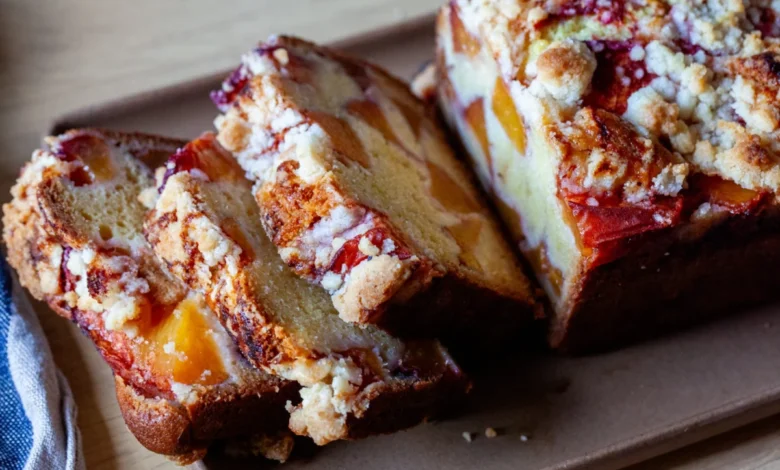
The pursuit of culinary perfection often demands an investment of time that far exceeds casual experimentation, a reality recently underscored by the multi-year development of a definitive peach cobbler loaf recipe. For home bakers and culinary professionals alike, the journey from conceptualization to execution can be fraught with technical challenges, particularly when attempting to merge distinct textural profiles—such as the dense crumb of a traditional loaf cake and the juicy, fruit-forward composition of a classic Southern cobbler. Following six consecutive summers of iterative testing, meticulous note-taking, and recipe adjustment, the finalized formula has been released to the public, offering a comprehensive case study in recipe development and the unique agricultural challenges of baking with seasonal stone fruits.
Main Facts and Technical Challenges
The development of the peach cobbler loaf highlights several foundational hurdles in baking science, primarily moisture management and flavor distribution. Peaches, while prized for their sweetness and aroma during the peak of the summer harvest, present significant obstacles in baked goods due to their high water content. Early iterations of the recipe revealed that diced peaches yielded a bland flavor profile within the batter, whereas thinly sliced fruit tended to disintegrate completely during the baking process, losing structural integrity and leaving behind pockets of excess moisture.
Furthermore, integrating spices directly into the cake batter proved counterproductive, resulting in an unappealing muted color without enhancing the complexity of the flavor. To resolve these issues, the finalized recipe mandates specific preparation steps: tossing peach wedges with freshly squeezed lemon juice, cinnamon, and brown sugar to concentrate flavor and firm up the fruit before assembly. The structural integrity of the loaf is further supported by precise pan specifications—specifically a six-liquid-cup capacity pan measuring eight by four inches at the base and nine by five inches at the top—to prevent overflow while ensuring an even rise.
Chronology of Development

The timeline of the recipe’s evolution spans six summer seasons, aligning with the regional availability of fresh stone fruit.
Summer Years 1 and 2 (Initial Conceptualization): The project began as a casual attempt to translate the flavors of a traditional peach cobbler into a portable, sliced loaf format. Initial batches relied on standard pound cake ratios combined with raw, diced fruit. Results were consistently dismissed as "not it," marked by uneven baking and water accumulation at the bottom of the pan.
Summer Years 3 and 4 (Variable Testing): The developer experimented with spice infusions and alternative dairy products, introducing yogurt and sour cream to add moisture and acidity to the crumb. Slicing techniques were modified from small dices to uniform wedges, though issues regarding fruit distribution throughout the batter persisted.

Summer Years 5 (Refining Structure and Topping): Focus shifted toward balancing the structural weight of the fruit with a streusel topping. Early streusel variations lacked cohesion or overpowered the delicate flavor of the peaches. The introduction of a dual-layer assembly method—halving the batter and fruit to create distinct strata—began to show promise.
Summer Year 6 (Finalization and Yield): The final summer involved rigorous stress-testing of pan dimensions, baking temperatures set at 375°F (190°C), and extended bake times ranging from 60 to 70 minutes. The resulting formula successfully balanced a tender crumb, a caramelized streusel crust, and evenly distributed, highly concentrated peach layers.
Supporting Data and Agricultural Context

The timing of the recipe’s release coincides with the natural conclusion of the North American peach season, which typically runs from May through late September, with peak production occurring in July and August. According to data from the United States Department of Agriculture (USDA), the U.S. produces nearly one million tons of peaches annually, with states like California, Georgia, South Carolina, and New Jersey serving as primary commercial hubs.
Baking with fresh seasonal produce introduces economic and logistical variables for home cooks. Unlike canned or frozen alternatives, fresh peaches exhibit fluctuating sugar content, acidity, and moisture levels depending on weather patterns and harvest timing. Culinary experts note that recipes relying on fresh fruit must account for these natural variances through strategic use of acid (such as lemon juice) and precise baking durations to avoid structural failure in high-moisture baked goods.
Culinary Analysis and Industry Implications

The prolonged development cycle of the peach cobbler loaf reflects broader trends in modern home baking and recipe publishing. In recent years, consumers and food media have placed a higher value on rigorous testing transparency. The publication of detailed failure notes—such as the rejection of bland dices and beige-colored spiced batters—provides educational value for novice and experienced bakers alike, demystifying the trial-and-error nature of professional recipe development.
From an operational standpoint, the recipe’s meticulous instructions regarding equipment—such as the recommendation to place the loaf pan on a larger sheet pan to catch potential fruit syrup overflows—address common kitchen pain points. Food safety and kitchen efficiency analysts frequently cite unclear equipment parameters as a primary cause of recipe failure among home cooks. By explicitly defining volumetric and linear pan measurements, the recipe minimizes variables that could lead to inconsistent results.
Broader Impact and Storage Longevity

Beyond the initial baking process, the finalized recipe incorporates practical considerations for food preservation and flavor maturation. The documentation notes that the loaf exhibits superior flavor and texture on its second and third days, challenging the conventional assumption that baked goods are best consumed immediately out of the oven.
To maintain the optimal texture of the streusel topping over multiple days, storage recommendations advise keeping the cake unsealed at room temperature, utilizing makeshift bread boxes such as a microwave or oven cavity to protect the crust from excessive ambient humidity. This emphasis on post-bake handling underscores the comprehensive nature of the six-year developmental project, ensuring that the final product maintains its integrity from the first slice to the last.