California Methane Accounting Policies Raise Concerns Over Double Counting and Climate Integrity in Dairy Sector

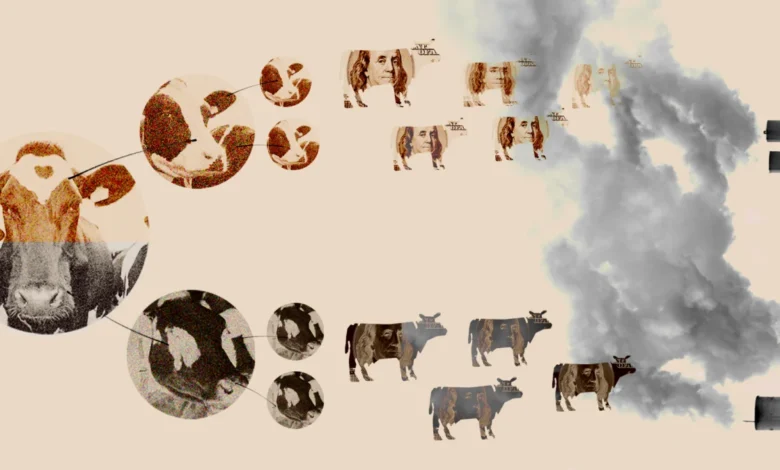
California’s ambitious climate agenda is currently facing intense scrutiny as environmental advocates and policy experts warn that the state’s accounting methods for methane emissions may be fundamentally flawed. At the heart of the controversy is the state’s treatment of factory farm gas systems—specifically methane digesters on large-scale dairy farms—which are being credited across multiple climate programs simultaneously. This practice, often referred to as "double counting," suggests that while California appears to be meeting its aggressive greenhouse gas reduction targets on paper, the actual physical reduction of gases in the atmosphere may be significantly overstated.
By treating the capture of methane from manure lagoons as a "carbon-negative" activity, the state has created a lucrative financial ecosystem for the dairy industry. However, critics argue that this framework allows the same metric ton of prevented emissions to be used to satisfy livestock sector mandates while also generating credits that allow fossil fuel producers to continue emitting greenhouse gases under the Low Carbon Fuel Standard (LCFS). The result is a complex web of subsidies and credits that may be incentivizing the very industrial farming practices the state aims to regulate.
The Mechanics of Methane Capture and Carbon Negative Scoring
To understand the current controversy, one must look at how California calculates the "carbon intensity" of transportation fuels. Every year, California dairy farms emit hundreds of thousands of tons of methane, a greenhouse gas that is roughly 25 to 80 times more potent than carbon dioxide over a 20-year period. This methane is primarily produced when massive amounts of livestock manure are stored in open-air lagoons, where anaerobic decomposition releases the gas into the atmosphere.
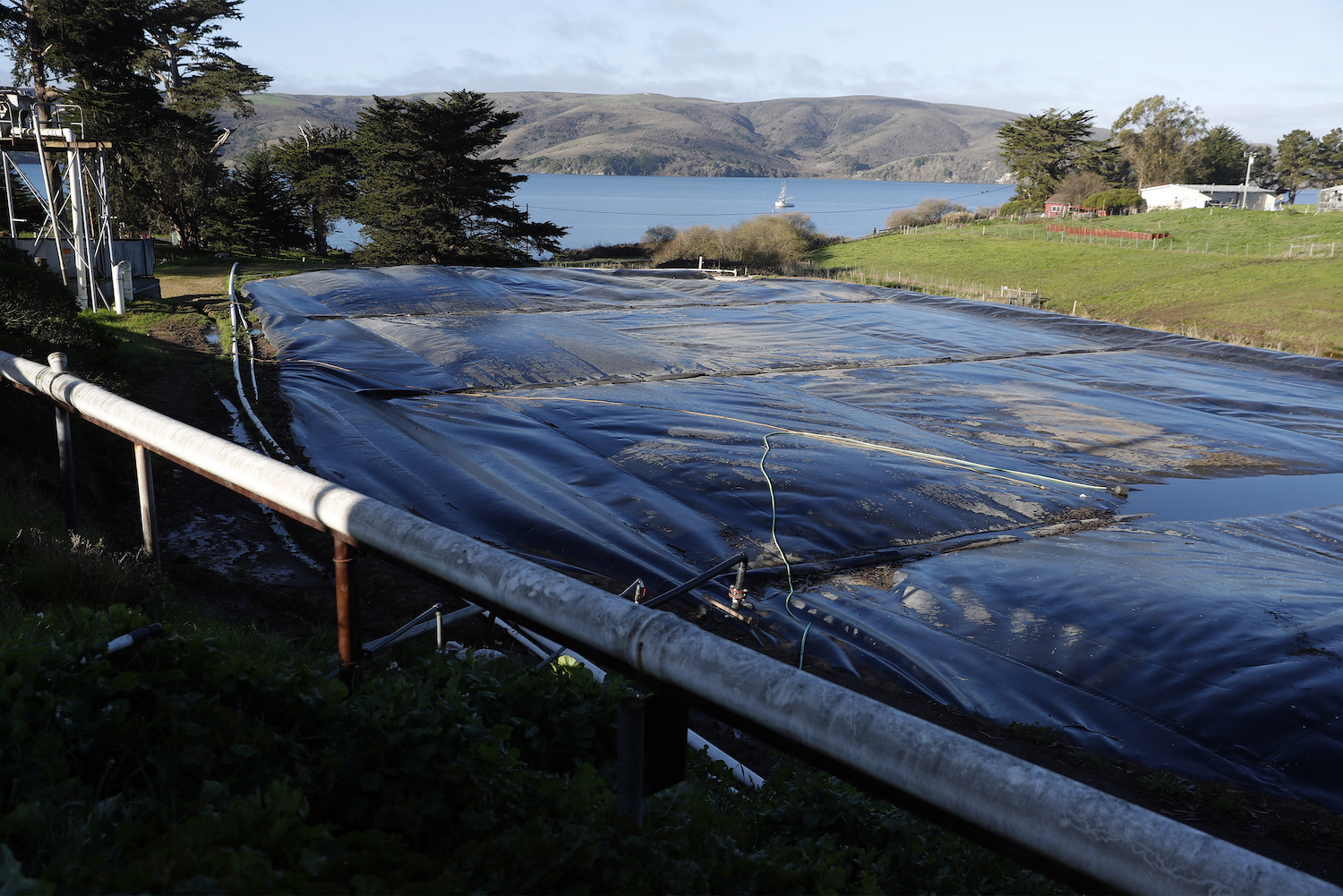
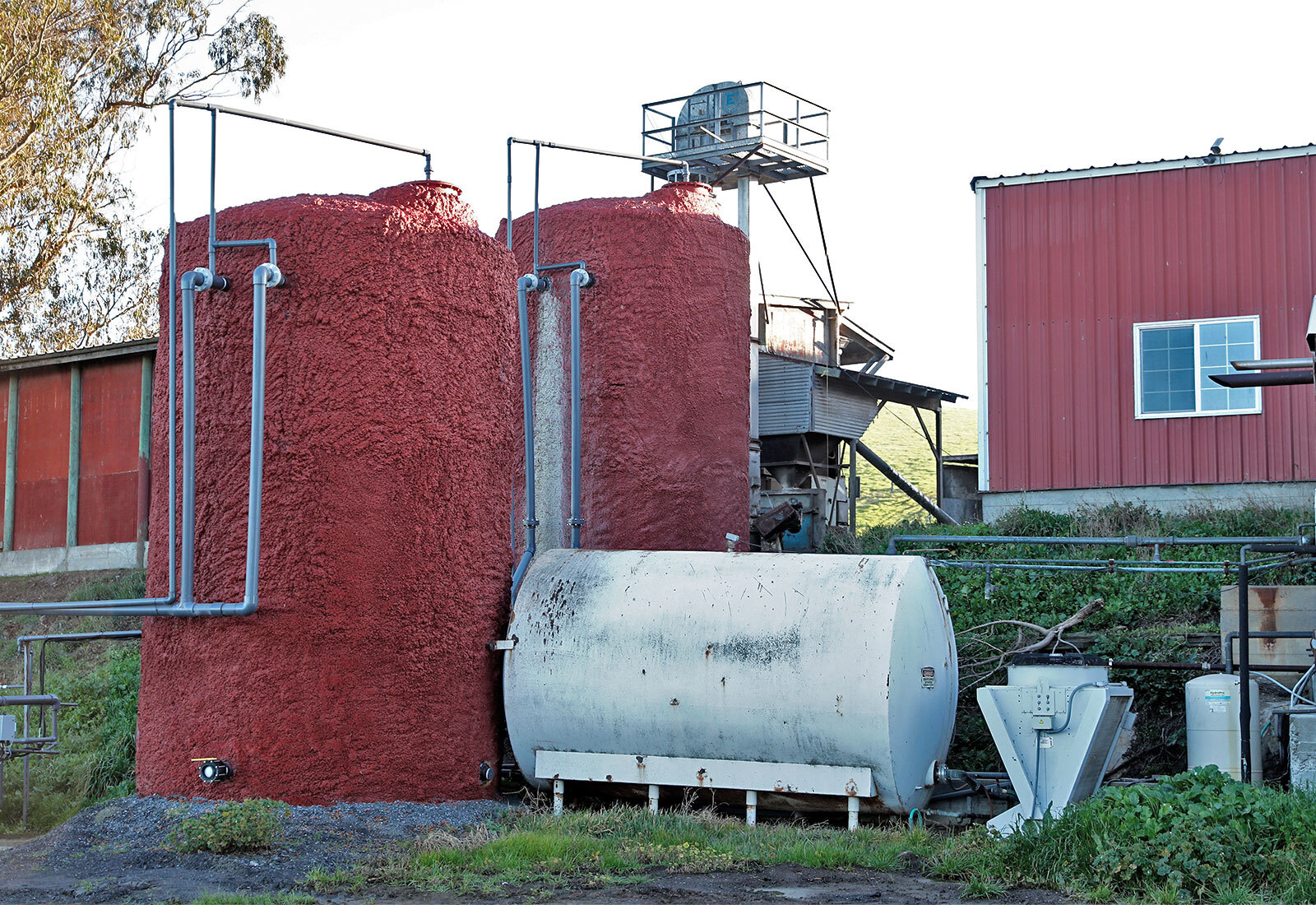
To mitigate this, the California Air Resources Board (CARB) and the California Department of Food and Agriculture (CDFA) have promoted the installation of methane digesters. These systems involve placing a physical cover over manure lagoons to trap the methane, which is then refined into "renewable natural gas" (RNG) and injected into pipelines for use as vehicle fuel.
Under the Low Carbon Fuel Standard (LCFS), CARB uses a "well-to-wheel" life-cycle analysis to determine the environmental impact of a fuel. Because capturing manure methane prevents it from entering the atmosphere, CARB assigns dairy-derived RNG a massive negative carbon intensity score. In essence, the state treats the production of this fuel as if it were a carbon-sequestration device, effectively "sucking" carbon out of the air. This negative score allows dairy digester projects to generate highly valuable LCFS credits, which are then sold to oil refineries and distributors who need them to offset the high carbon intensity of gasoline and diesel.
A History of Legislative Mandates and Methane Targets
The push for methane capture is rooted in several key pieces of California legislation. In 2006, the Global Warming Solutions Act (AB 32) set the stage for the state’s cap-and-trade and LCFS programs. More recently, Senate Bill 1383, passed in 2016, specifically mandated a 40 percent reduction in methane emissions from 2013 levels by the year 2030.
To meet these targets, the state has funneled hundreds of millions of dollars into the dairy sector. The CDFA’s Dairy Digester Research and Development Program has provided nearly $200 million in grants since 2015. These efforts are currently on track to prevent approximately 1.8 million tons of carbon dioxide equivalent (CO2e) from being emitted annually by the end of 2023.
However, the accounting becomes problematic when these same reductions are applied to different sectors. The state attributes the cuts at dairy farms to the "livestock sector" to meet SB 1383 goals. Simultaneously, when that methane is turned into fuel, the state credits the reduction to the "transportation sector" via the LCFS. Critics like Danny Cullenward, a lawyer and policy director at the nonprofit Carbon Plan, describe this as a "classic case of double counting," where the same physical ton of carbon is used to demonstrate progress in two distinct areas of the state’s climate portfolio.
The Case of Calgren and Vander Poel Dairy
The scale of this issue is illustrated by specific projects in the San Joaquin Valley. In 2018, the state awarded a $1.9 million grant to Calgren Dairy Fuels for a project at Vander Poel Dairy in Tulare County. The farm, which houses approximately 11,000 cattle, installed a methane digester expected to prevent 290,000 metric tons of CO2e emissions over a decade—an impact equivalent to removing 6,250 cars from the road.
While the CDFA logs these savings toward livestock sector targets, CARB simultaneously allows the project to participate in the LCFS. This means the 290,000 tons are not just a "reduction" for the dairy industry; they are also "credits" that permit the continued combustion of fossil fuels elsewhere in the state. By counting the reduction twice, the state may be creating a statistical illusion of progress that does not reflect the total volume of greenhouse gases entering the atmosphere.
The Aliso Canyon Mitigation and Triple Counting
The concerns regarding double counting extend beyond the LCFS and livestock targets. A third layer of complexity exists in the form of the Aliso Canyon Mitigation Agreement. This program was established to offset the 2015 SoCalGas leak, the largest natural gas leak in U.S. history, which released 109,000 metric tons of methane and forced thousands of Southern California residents to evacuate.
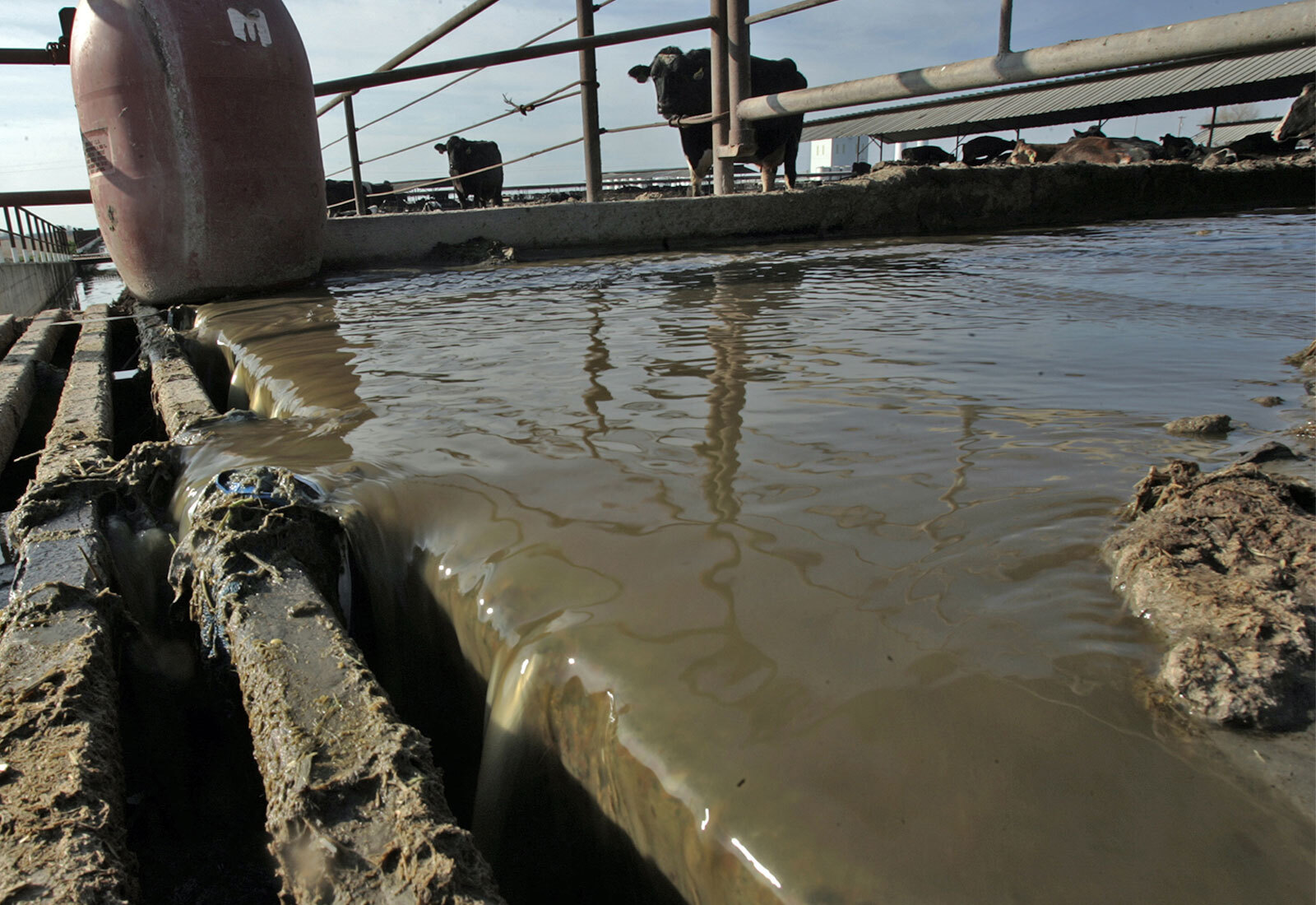
To mitigate the damage, CARB distributed over $25 million in loans to dairy farms to build digesters, with the goal of capturing enough methane to cancel out the Aliso Canyon disaster. Investigations by Grist and The Counter identified at least eight instances where dairy projects funded by Aliso Canyon mitigation loans were also generating LCFS credits.
In these cases, a single methane reduction is used to:
- Offset the 2015 Aliso Canyon gas leak.
- Meet the 2030 livestock methane mandate.
- Lower the average carbon intensity of California’s transportation fuel mix.
Environmental groups, represented by Public Justice, filed a petition to CARB arguing that this arrangement produces a "perverse result." When a dairy digester generates an LCFS credit from a project already funded as a legal mitigation for a gas leak, it allows a fossil fuel company to emit more CO2. This effectively cancels out the mitigation value of the project, meaning the Aliso Canyon leak is never truly neutralized on a one-to-one basis.
The "Additionality" Debate and Perverse Incentives
Central to the critique of California’s policy is the concept of "additionality." In climate policy, a reduction is considered "additional" only if it would not have occurred without the specific incentive provided by a program. Critics argue that if a dairy farm receives a grant from the CDFA or a loan from the Aliso Canyon fund to build a digester, the methane reduction is already happening. Therefore, allowing that farm to also generate LCFS credits provides no "additional" climate benefit; it simply provides a windfall profit for the operator.
"There is no causal link between the LCFS and those reductions happening" in these stacked scenarios, says Brent Newell, a senior attorney who has represented residents in petitions against CARB.
Furthermore, the extreme profitability of "stacking" these incentives—combining state grants, federal tax credits, and LCFS revenues—has raised fears of perverse incentives. If producing manure becomes more profitable than producing milk, there is a financial motivation for factory farms to increase their herd sizes or maintain inefficient "wet" manure management systems to maximize methane production. Chevron executives, in a 2021 investor meeting, projected "double-digit returns" on their digester investments, fueled largely by the negative carbon intensity scores granted by California.
Industry Defense: The Necessity of "Stacking"
Representatives of the dairy industry and digester developers maintain that these multiple revenue streams are essential for the technology’s adoption. Michael Boccadoro, executive director of DairyCares, argues that digester projects are capital-intensive and carry significant operational risks. Without the ability to "stack" incentives from LCFS, grants, and other programs, he contends that many projects would be financially unviable, and the methane would simply continue to be released into the atmosphere.
The California Air Resources Board has echoed this sentiment, disputing the "double counting" label. In official responses, CARB spokespeople have stated that the programs are designed to be complementary. By encouraging methane capture at dairies and directing that gas into the transportation sector, the agency argues it is simultaneously solving an agricultural waste problem and displacing fossil fuels like diesel.
Broader Implications and Future Outlook
Despite the pushback from environmental advocates, CARB denied a 2021 petition to reconsider the LCFS accounting methods. The agency argued that it could not make piecemeal changes while it was in the middle of a broader update to the state’s "Scoping Plan," the roadmap for achieving carbon neutrality by 2045.
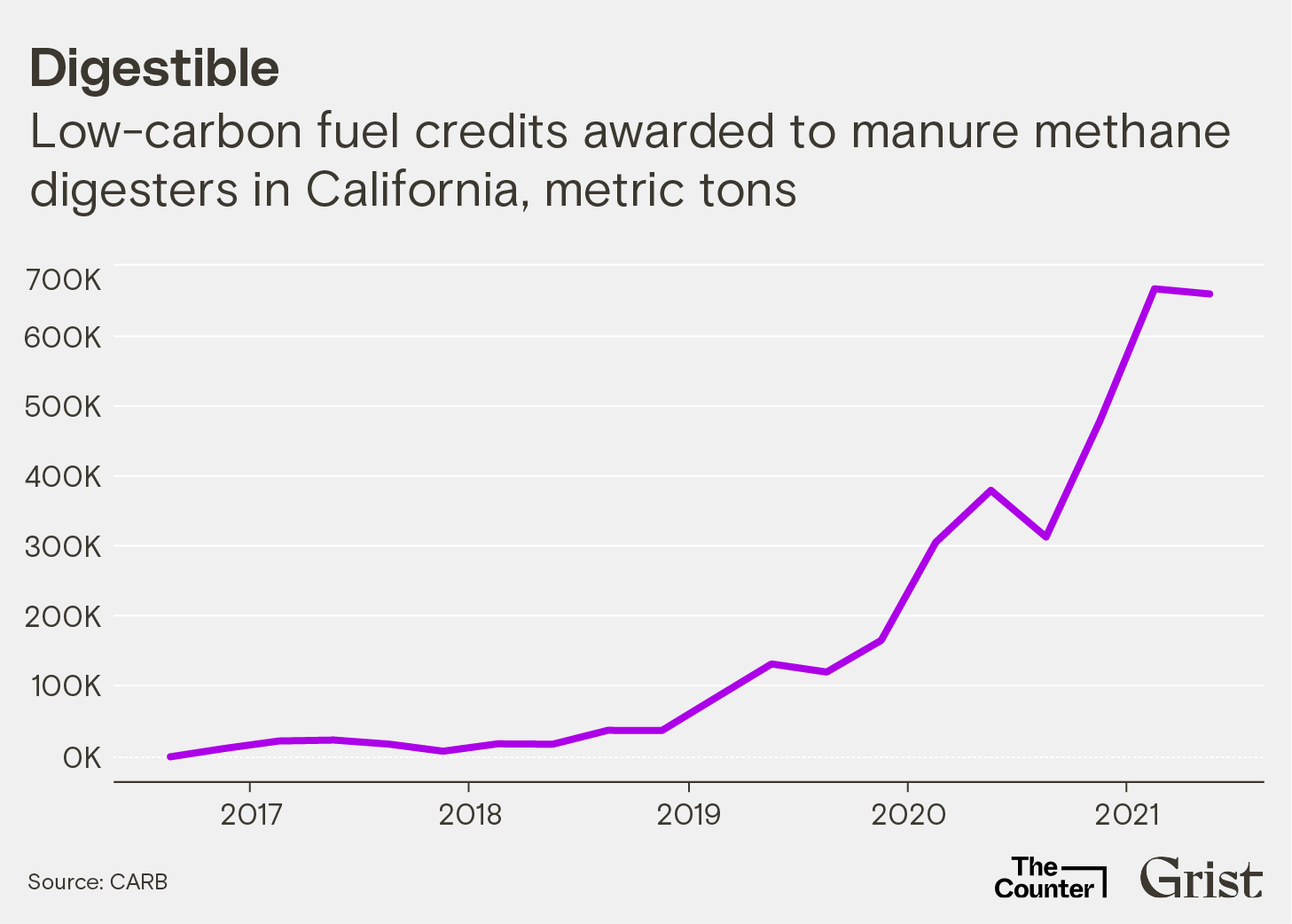
In the meantime, the digester industry is expanding rapidly. As of early 2022, nearly 100 additional digesters were under construction in California, almost all of which are expected to participate in the LCFS program. By 2021, manure-based fuels already accounted for about 10 percent of all LCFS credits generated, despite representing a tiny fraction of the total fuel volume.
The debate over California’s methane accounting serves as a cautionary tale for other jurisdictions looking to implement similar market-based climate solutions. While the state’s data shows a downward trend in carbon intensity, the "paper reductions" created by double and triple counting may be masking a much slower rate of actual atmospheric improvement. As the 2030 deadline for methane reduction approaches, the pressure on California regulators to ensure "additionality" and transparency in its climate ledger is only expected to grow. Without a more rigorous accounting framework, the state risks undermining the integrity of its most celebrated environmental policies.