Halloween Ghost Biscotti Offer a Spooky Twist on Traditional Italian Twice-Baked Cookies

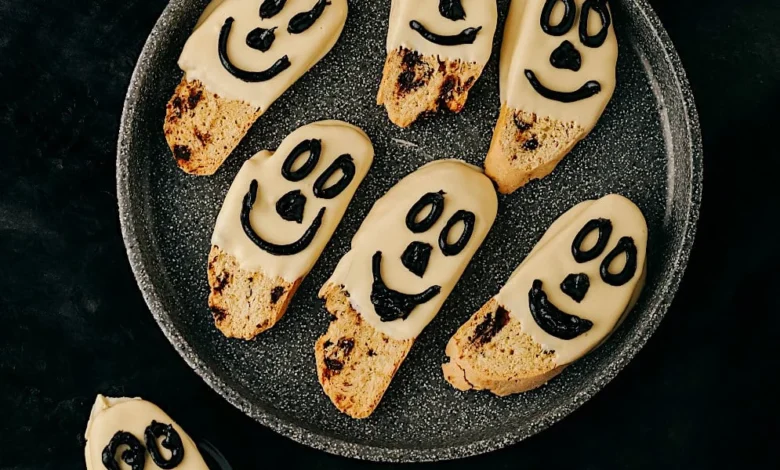
The culinary landscape of contemporary seasonal baking has witnessed a distinct shift toward inventive adaptations of traditional heritage recipes, a trend recently exemplified by celebrated Mediterranean culinary figure Chef Giorgos Tsoulis with his introduction of Halloween Ghost Biscotti. Diverging from the conventional market dominance of heavily frosted sugar cookies and artificial-dye-laden confections, this innovative recipe marries the time-honored artisanal techniques of traditional Italian twice-baked almond biscuits—historically known as cantucci—with playful, Gothic-inspired iconography suited for the modern autumn holiday season.
This development arrives during a period of significant commercial expansion for the global seasonal baking sector. Market analysts tracking consumer behavior during the fourth-quarter holiday period note a rising consumer preference for gourmet, scratch-made baked goods that prioritize complex flavor profiles over purely aesthetic, sugar-heavy novelties. By transforming a structurally robust, pantry-stable Italian classic into a canvas for edible artistry, Chef Tsoulis has tapped into an expanding demographic of home bakers and culinary enthusiasts seeking sophisticated yet accessible seasonal projects.
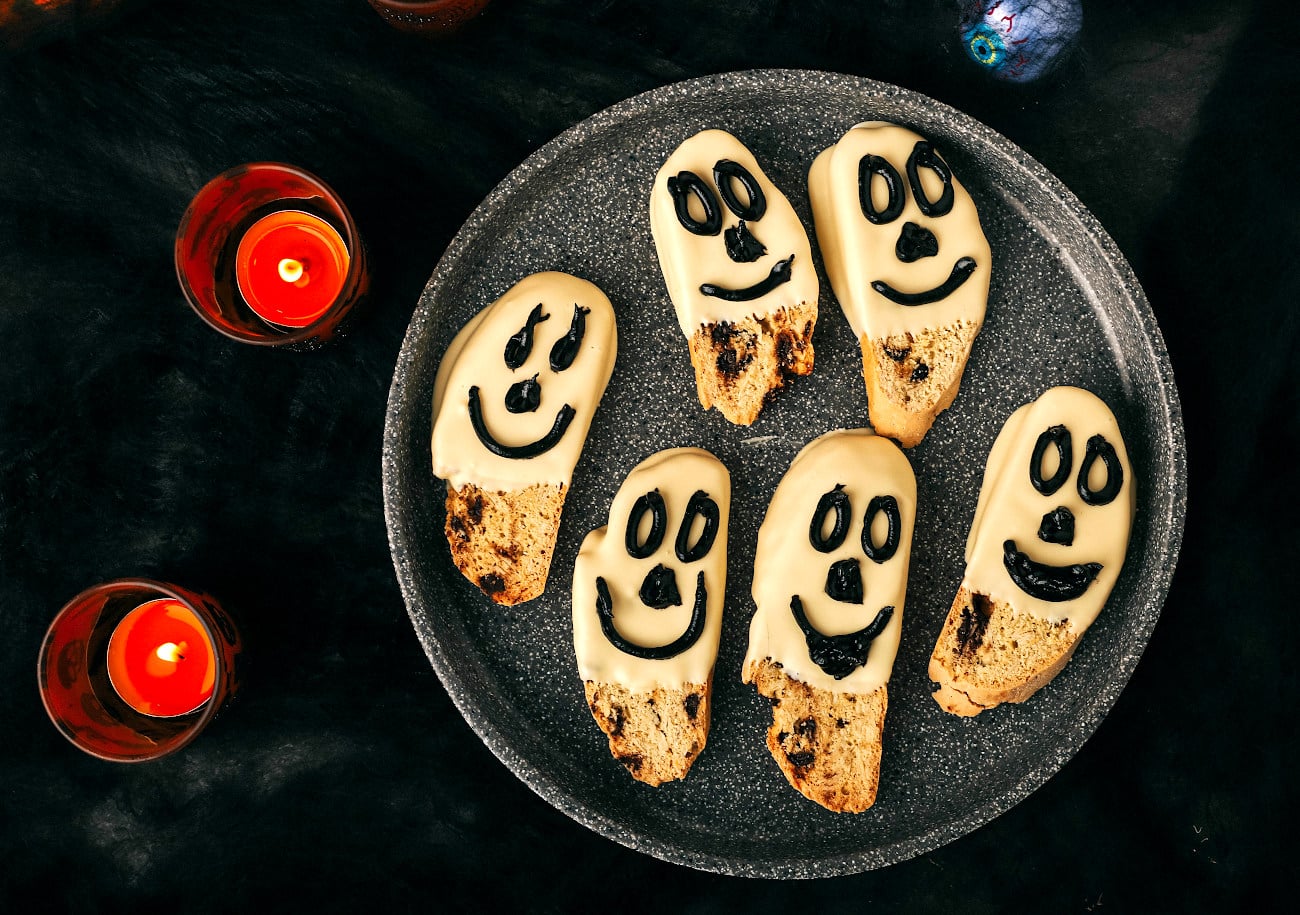
Culinary Anatomy and Formulation of the Ghost Biscotti
At its core, the Halloween Ghost Biscotti recipe relies on the foundational methodologies of Mediterranean patisserie while incorporating modern flavor preferences. The formulation yields approximately fifteen distinct servings, requiring a preparation timeline of precisely ten minutes, followed by an intensive cooking and baking duration of one hour. The total elapsed time from raw ingredients to finished, decorated confections stands at one hour and ten minutes.
The structural integrity of the biscuit is achieved through a meticulous double-baking process, a technique indigenous to the Tuscan region of Italy. Initially, a dense, cohesive dough—enriched with premium whole almonds, rich chocolate chips, and aromatic vanilla bean or extract—is shaped into a flattened log and subjected to an initial low-temperature bake. This step cooks the interior while establishing the basic shape. Following a brief resting period to allow for safe handling, the log is sliced diagonally into uniform individual biscuits, which are returned to the oven for a secondary dehydration phase. This second bake eliminates residual moisture, conferring the signature crisp, brittle texture that allows biscotti to withstand being submerged in hot beverages without disintegrating.
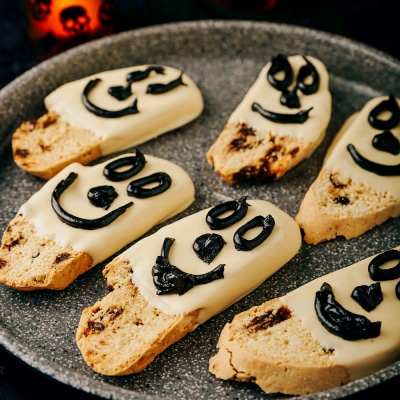
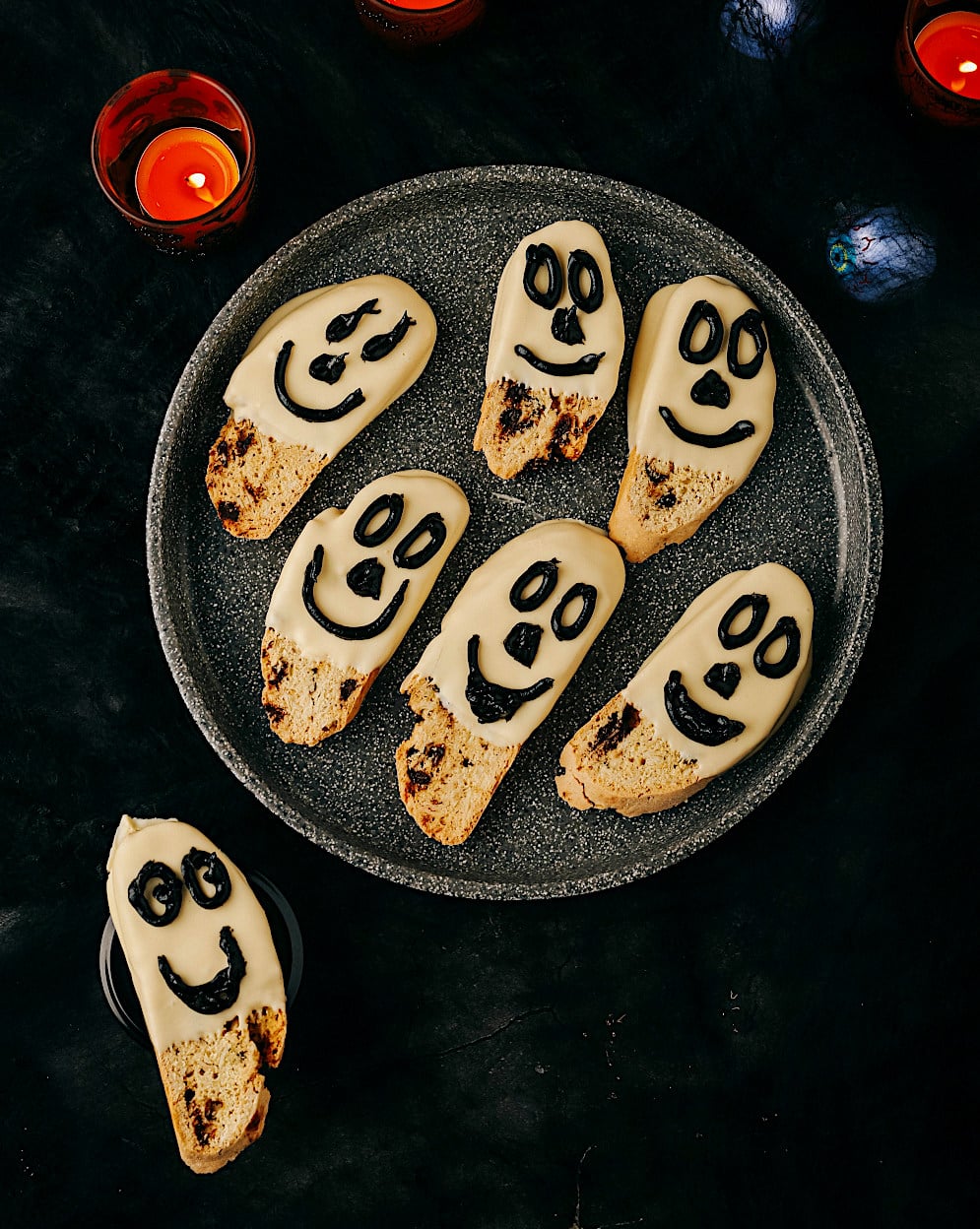
The transformation from traditional Italian accompaniment to seasonal Halloween novelty occurs during the final finishing stage. Once the twice-baked cookies have cooled completely to room temperature—a critical technical step to prevent the melting of subsequent confectionary layers—they are dipped halfway into a bath of tempered white chocolate. This opaque, pale coating forms the spectral silhouette of the ghost’s body. To finalize the decoration, dark chocolate is piped meticulously onto the hardened white chocolate surface to delineate individualized facial expressions, including eyes, noses, and mouths.
Background Context and Culinary Heritage
The history of biscotti traces its origins back to the Roman Empire, where twice-baked dry bread products served as an indispensable ration for legionnaires due to their exceptional shelf life and resistance to spoilage during extended military campaigns. Over subsequent centuries, particularly during the Renaissance in Tuscany, the recipe evolved from a utilitarian military provision into a celebratory regional specialty, frequently paired with sweet dessert wines such as Vin Santo.
In contemporary global gastronomy, biscotti have transcended their regional Italian boundaries to become a staple of international cafe culture and domestic baking repertoires. The introduction of seasonal variations, such as the Halloween Ghost Biscotti, reflects a broader postmodern culinary movement wherein traditional heritage foods are deconstructed and recontextualized for modern cultural festivals.
Chef Giorgos Tsoulis, the creator of this specific iteration, is widely recognized within the Mediterranean and international culinary spheres for his commitment to bridging the gap between traditional Mediterranean flavors and modern, accessible gastronomy. Operating from a philosophy that emphasizes sustainability, ingredient integrity, and culinary education, Tsoulis has built a substantial platform as an executive chef, television personality, and sustainability ambassador for WWF Hellas. His involvement in European initiatives such as the #Eat4Change and #Farm2Fork programs underscores a professional ethos that values mindful consumption, even within the context of holiday baking and confectionery treats.

Chronology of Preparation and Technical Execution
For professional kitchens and home bakers alike, successful execution of the Halloween Ghost Biscotti recipe requires strict adherence to a precise chronological workflow.
- Phase One: Dough Preparation and Shaping (Minutes 0–20): The process begins with the amalgamation of dry and wet components, folding in whole almonds and chocolate chips to ensure even distribution throughout the dense dough. The mixture is then divided and shaped into uniform logs on a parchment-lined baking sheet.
- Phase Two: The Initial Bake (Minutes 20–45): The logs are placed into a preheated oven and baked until firm to the touch and lightly golden around the edges.
- Phase Three: Cooling and Slicing (Minutes 45–55): The baked logs must be removed from the heat source and allowed to temper briefly. Using a sharp, serrated bread knife, the baker cuts the warm logs on a bias into uniform slices. This must be executed with precision to prevent the structural crumbling of the almonds embedded within the matrix.
- Phase Four: The Secondary Bake and Final Cooling (Minutes 55–1:10): The individual slices are arranged flat on the baking sheets and subjected to the second bake. According to professional culinary advisory notes issued by Tsoulis, bakers must monitor this phase closely to avoid excessive browning, which can impart a bitter flavor profile. Concurrently, the natural hardening process of biscotti continues as the items lose their remaining thermal energy during the final cooling phase.
- Phase Five: Decoration (Post-Bake): Melted white and dark chocolates are applied in succession to create the spectral motif, completing the workflow.
Industry Analysis and Broader Implications
The release and subsequent popularity of recipes like the Halloween Ghost Biscotti highlight several notable shifts in seasonal food marketing and home economics. As consumer price indices for pre-packaged holiday goods remain volatile, culinary experts observe a significant surge in interest regarding scratch-made, multi-purpose recipes that can serve simultaneously as party centerpieces, homemade gifts, and everyday domestic treats.
Furthermore, the integration of traditional Mediterranean baking techniques with Anglo-American holiday traditions demonstrates the increasing globalization of culinary culture. Analysts note that recipes requiring specialized technical knowledge—such as the double-bake method or proper chocolate tempering—appeal strongly to a growing demographic of consumers who developed advanced culinary skill sets during recent years of increased home-based leisure time.
By utilizing high-quality, recognizable components such as almonds, vanilla, and premium chocolates rather than synthetic additives, recipes of this caliber align with growing public health advocacy surrounding mindful eating and transparent ingredient sourcing. While holiday confections remain fundamentally celebratory and indulgent, the emphasis on whole nuts and authentic chocolates provides a more nutritionally grounded alternative to highly processed commercial alternatives.
Ultimately, the Halloween Ghost Biscotti serves as a functional intersection between historical culinary preservation and contemporary holiday consumerism. Through the stewardship of established culinary figures like Chef Giorgos Tsoulis, traditional techniques are preserved, adapted, and transmitted to new generations of global home cooks, ensuring the continued evolution of international pastry arts well into the future.