Our Essential Reading List: Examining the Future of Global Food Systems and Human Health


As the calendar year draws to a close, a survey of the most impactful literature in the fields of agriculture, nutrition, and environmental policy reveals a growing consensus: the current industrial food system is approaching a critical juncture. From the health of the microscopic gut microbiome to the macro-scale realities of global climate change, researchers and authors are increasingly calling for a paradigm shift. The following collection of works, compiled over the past 12 months, provides a comprehensive analysis of the challenges facing our food systems and the diverse, innovative solutions currently being proposed by experts worldwide.
The Microbiome Connection: Soil and Human Health
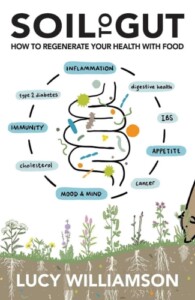
Dr. Lucy Williamson’s Soil to Gut serves as a foundational text for those examining the intersection of veterinary science, public health, and regenerative agriculture. With 15 years of experience in both animal husbandry and nutrition, Dr. Williamson posits that the "hidden hunger" epidemic—a state where individuals consume sufficient calories but remain nutrient-deficient—is a direct consequence of degraded soil health.

Modern industrial farming, characterized by heavy reliance on chemical inputs, has led to a documented decline in the nutrient density of staple crops. This depletion interrupts the natural nutrient cycle, where minerals move from the soil, through plant roots, and into the human body. By prioritizing soil health and the cultivation of a diverse gut microbiome, Williamson argues that we can create a biological environment capable of resisting harmful microbes. This shift represents a move away from the heavily marketed, trend-driven diet culture toward a grounded, systemic approach to individual wellbeing.
Environmental Stewardship and the Industrial Food Crisis
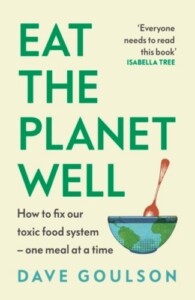
In Eat the Planet Well, environmentalist David Goulson addresses the systemic toxicity inherent in modern food production. Goulson, who has spent decades studying the vital role of insects in our ecosystems, expands his scope to detail how industrial practices are compromising both human health and ecological stability.
The data presented by Goulson is sobering. The rise of ultra-processed foods, coupled with the systemic use of pesticides and synthetic chemicals, has contributed to an increase in non-communicable diseases. Furthermore, the industrialization of agriculture has resulted in the degradation of animal welfare and the catastrophic loss of biodiversity. Goulson categorizes these issues into thematic chapters—ranging from carbon and climate change to water scarcity—to illustrate that the current trajectory is unsustainable. He concludes that shifting toward organic farming and a deeper appreciation for nature’s intrinsic value is the only pathway to a food system that can reliably sustain a growing global population.
The Role of Women in Food System Reform
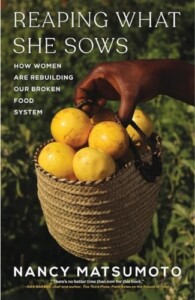
While the narrative of a "broken" food system is frequently discussed in policy circles, Reaping What She Sows by Nancy Matsumoto highlights the often-overlooked demographic driving the most significant grassroots change: women. Historically marginalized within male-dominated agricultural power structures, women have increasingly become the architects of alternative food movements.
Matsumoto’s research demonstrates how cooperative movements and localized supply chains are emerging as responses to the hegemony of "Big Food" oligarchies. By documenting the efforts of women working in racial justice within agriculture, sustainable fisheries, and local grain economies, the book provides a blueprint for agency. Matsumoto emphasizes that systemic change is not solely the responsibility of policymakers; consumers act as critical nodes in this transformation by consciously supporting ethical supply chains, even when those options are buried within the inventory of mass-market retailers.
Climate Resilience and the Rise of Edimentals
The extreme weather events of the past year, marked by record-breaking heat and drought, have prompted many gardeners to reconsider traditional planting methods. Harry Holding’s Eat Your Garden introduces the concept of "edimentals"—plants that serve both ornamental and nutritional functions.
The agricultural implications of this approach are significant. Perennial edibles, which are a core component of the edimental philosophy, develop stronger root systems that enhance soil structure and water retention. This resilience is critical as global climate patterns become more erratic. By integrating these plants into garden design, individuals can reduce the labor-intensive, water-heavy demands of traditional annual vegetable gardening while simultaneously supporting local biodiversity.
The Ethics of Institutional Nutrition
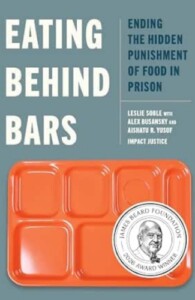
A particularly stark critique of systemic failure is found in Eating Behind Bars, a collaborative work by Leslie Soble, Alex Busansky, and Aishatu R. Yusuf. This investigation into the American prison system reveals that food is frequently utilized as a tool of punishment, with incarcerated individuals often subjected to substandard, nutritionally void diets.
The implications of this are profound. The book highlights the irony of prisoners working on industrial-scale farms to produce food they are never permitted to consume. However, the text also showcases successful reform initiatives, such as the "Chefs in Prisons" program in Maine. These projects demonstrate that treating food as medicine—providing adequate, nutritious, and dignified meals—can lead to better physical and mental health outcomes, ultimately fostering a more rehabilitative environment that benefits society at large.
Terroir, Microbes, and Cultural Heritage
Trevor Wamedahl’s Cheese Trekking offers a specialized yet essential look at "deep terroir." By exploring how livestock breeds, local landscapes, and traditional cultural practices intersect, Wamedahl argues that the standardization of food production via starter cultures has led to a homogenization of flavor and a loss of regional identity.
The research suggests that the "microbial terroir" of a place is a living history. From sheep grazing on Mediterranean flora to nomadic herders in Mongolia, the traditional cheesemaking techniques documented in the book serve as an archive of human knowledge. This study highlights the importance of preserving artisanal methods that rely on natural environmental interactions rather than industrial, uniform processes.
A Historical Perspective on Childhood Nutrition
First Helpings by Deborah Albon and Amy Palmer provides a rigorous historical account of how children have been fed in the UK from the medieval period to the present. By utilizing court records, medical advice, and personal testimony, the authors highlight the persistent socio-economic disparities in childhood nutrition. The book serves as a reminder that the "right way" to feed a child has been a point of contention for centuries, with the final chapters on contemporary food poverty statistics providing a sense of urgency for modern policy reform.

Imagining a Sustainable Future
Concluding this year’s recommendations is Rob Hopkins’ How to Fall in Love with the Future. In a field often dominated by "climate anxiety," Hopkins advocates for the radical power of imagination. He uses the metaphor of time travel to challenge readers to envision a 2030 defined by restoration rather than degradation.
By citing real-world examples—such as the localized school food systems in France and the car-free urban districts in Germany—Hopkins demonstrates that the infrastructure for a sustainable future already exists. He posits that the primary barrier to progress is not a lack of technology, but a lack of collective vision.
Broader Implications and Future Outlook
The literature reviewed this year reflects a growing trend toward integrated, systemic thinking. Whether discussing the gut microbiome, prison reform, or urban planning, the overarching theme is that food is not merely a commodity, but the central link between human health, social justice, and ecological stability.
Recent policy discussions at the international level suggest that governments are beginning to recognize the need for a more holistic approach. The integration of "food sovereignty" and "food security" principles—as explored in Honor May Eldridge’s The Future of Food Policy in the UK—is expected to be a major theme in the coming decade. As we look toward 2027 and beyond, the consensus among experts is clear: the transformation of our food system is an urgent, multi-generational project that requires the engagement of producers, policymakers, and consumers alike.