The Revolutionary Science Behind Egg-Free Chocolate Chip Cookies and the Humble Ingredient Transforming Modern Baking


The culinary world has long operated under the rigid assumption that achieving the quintessential chocolate chip cookie—characterized by crisp, golden-brown edges and a tender, melt-in-your-mouth center—requires a delicate chemical equilibrium of fats, sugars, leaveners, and, most importantly, eggs. For decades, home bakers and professional pastry chefs alike viewed the egg as an irreplaceable structural pillar responsible for binding ingredients, adding moisture, and providing structural lift. However, a significant shift in home baking methodologies, popularized by culinary innovator and recipe developer Alejandra Graf, demonstrates that standard baking paradigms are subject to revision. By eliminating eggs entirely and substituting them with an unexpectedly common household staple—plain tap water—bakers are achieving superior textural results while simultaneously opening new avenues for plant-based and allergen-friendly desserts.
Background and Context of the Innovation
The genesis of this culinary technique traces back to the broader cultural and dietary movement toward plant-based and vegan eating. During her transition into veganism, Alejandra Graf encountered a pervasive frustration familiar to many individuals experimenting with alternative diets: standard commercial egg replacements often failed to replicate the precise mouthfeel of traditional baked goods. Ingredients such as commercial egg replacers, flaxseed slurries, and aquafaba—while effective in pancakes, cakes, or heavy quick breads—frequently introduce undesirable density, peculiar flavors, or excessive moisture retention that ruins the delicate architecture of a drop cookie.

Traditional cookies rely heavily on the protein coagulation and fat emulsification properties of eggs. When whole eggs are added to cookie dough, the albumin proteins set during baking, giving the cookie its cake-like height and structural integrity. Yet, for enthusiasts of thin, crispy-edged, chewy-centered cookies—a style popularized by commercial bakeries and artisanal confectioners—eggs often work against the desired outcome, making the dough overly puffy, dry, or bread-like. Through an extensive series of trial-and-error kitchen experiments spanning numerous batches, Graf discovered that water could achieve what complex substitutes could not. By supplying precise hydration without introducing unwanted proteins or starches, water allows butter (or vegan butter substitutes) and sugars to interact dynamically, producing a thin, elegantly spread cookie with a decadent dark chocolate profile.
The Chronology of Culinary Experimentation
The development of the water-based chocolate chip cookie technique followed a rigorous empirical timeline typical of professional recipe testing.
Initial Phase: Transition to Egg-Free Baking
The journey began during Graf’s personal adoption of a plant-based lifestyle. Early experiments relied on standard vegan baking practices, including commercial starches and blended seeds. These initial trials yielded mixed results; while the absence of animal products was achieved, the texture consistently leaned toward heavy, dry, or excessively cake-like formations that failed to satisfy the craving for a classic American-style chocolate chip cookie.
Iterative Testing and Failure Analysis
Recognizing that conventional substitutes were altering the moisture-to-fat ratio adversely, the testing phase shifted toward simplification. Early attempts utilizing purely reduced liquid components resulted in structural collapses, with cookies spreading into thin, greasy puddles. Through systematic adjustments of flour-to-fat ratios, the testing revealed that a measured amount of plain water could restore the exact hydration lost by omitting the egg, without adding interfering chemical compounds.
Refining the Technique
The final iteration of the recipe established a streamlined timeline for modern home bakers. The preparation phase requires approximately 10 minutes of mixing dry and wet ingredients, followed by a brief 10-minute refrigeration window to solidify the fats slightly and control rapid spreading. Baking takes an additional 10 minutes at standard oven temperatures, bringing the total time investment to just 30 minutes for a yield of approximately 20 uniform pieces.
Understanding the Chemistry: Why Water Outperforms Complex Substitutes
To comprehend the viability of water as a functional baking agent, one must examine the specific roles eggs play in traditional formulations. Biochemically, an egg performs three primary functions: hydration, binding, and aeration.

Hydration and Spread Dynamics
In a standard cookie dough, eggs supply approximately 70% water and 30% fat-and-protein matrix. When water is added directly in place of an egg, it provides the precise moisture required to dissolve sugars and hydrate flour proteins without introducing extra binding agents that prevent the cookie from spreading. Without egg proteins to trap air and create an internal sponge-like structure, the dough relaxes properly in the heat of the oven. The edges caramelize rapidly against the baking sheet, yielding a crisp perimeter, while the center retains its moisture and remains soft.
Fat and Sugar Synergy
The interaction between sugar and fat is critical in determining cookie texture. Granulated and brown sugars attract moisture. When water is introduced directly into the creamed butter-and-sugar mixture, it dissolves the sugar crystals more efficiently than a viscous egg can. This enhanced dissolution allows the batter to flow uniformly outward during the initial stages of baking before the starches fully gelatinize, resulting in the coveted thin, expansive shape associated with premium artisanal cookies.
Nutritional Profile and Dietary Implications
From a nutritional standpoint, removing the egg alters both the caloric density and macronutrient composition of the final baked good. According to standardized nutritional estimates for this specific formulation, a serving size of four cookies contains approximately 134 kilocalories.

Further nutritional breakdown per serving indicates a light yet satisfying profile:
- Carbohydrates: 20 grams
- Dietary Fiber: 1 grams
- Total Sugars: 10 grams
- Protein: 1 grams
- Total Fat: 6 grams
- Saturated Fat: 5 grams
- Sodium: 118 milligrams
- Potassium: 34 milligrams
- Calcium: 14 milligrams
- Iron: 1 milligrams
Because the recipe accommodates both traditional dairy butter and plant-based alternatives—paired universally with high-quality dark chocolate chips—it offers significant dietary flexibility. It caters directly to individuals managing egg allergies, those adhering to strict vegan regimens, or consumers simply seeking a lighter, less chemically processed dessert option utilizing pantry staples already present in every household.
Industry Implications and the Future of Simplified Baking
The widespread interest generated by water-based cookie formulations highlights a broader psychological and practical shift within culinary arts: the democratization of baking through radical simplification. For decades, the commercial food industry and specialized culinary blogs have marketed expensive, specialized ingredients—such as xanthan gum, psyllium husk, specialized vegan egg powders, and imported plant proteins—as mandatory prerequisites for alternative baking.
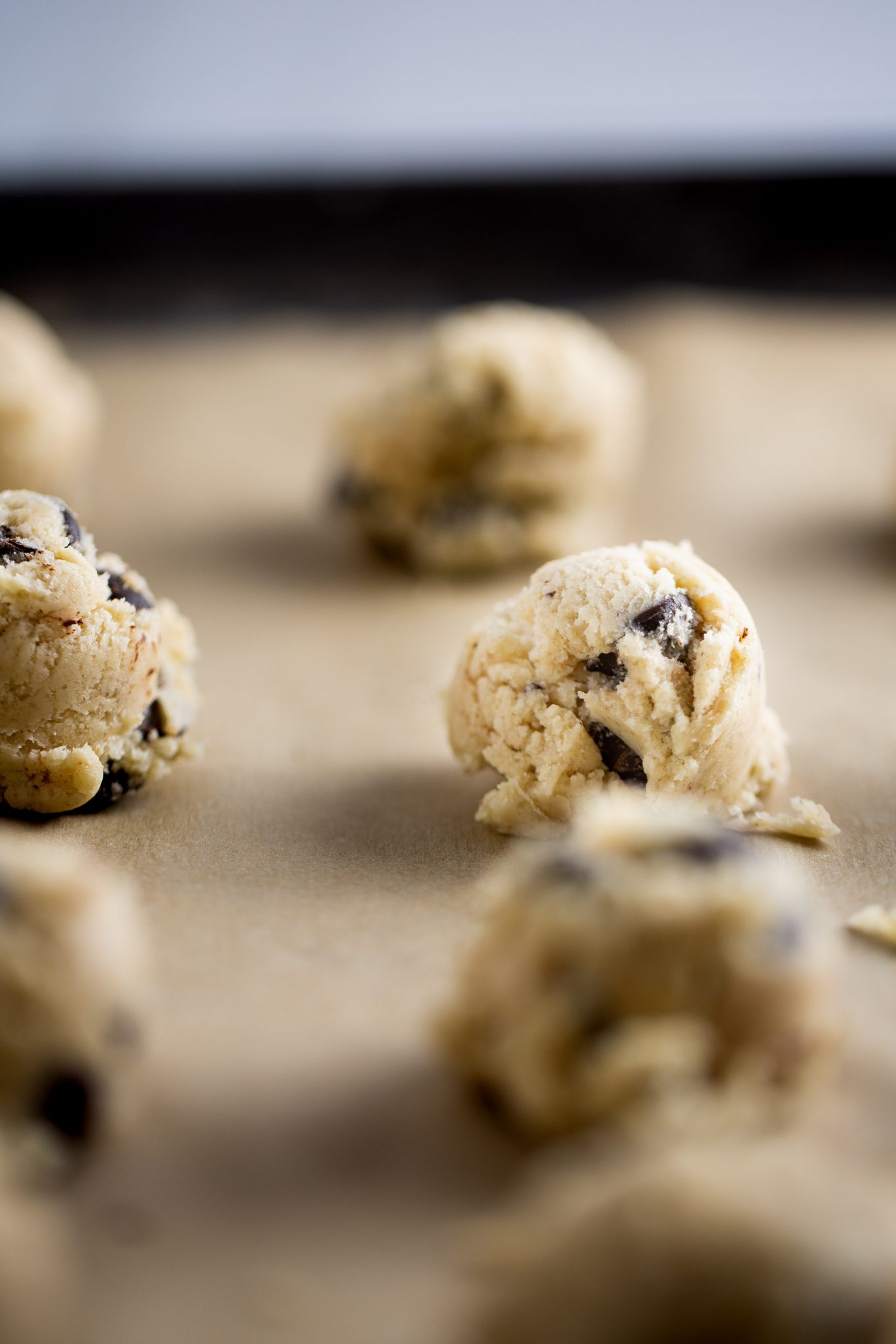
By proving that the most ubiquitous liquid on Earth can solve a complex structural baking challenge, this technique challenges the necessity of over-engineered food products. Industry analysts note that consumer preferences are increasingly leaning toward "clean label" recipes that emphasize transparency, minimal ingredients, and ease of execution.
Furthermore, the adaptability of the water-substitution method opens doors for further culinary exploration across other baked goods traditionally dependent on binding agents. While drop cookies present an ideal testing ground due to their forgiving structural requirements, ongoing home kitchen experiments suggest that similar minimalist interventions could redefine other pastry categories.
As culinary creators continue to share these findings across digital platforms, the overarching implication is clear: innovation in the kitchen does not always require the introduction of novel technologies or expensive specialty goods. Often, true progress lies in stripping away unnecessary complications to reveal the fundamental physics and chemistry of basic ingredients working in harmony.