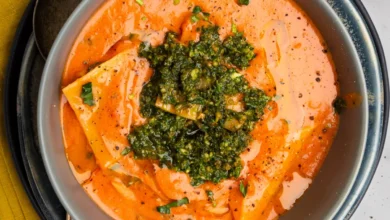
A Wholesome Twist on Comfort Food: Alejandra Graf Introduces a Nutrient-Rich Vegan Split Pea Soup


The modern culinary landscape is experiencing a profound shift toward plant-based nutrition, sustainable ingredients, and time-saving cooking appliances. In response to the growing demand for accessible, wholesome meals that do not compromise on flavor, food writer and recipe developer Alejandra Graf has released a distinctive recipe for a vibrant green split pea soup. Moving away from traditional meat-heavy broths flavored with ham or bacon, Graf’s recipe leverages the robust, earthy profiles of whole grains, legumes, and an abundance of fresh herbs to create a nutrient-dense, vegan-friendly dish suitable for home cooks of varying experience levels.

Background Context and Nutritional Philosophy
Traditionally, split pea soup has relied heavily on pork products such as ham bones, bacon, or salt pork to develop its savory foundation. While these conventional methods yield a rich flavor, they also introduce high levels of sodium and saturated fats, making the dish less accessible to those adhering to plant-based, vegan, or heart-healthy diets. Graf’s adaptation reimagines this classic comfort food by substituting animal fats with a complex matrix of plant-based ingredients.
At the core of the recipe are dried green split peas, a legume renowned for its high protein and dietary fiber content. Combined with whole-grain brown rice, the soup offers a complete nutritional profile, supplying sustained energy alongside essential minerals such as iron, potassium, and magnesium. However, the defining characteristic of Graf’s creation is the heavy incorporation of fresh herbs—specifically large bunches of flat-leaf parsley, cilantro, and fresh mint leaves. These herbs not only impart a brilliant emerald hue to the broth but also deliver concentrated doses of antioxidants and vitamins A and C. Further warmth and complexity are achieved through the inclusion of ground cinnamon and turmeric, spices long celebrated in culinary and holistic traditions for their anti-inflammatory properties.
Culinary Integration: Adapting to Modern Kitchen Technology
The introduction of multi-cookers, most notably the Instant Pot, has fundamentally transformed weeknight meal preparation for millions of households worldwide. Graf’s recipe is designed with this technological shift in mind, offering a streamlined cooking process that reduces total preparation and active cooking time significantly.
In a standard Instant Pot workflow, the soup requires only about 10 minutes of active preparation followed by a high-pressure cooking cycle of roughly 25 minutes, bringing total preparation and cooking time to approximately 35 to 40 minutes. This efficiency addresses a major barrier for working families and individuals seeking home-cooked meals amidst busy schedules.

However, culinary technicians and home economists note that cooking legumes under pressure requires specific safety precautions. Split peas, like many starches and pulses, release considerable amounts of starch foam during rapid boiling and pressure release. Graf highlights a vital operational tip for users of pressure cookers: if foaming occurs and escapes through the steam release valve during depressurization, operators should immediately close the valve and allow the appliance to naturally release its internal pressure over several minutes. This prevents potential burns and kitchen messes while ensuring the integrity of the dish.
For kitchens lacking modern pressure-cooking appliances, the recipe remains highly adaptable. Traditional stovetop simmering remains a reliable method, requiring the ingredients to be brought to a boil before reducing the heat to a low simmer, covered, until both the split peas and brown rice reach a tender consistency. Alternatively, a slow cooker can be utilized for unattended, all-day simmering, accommodating various domestic schedules and kitchen setups.

Broader Culinary Trends and Plant-Based Adoption
Graf’s green split pea soup arrives at a time of significant transition within the global food and beverage sector. Consumer data consistently indicates a rising preference for home cooking centered around whole, minimally processed ingredients. Plant-based eating, once viewed as a niche dietary restriction, has increasingly integrated into mainstream culinary practices, driven by health consciousness, environmental sustainability, and economic factors.
Nutritionists and public health advocates frequently emphasize the importance of incorporating legumes and whole grains into daily diets. Legumes are recognized as an environmentally sustainable protein source due to their low carbon footprint and nitrogen-fixing capabilities in agriculture. By highlighting dried split peas—an economical and shelf-stable pantry staple—recipes like Graf’s demonstrate that nutrient-dense eating can remain accessible across various socioeconomic brackets, independent of expensive specialty ingredients.

Furthermore, the emphasis on fresh culinary herbs aligns with broader gastronomic movements prioritizing clean, unmasked flavors. By allowing the natural brightness of parsley, cilantro, and mint to define the flavor profile rather than heavy sodium or artificial flavor enhancers, the recipe reflects a sophisticated approach to plant-based home cooking.
Implications for Home Economists and Culinary Publishing
The publication and reception of recipes optimized for multi-appliance use underscore a broader evolution in culinary media. Modern food journalism and recipe development must account for diverse kitchen environments, ranging from high-tech urban apartments equipped with smart appliances to traditional kitchens relying on basic stovetop cookware.

By providing explicit instructions for pressure cookers, stovetops, and slow cookers alike, recipe developers maximize utility and reader engagement. The inclusion of approximate nutritional data—estimating a per-serving profile low in calories yet rich in essential dietary fiber, vitamins, and minerals—further serves a public increasingly interested in transparent, health-conscious dietary planning.
As home cooking continues to adapt to the demands of contemporary life, innovations that merge traditional comfort foods with modern nutritional science and kitchen technology will likely remain a staple of culinary media. Alejandra Graf’s green split pea soup serves as a case study in this ongoing evolution, proving that heritage dishes can be successfully reinvented for a health-conscious, fast-paced modern world without losing their fundamental appeal.