The Fragile Efficiency of Mega Dairies and the Urgent Need for a Resilient British Food System

The landscape of British agriculture is undergoing a profound structural transformation, one characterized by the consolidation of dairy production into increasingly industrialised units. Recent investigations, including data from the Bureau of Investigative Journalism, confirm that the number of "mega-dairies"—facilities housing hundreds or thousands of cattle in permanent indoor environments—has doubled over the past decade. Simultaneously, the total number of dairy farms across Great Britain has plummeted, falling below the 7,000 threshold for the first time in history. This shift, while framed by some proponents as an inevitable evolution toward modernization, has sparked a rigorous debate regarding the long-term viability, ecological impact, and national security implications of intensive livestock systems.
The Chronology of Consolidation: A Sector in Flux
The trajectory of the British dairy industry has been defined by a persistent trend of attrition. In the early 2000s, the UK boasted over 14,000 dairy farms. By 2024, that figure had been halved. This decline is not merely a statistical anomaly but a reflection of systemic economic pressure. For nearly two decades, dairy farmers have contended with volatile global milk prices, compounded by the rising costs of essential inputs such as concentrated feed, veterinary services, and synthetic fertilisers.
The response from the industry has been bifurcated. Smaller, independent operators have frequently found the economic burden insurmountable, leading to a steady stream of exits from the sector. Conversely, larger enterprises have sought to insulate themselves from these pressures through economies of scale. By intensifying production, these "mega-dairies" prioritize high-volume output to offset thin margins. This model, however, creates a feedback loop of dependency: these systems require constant, high-quality inputs that are often sourced from international markets, tethering domestic food production to the volatility of global logistics.
The Illusion of Productivity: Input-Heavy Systems
At the core of the current debate is the definition of efficiency. Traditional intensive farming models measure efficiency through the lens of product-level footprints—focusing primarily on the volume of milk produced per animal or per hectare. However, critics, including analysts at the Sustainable Food Trust (SFT), argue that this narrow metric overlooks the broader systemic costs.
Intensive systems rely heavily on nitrogen-based fertilisers and imported grain. The vulnerability of this supply chain was laid bare during recent geopolitical instability, particularly the temporary disruptions at the Strait of Hormuz, a critical maritime chokepoint for the global nitrogen fertiliser trade. When these supply chains are disrupted, the "efficiency" of intensive dairy systems evaporates, exposing a brittle dependency on fossil-fuel-derived inputs.
Furthermore, the environmental cost of this intensification is significant. Industrial livestock operations produce large concentrations of waste, which, if not managed correctly, can lead to nutrient runoff and water quality degradation. The reliance on synthetic fertilisers also contributes to the degradation of soil health, reducing the land’s long-term capacity to support high-yielding crops without chemical intervention.
Environmental Degradation and the Security Assessment
The urgency of this transition is underscored by the Climate Change Committee’s (CCC) recent assessments. The projections for the United Kingdom’s agricultural land are stark. Under a moderate 2°C warming scenario, the availability of high-quality farmland in England and Wales is predicted to shrink from approximately 38% to just 11% by 2050.
This loss is driven by a combination of factors:
- Soil Erosion: Increased intensity of rainfall and prolonged dry periods are expected to accelerate soil degradation, with estimates suggesting a minimum 15% increase in erosion rates.
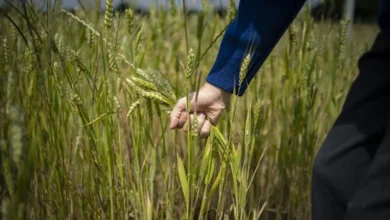
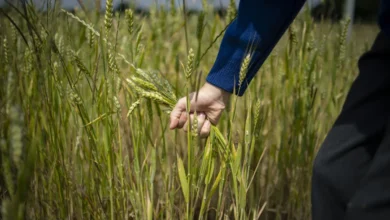
- Drought Risk: Arable crops are becoming increasingly susceptible to water stress. A concerning precedent was set when the South East of England experienced a 20% yield loss in wheat during a single, severe drought year.
- Harvest Volatility: The past decade has seen three of the worst five harvests on record for England, dragging the five-year average below the 20-year trend—a reversal that signals a departure from historical agricultural stability.
These environmental shifts are not merely domestic concerns; they are issues of national security. A government intelligence assessment published earlier this year explicitly warned that the UK’s food security is increasingly at risk from ecosystem collapse and the resulting geopolitical competition for resources. As climate change renders traditional high-input farming methods less predictable, the reliance on these systems becomes a strategic liability.
A New Model: Agroecological Resilience
The alternative to the current intensification trajectory is an agroecological approach that prioritizes pasture-based, low-input systems. Proponents argue that such systems are inherently more resilient because they utilize the land’s natural biological cycles rather than relying on external, fossil-fuel-dependent inputs.
Research from Wageningen University provides a compelling data point for this transition: a global food system that utilizes livestock to convert human-inedible biomass (such as grass) into nutrients requires significantly less arable land than a purely vegan model. By grazing livestock on grasslands—much of which is unsuitable for arable crop production—farmers can produce high-quality, nutrient-dense food while simultaneously improving soil health through organic fertilization.
However, the transition to such a model is not without significant challenges. It necessitates a fundamental shift in dietary patterns and production volumes. The SFT’s Feeding Britain report models this transition, projecting a 20% reduction in total dairy production, alongside more significant declines in pork and poultry production, which are currently heavily reliant on imported grain.
The Role of Governance and System-Wide Measurement
The shift toward agroecology cannot be driven by market forces alone, particularly when the current market environment incentivizes short-term volume over long-term stability. Government intervention is required to realign incentives. This includes:
- Redefining Efficiency: Shifting policy focus from product-level output (e.g., liters per cow) to system-level impact (e.g., nutrient density, soil health, and resource autonomy).
- Infrastructure Support: Providing financial and technical support for farmers to transition away from high-input indoor systems toward regenerative grazing practices.
- Supply Chain Diversification: Reducing the reliance on volatile international logistics by strengthening domestic circularity—where local livestock and crop systems support each other.
The debate over the rise of "Big Dairy" is emblematic of a broader national decision. By continuing to prioritize industrial intensification, the UK risks accelerating the loss of independent farmers and ecological resilience. Conversely, embracing a more integrated, lower-input system could provide a buffer against the escalating pressures of climate change and global instability.
Conclusion: A Strategic Crossroads
The evidence presented by current agricultural trends suggests that the "bigger is better" paradigm of the 20th century is increasingly at odds with the realities of the 21st. As the UK faces the dual challenges of climate-induced crop failure and geopolitical resource scarcity, the resilience of the food system will be determined by its diversity and its ability to function within ecological limits.
The consolidation of dairy into mega-dairies represents a high-risk, high-reward strategy that may yield short-term dividends but leaves the national food supply vulnerable to systemic shocks. Whether the UK chooses to double down on these intensive systems or pivots toward a more decentralized, agroecological future will likely define the security and sustainability of its food system for the next several decades. The path forward requires a sober assessment of these risks and the political will to enact systemic change before the structural fragility of the current model leads to irreparable decline.
Related posts: